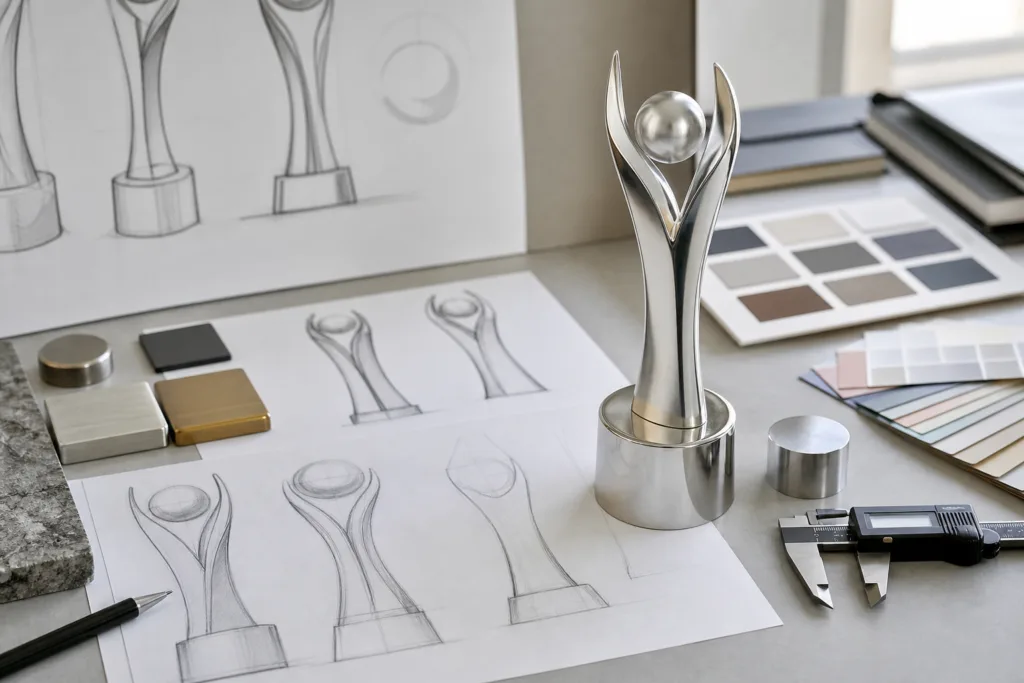
OEM Trophy Buying Guide for Custom Metal Award Projects
Plan an OEM trophy order with clearer specifications, approval checkpoints, and supplier discussions. This guide is for distributors, event organizers, private-label buyers, and procurement teams sourcing made-to-order metal trophies. Prepare your project details, then request a custom trophy quote based on the intended design, quantity, finish, personalization, and packaging.
PROJECT BRIEF
Start With the Commercial and Design Requirements
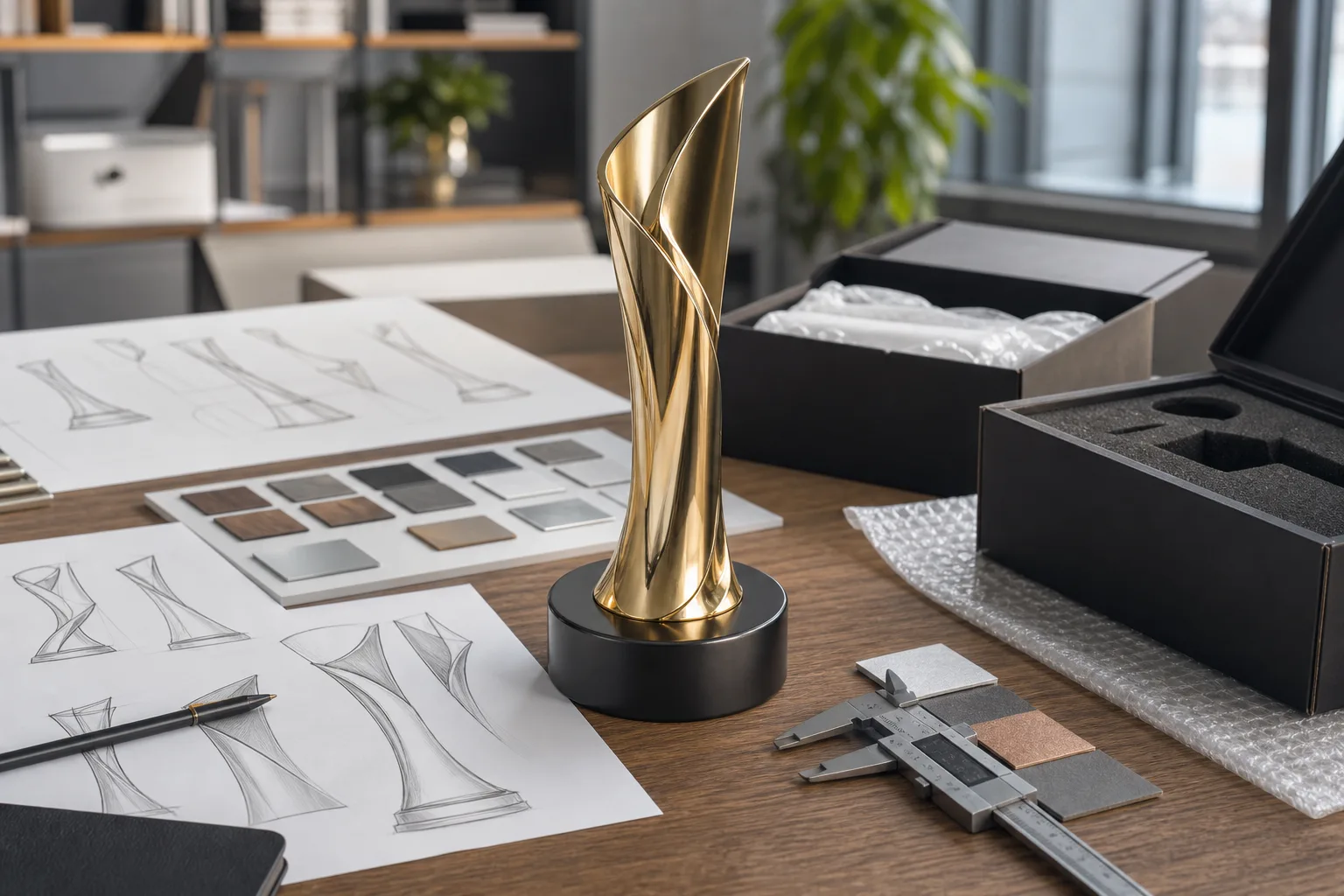
OEM trophy sourcing begins with a clear product brief. The supplier manufactures against an approved design and specification, while the buyer remains responsible for confirming appearance, quantities, personalization data, packaging, and delivery requirements.
Before comparing quotations, define the purpose of the trophy, the expected order quantity, the number of award levels, and whether the design will be used once or reordered. If the design is still being developed, review the available custom trophy design decisions before fixing materials or production processes.
A useful initial brief should cover:
- Event, program, resale, or private-label purpose
- Target size, shape, weight preference, and base structure
- Preferred metal material and surface appearance
- Logo, artwork, engraving, nameplate, or individual winner data
- Estimated quantity and possible future reorder needs
- Packaging style and carton-marking requirements
- Destination and required event or receiving date
SPECIFICATION DETAILS
Separate Structure, Finish, and Personalization Decisions
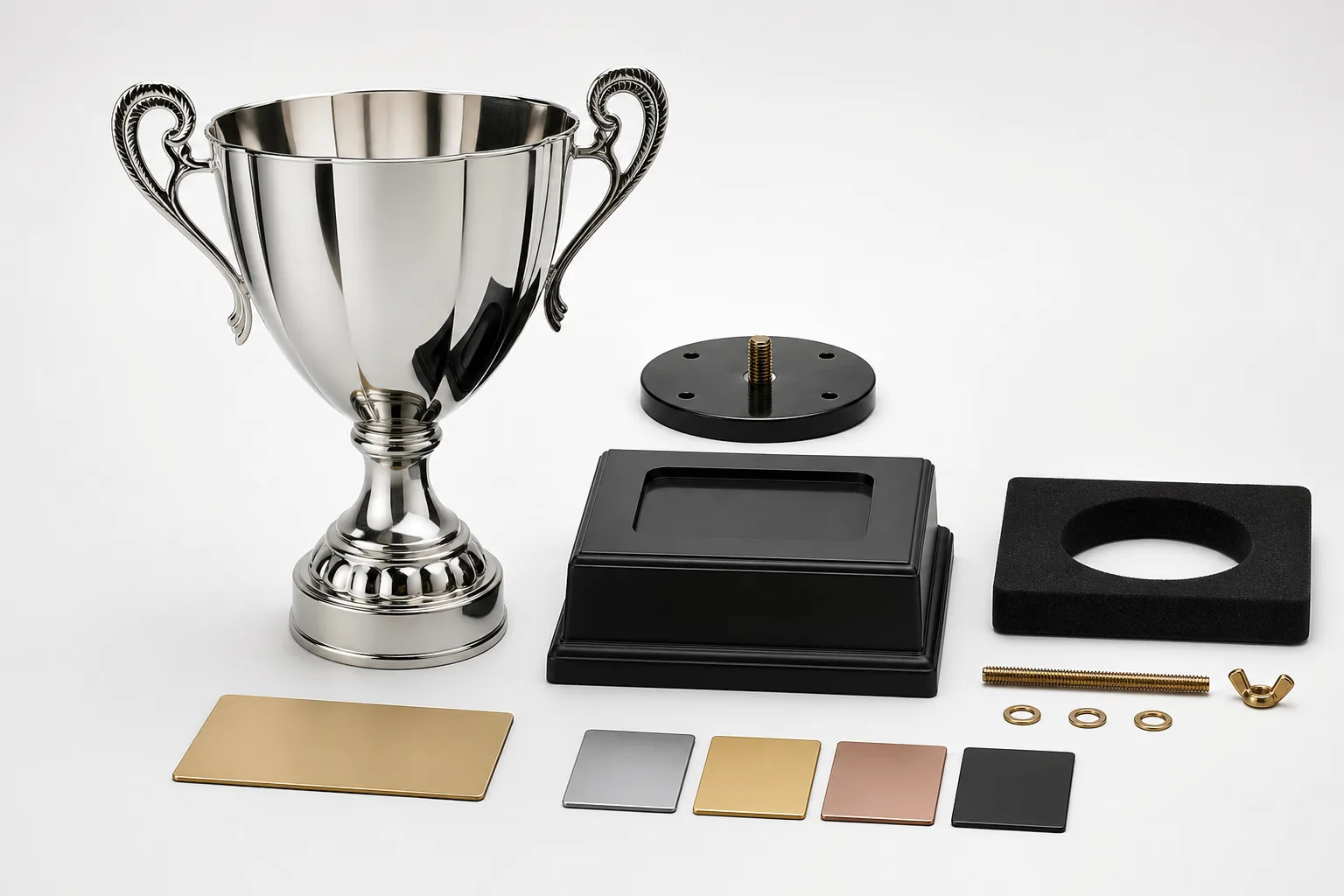
A trophy specification should distinguish the metal body, surface finish, decorative details, base, assembly method, and packaging. Mixing these categories can create quotation gaps because each choice affects feasibility, tooling, labor, appearance, or packing requirements in a different way.
| Specification Area | Buyer Decision | Why It Matters |
|---|---|---|
| Body structure | Overall dimensions, shape, thickness approach, separate parts, and base connection | Influences mold feasibility, assembly, stability, and packing space |
| Metal material | Preferred material or required appearance and weight | Affects process selection, detail reproduction, cost, and handling |
| Surface finish | Electroplating color, polished or brushed areas, painted details, and visual contrast | Defines appearance and creates process-specific approval points |
| Personalization | Shared logo, individual names, award levels, dates, or variable plates | Requires accurate files, data control, and placement approval |
| Base and assembly | Base material, dimensions, fixing method, and nameplate position | Affects balance, presentation, assembly, and packaging |
| Packaging | Individual protection, presentation needs, labels, and shipping carton requirements | Helps reduce movement and supports the intended distribution workflow |
Use visual references to communicate the intended appearance, but do not treat a reference image as a complete production specification. Material, finish, dimensions, and acceptable variation still need confirmation.
BUYING PATHS
Match the Process to the Project Stage

01
Scenario 1: A Distributor Planning Repeat Supply
A distributor may prioritize consistent specifications, private-label packaging, product data, and straightforward reorders. The buyer should decide which elements remain fixed, which engraving fields vary, how packaging is identified, and whether future orders must follow the approved sample. Discuss the OEM trophy manufacturing workflow and record the approved specification for each model.
02
Scenario 2: An Event Team Working Toward a Fixed Date
An event team may need several award levels, individual names, and a final delivery date. The buyer should confirm quantities by category, establish a deadline for winner data, approve artwork and samples promptly, and discuss the fixed event date at the start of the inquiry. Production and delivery timing remain project-specific and depend on the approved design, process, quantity, packaging, and current order schedule.
03
Scenario 3: A Buyer With a New Structural Concept
A new shape or multi-part structure may require design evaluation, mold development, and sample testing before a bulk order. The buyer should provide dimensioned artwork where possible and identify which visual details are essential. Mold cost, revision scope, and ownership or reuse terms should be clarified in the quotation rather than assumed.
PROCUREMENT STEPS
Use Checkpoints Before Bulk Production
A controlled purchasing process gives both parties a common basis for pricing, sampling, production, and inspection.
- Submit artwork, dimensions, quantity, finish references, personalization needs, packaging requirements, destination, and required date.
- Review design feasibility, material and process recommendations, mold needs, MOQ factors, quotation scope, and conditional timing.
- Confirm drawings, logo placement, colors, engraving content, base details, and packaging specification.
- Arrange sample production when appearance, structure, assembly, or packaging needs physical approval.
- Approve the sample or documented specification and record any accepted revisions before bulk production.
- Confirm variable name data, inspection checkpoints, packaging marks, and delivery coordination before shipment.
Regular custom products are usually available from 1 piece, but the exact MOQ depends on structure, size, material, process, mold needs, and packaging. A low-volume sample or order may also have a different unit-cost structure from a larger production run.
QUOTE RISKS
Common OEM Trophy Buying Mistakes
- Requesting a price without dimensions, quantity, finish, or packaging details
- Approving only a front-view image while leaving the side profile, base connection, or rear surface undefined
- Treating plating, paint, metal material, and base material as interchangeable specification categories
- Sending variable names or award levels without a controlled spreadsheet and final approval owner
- Waiting until production starts to disclose a fixed event date
- Assuming a sample automatically represents every variable engraving or packaging version
- Using logos, team names, school marks, event graphics, or association marks without confirming authorization
Pricing depends on artwork, size, material, quantity, surface finish, accessories, personalization, and packaging. Use the custom trophy cost guide to identify the main cost variables, but request a project-specific quotation for purchasing decisions.
- Vector artwork, 3D files, drawings, or clear reference images
- Target dimensions and any weight or stability preferences
- Estimated order quantity and award-level breakdown
- Preferred material, plating appearance, painted colors, and texture
- Logo engraving and variable personalization requirements
- Base, accessories, assembly, and packaging requirements
- Shipping destination and any fixed event or receiving date
- Questions about molds, samples, revisions, inspections, and repeat orders
NEXT STEP
Request a Quote Based on One Clear Specification
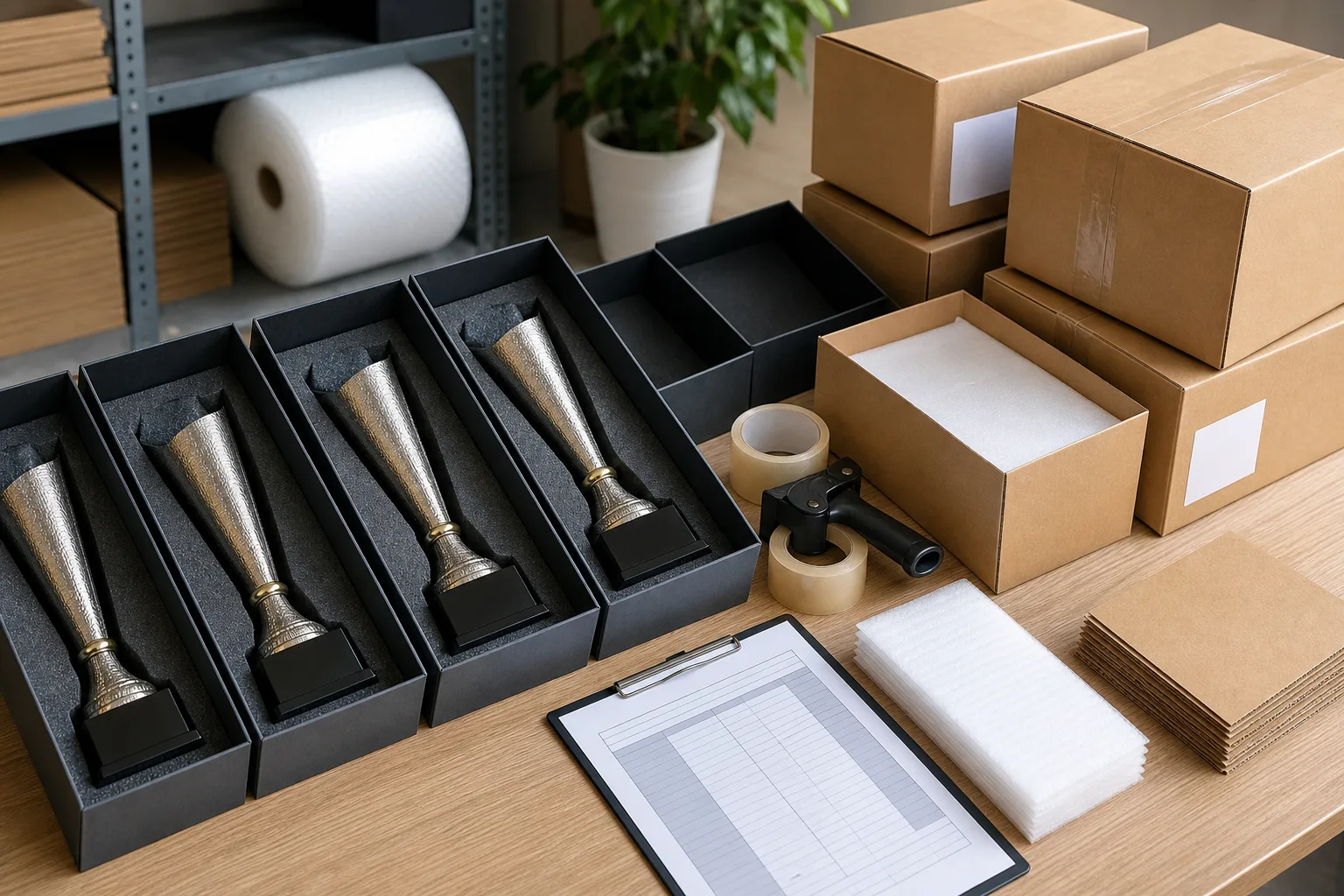
Consolidate the project requirements into one current brief and identify any decisions that remain open. Me Trophy can evaluate made-to-order metal trophy requirements and support design evaluation, OEM manufacturing, samples, mold development, finishing, engraving, assembly, quality inspection, packaging, and export delivery coordination, depending on the project.
Submit the available files and purchasing requirements to request an OEM trophy quotation. If presentation and finish must be checked physically before production, you can also request a trophy sample based on the proposed specification.
BUYER QUESTIONS
Frequently Asked Questions
What information is needed for an OEM trophy quotation?
Provide artwork or reference images, target dimensions, quantity, preferred material and finish, personalization details, base requirements, packaging needs, destination, and any fixed event date. The quotation scope depends on the completeness of these details.
Is there a minimum order quantity for custom OEM trophies?
Regular custom products are usually available from 1 piece, but the exact MOQ depends on the trophy structure, size, material, production process, mold requirements, and packaging.
Does every OEM trophy project require a new mold?
Not necessarily. Mold requirements depend on the structure, design, material, process, and whether suitable existing components can be used. Mold feasibility and related costs should be confirmed during design evaluation.
Should I request a sample before bulk production?
A sample is useful when the buyer needs to evaluate structure, finish, color, engraving, assembly, or packaging. Whether sampling is appropriate depends on the project stage, quantity, schedule, and approval requirements.
How should variable winner names and award levels be supplied?
Use a controlled data file with clear fields for each trophy, award level, name, date, and engraving position. Confirm spelling, duplicates, character support, and the final approval owner before production.
Can a supplier reproduce a team logo, school mark, or event graphic?
Production feasibility can be reviewed, but the buyer should confirm that it has authorization to use any trademark, logo, team name, school mark, association mark, or event graphic before production.