

Polishing and Surface Preparation for Custom Metal Trophies
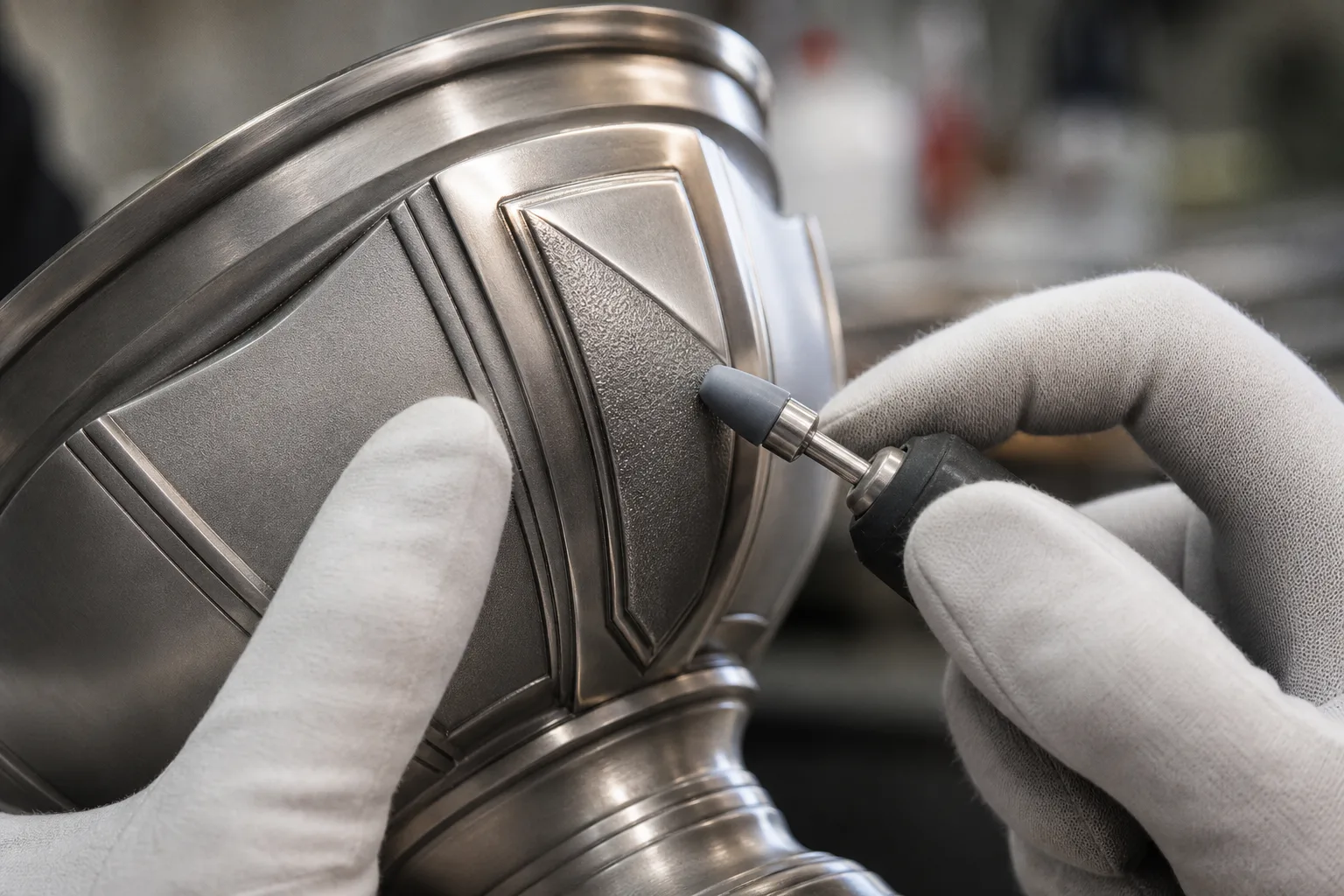
Metal trophy polishing and surface preparation help create a suitable foundation for electroplating, painting, engraving, and final assembly. Me Trophy can plan these steps for custom trophy projects based on the metal component, intended finish, visible surfaces, and approved appearance requirements.
Surface preparation planning
Matched to component geometry and intended finish.
Finish-sensitive review
Visible surfaces, edges, recessed details, and boundaries are checked.
Connected production sequence
Preparation is coordinated with later finishing and assembly steps.
Project-specific assessment
Artwork, finish reference, quantity, and application guide the review.
Guide
Prepare Metal Components for the Intended Finish
Casting, joining, and handling can leave parting lines, attachment points, uneven areas, or other visible surface conditions. Surface preparation is used to reduce relevant irregularities and establish the appearance required for the next finishing stage.

Reflective plated body
Identify the most visible surfaces, check whether casting lines may remain noticeable after plating, and state the planned plated appearance before sample production. brushing and polishing options
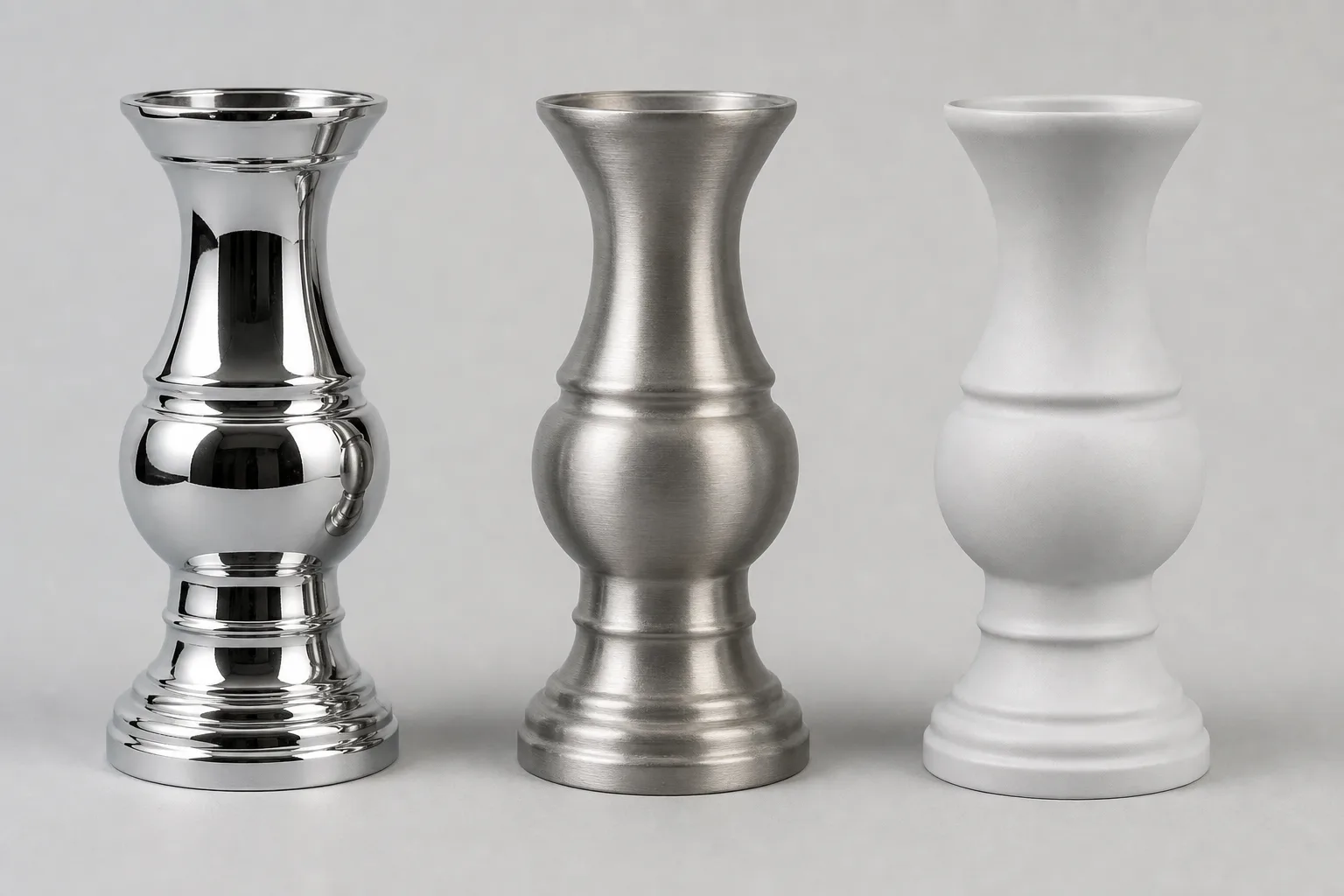
Painted and polished areas
Define clear boundaries, provide color references, confirm metallic areas, and check whether edges should look sharp or softly blended.
Deliberate brushed appearance
Treat directional brushing as an appearance choice, with brushing direction, visible area, and section relationships agreed in the specification.

From Raw Metal Component to Finish-Ready Surface
The exact sequence remains subject to the design, material, geometry, and selected finish. A typical project may follow these stages: metal casting process electroplating
Identify visible faces, detail-sensitive areas, finish boundaries, assembly points, and appearance references.
Check relevant surfaces after the selected metal casting process, remove applicable irregularities, and refine specified surfaces without unnecessarily reducing design detail.
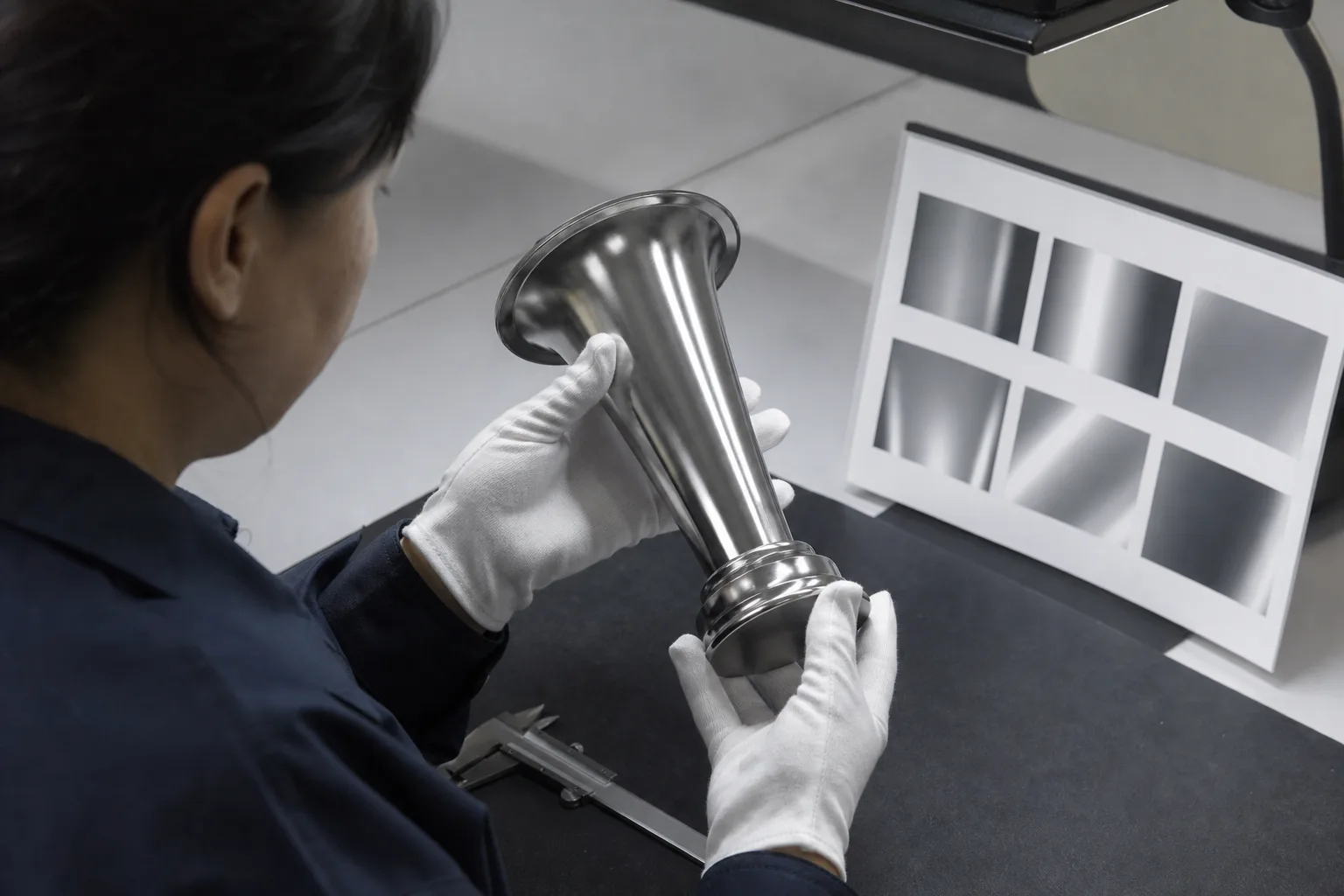
Review the component before electroplating, painting, engraving, or assembly, then compare the prepared and finished sample with the approved specification before bulk production planning.
Control the Details That Affect the Finished Trophy
Visual expectations should be documented before production. Useful approval checkpoints can include: quality control checkpoints
- Overall finish type and reference appearance
- Front-facing and other high-visibility surfaces
- Protection of fine relief, recessed graphics, engraved lines, and defined edges
- Boundaries between polished, plated, painted, and intentionally textured areas
- Appearance under practical viewing angles and lighting conditions
Frequently Asked Questions
Key questions buyers often ask about metal trophy polishing and surface preparation.
What is the purpose of polishing and surface preparation for a metal trophy?
These processes help establish a suitable surface for the intended appearance and later operations such as electroplating, painting, engraving, and assembly. The required preparation depends on the component and approved finish specification.
Does every trophy component require the same level of polishing?
No. Highly visible reflective surfaces, painted recesses, textured areas, and hidden assembly faces may require different treatments. The process should be matched to each component and its role in the finished trophy.
Should the surface finish be confirmed before sample production?
Yes. Buyers should identify the intended plated, painted, polished, brushed, or mixed appearance before sampling. Clear finish boundaries and reference images help define the review criteria.
What should I inspect on a trophy sample?
Review the most visible surfaces, edge and relief definition, finish transitions, brushing direction where applicable, painted boundaries, assembly interfaces, and the appearance under practical lighting and viewing angles.
Prepare for a Quote or Sample
Send the design files, finish reference, quantity, and required date for a project-specific review. If appearance is especially sensitive, a sample can be requested before bulk production planning.