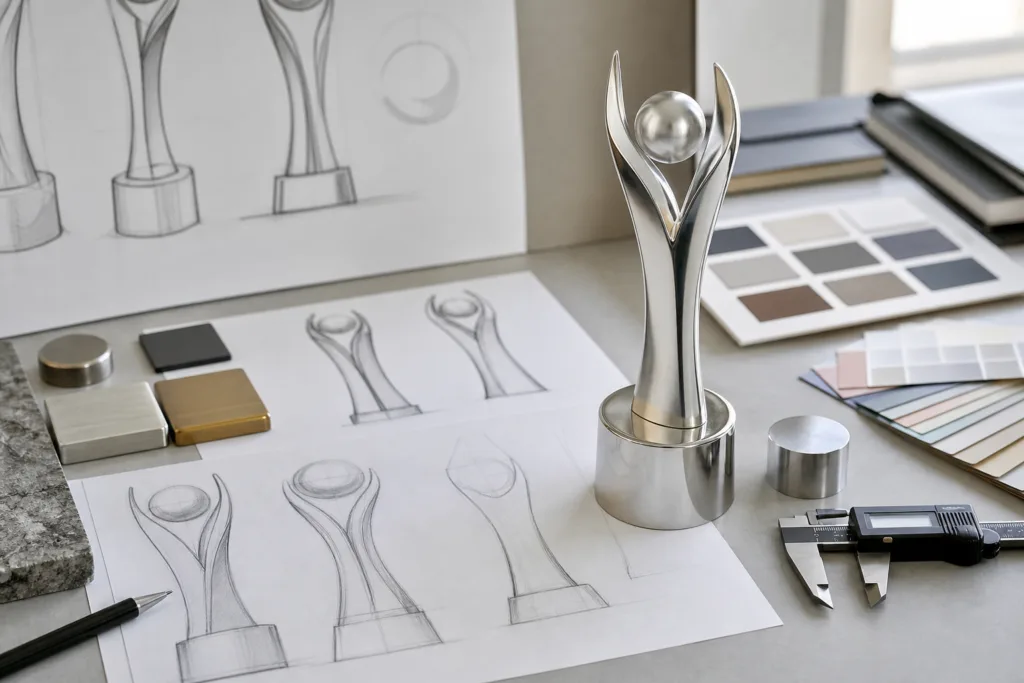
Custom Trophy Design for Made-to-Order Metal Awards
Develop a trophy concept into a practical specification for event awards, corporate programs, distribution, private-label supply, or other custom projects. Me Trophy can support design evaluation, material and finish planning, mold feasibility review, sample production, and preparation for manufacturing. To begin, upload your trophy design with the target size, quantity, use case, and required date.
EARLY PLANNING
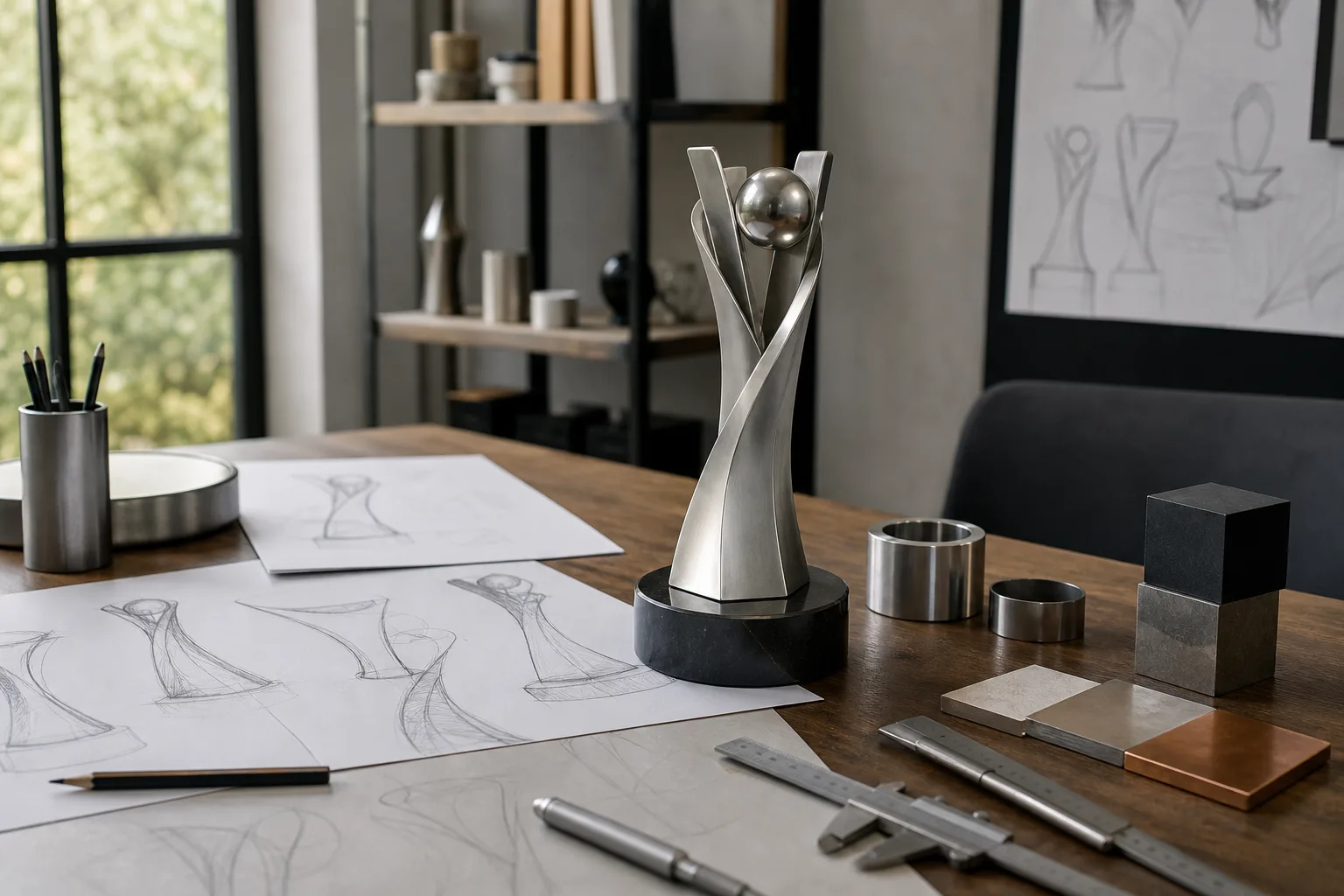
Design Around the Award Program and Production Method
A custom trophy design has to do more than look distinctive. Proportions, metal parts, base, engraving areas, assembly points, finish, packaging, and production method must work together.
A buyer may start with a sketch, reference image, 2D artwork, 3D file, or written brief. The first review should identify what is fixed, what can change, and what needs feasibility confirmation. Complex curves, thin sections, deep recesses, large unsupported parts, or mixed finishes may affect mold development, casting, polishing, assembly, cost, and lead time.
Useful early decisions include:
- The purpose of the award and the visual theme
- The number of award levels or design variations
- The approximate height, width, depth, and weight preference
- The preferred metal appearance and color details
- The information that must be engraved or printed
- The base structure and display stability
- The quantity, packaging method, delivery destination, and event date
SPECIFICATION REVIEW
Compare the Specification Areas Before Finalizing Artwork
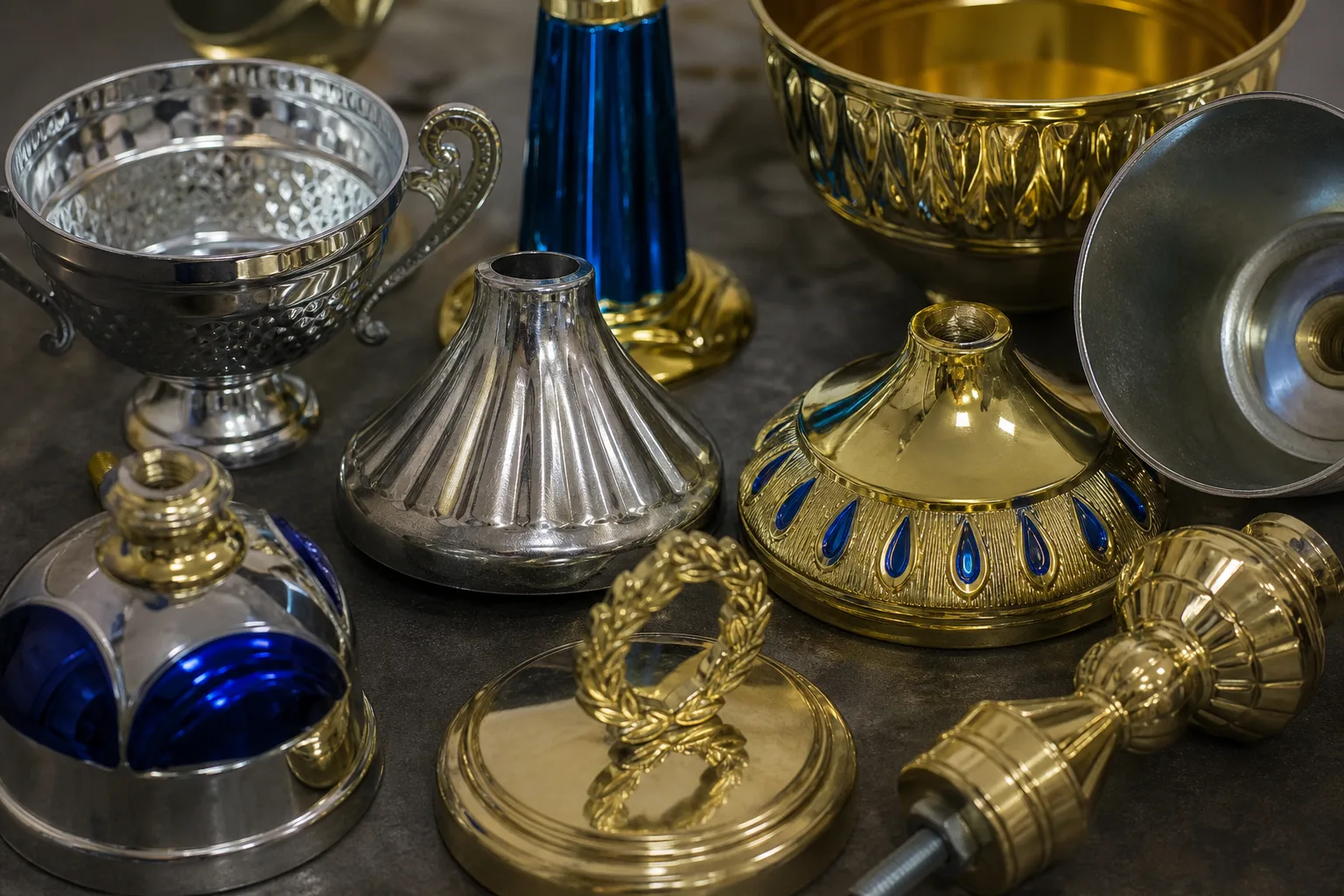
Each specification category affects a different part of the project. Keep structural, material, finish, and personalization decisions separate so quotations and approvals are easier to review.
| Specification Area | Questions to Decide | Possible Project Effect |
|---|---|---|
| Size and structure | What are the target dimensions, proportions, support points, and assembly method? | Can affect stability, mold feasibility, material use, packaging, and shipping. |
| Metal material | Which material suits the shape, appearance, quantity, and budget framework? | Can affect forming or casting options, surface preparation, detail, and cost. |
| Surface finish | Is the design plated, painted, polished, brushed, antique-style, or a controlled combination? | Can affect color consistency, masking requirements, handling, and approval criteria. |
| Personalization | Does each piece need a name, rank, category, date, or number? | Can affect artwork control, data checking, engraving, sorting, and packing. |
| Base | What base shape, material, connection, and nameplate area are required? | Can affect balance, assembly, appearance, packaging dimensions, and presentation. |
Review trophy size, shape, and structure before locking the silhouette. Then compare metal material options and consider whether an electroplating finish, painted details, or another approved finish supports the intended appearance.
BUYER SCENARIOS
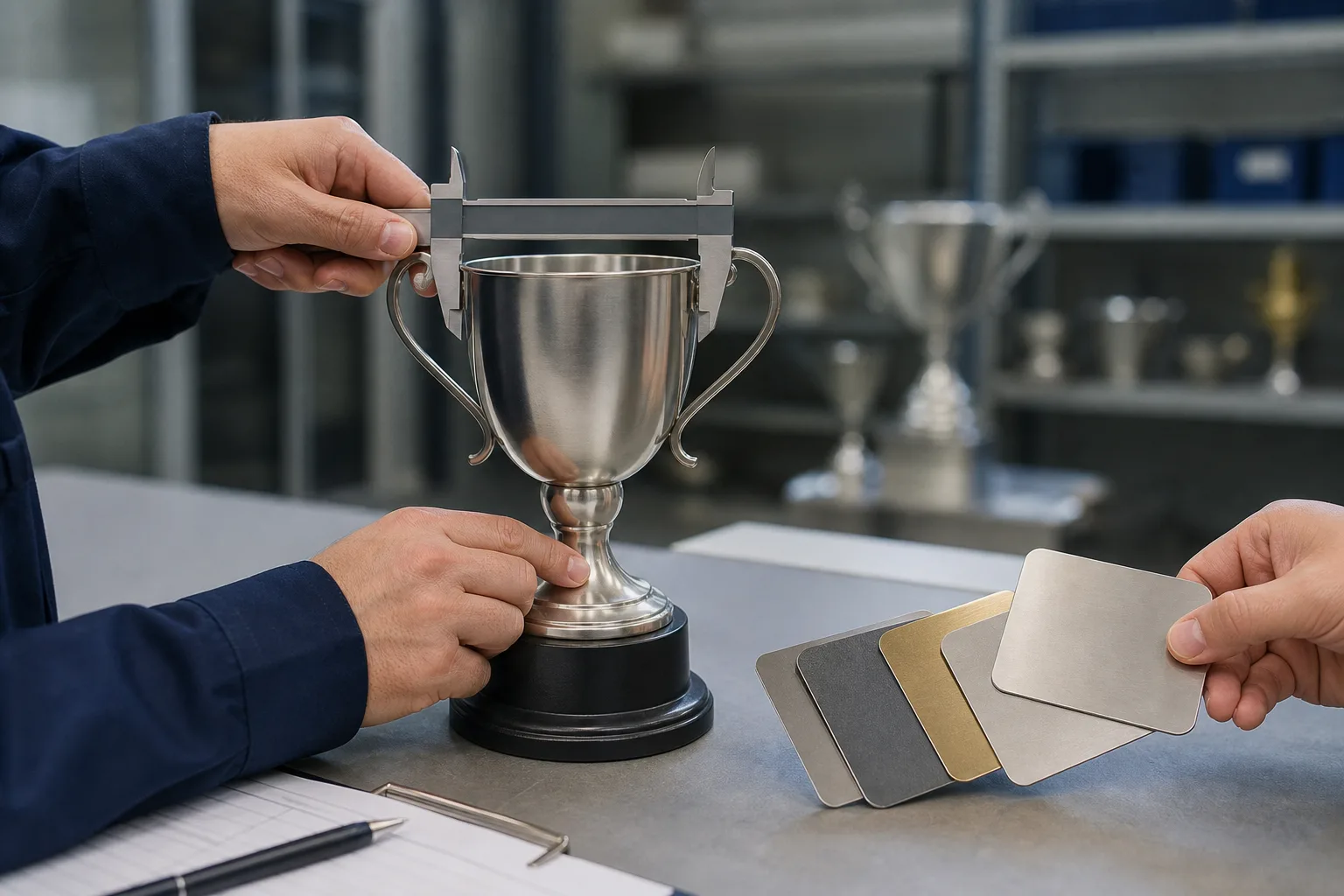
Match the Design Process to the Buying Scenario
01
Event Organizer With Several Award Levels
An event organizer may need one visual family with different sizes, colors, nameplates, or rank details. The buyer should confirm how first, second, and third places will differ, whether recipient data is available before production, and whether packaging must identify each category. A fixed event date should be discussed at the start of the inquiry because timing depends on design approval, sample needs, order details, and the current production schedule.
02
Distributor or Private-Label Buyer Planning Repeat Supply
A distributor may prioritize a reusable structure with changeable plates, colors, or packaging. The buyer should decide which elements remain standard, which elements vary by customer, how artwork revisions will be controlled, and what records are needed for reorders. Repeat orders remain subject to the approved specification, current material availability, and order schedule.
03
Corporate Award Program With Individual Names
A procurement team may use one trophy body while changing recipient names, departments, or award categories. The team should provide a checked data file, define capitalization and line-break rules, identify duplicate names, and approve the engraving layout before production.
SAMPLE REVIEW
Use Approval Checkpoints Before Bulk Production
A structured review helps reduce misunderstandings between the visual concept and the manufactured trophy.
- Submit the design files, project purpose, target size, expected quantity, finish preferences, packaging needs, destination, and required date.
- Review the concept for structure, mold feasibility, material choice, engraving space, assembly, and packaging constraints.
- Confirm the working specification, including dimensions, finish references, accessories, personalization method, and base connection.
- Review the quotation and project-specific MOQ. Regular custom products are usually available from 1 piece, but the exact MOQ depends on structure, size, material, process, mold needs, and packaging.
- Decide whether a physical sample is needed. When appearance, fit, finish, or assembly requires confirmation, arrange custom trophy sample production.
- Approve the sample or documented specification before bulk production planning. Any later change should be reviewed for possible effects on cost and timing.
A sample can help evaluate overall proportions, finish direction, assembly, engraving placement, and packaging fit. It should not be treated as approval for details that were not included in the reviewed specification.
QUOTE PREP
Send Enough Information for a Useful Project Assessment
The quotation depends on artwork, size, material, quantity, surface finish, accessories, personalization, and packaging. Prepare as much of the following information as possible:
- Vector artwork, dimensioned drawing, 3D file, sketch, or clear reference images
- Target height, width, depth, and any weight preference
- Expected quantity and the number of design or award-level variations
- Preferred metal, color direction, plating appearance, painted areas, and texture
- Logo, emblem, nameplate, engraving, or variable recipient-data requirements
- Base style, accessories, assembly preferences, and presentation requirements
- Individual box, protective insert, private-label, carton-marking, or other packaging needs
- Delivery country or region and any fixed event date
- Reference sample needs and the person responsible for final approval
Files do not need to be complete for an initial discussion, but missing dimensions or unclear personalization data may limit the accuracy of the review. If the main design decisions are already defined, request a custom trophy quote with the available files and order details.

NEXT STEP
Check Common Issues Before Submitting the Concept
Avoid treating a reference image as a complete production specification. Confirm dimensions, materials, finish boundaries, engraving content, assembly points, base proportions, and packaging instead of relying only on visual similarity.
Other common risks include changing artwork after sample approval, supplying low-resolution graphics, leaving variable name data unchecked, selecting colors without an agreed reference, and waiting too long to disclose a fixed event date. Buyers should also confirm authorization to use trademarks, company logos, team names, school marks, association marks, event marks, or other protected graphics before production.
For the next step, gather your concept files and known requirements, then upload your trophy design for a project-specific feasibility review.
BUYER QUESTIONS
Frequently Asked Questions
What files can I submit for a custom trophy design review?
You can submit vector artwork, dimensioned drawings, 3D files, sketches, or clear reference images. Include known dimensions, quantity, finish preferences, personalization requirements, packaging needs, destination, and required date.
Can Me Trophy help if I only have an initial concept?
Yes. Me Trophy can support design evaluation and ODM development based on the information supplied. Feasibility, scope, deliverables, cost, and timing remain subject to project review.
Does every custom trophy design require a new mold?
Not necessarily. Mold requirements depend on the shape, structure, material, process, and whether an existing approved component can be used. The design should be reviewed before the mold approach is confirmed.
What is the MOQ for a custom-designed trophy?
Regular custom products are usually available from 1 piece, but the exact MOQ depends on the structure, size, material, process, mold needs, and packaging.
Should I request a sample before bulk production?
A sample is useful when the project requires confirmation of proportions, finish direction, engraving placement, assembly, or packaging fit. The appropriate approval method depends on the design and order requirements.
Can I use a team, school, event, or company logo on the trophy?
Custom graphics can be reviewed, but the buyer should confirm authorization to use trademarks, logos, team names, school marks, association marks, event marks, and other protected content before production.