
Electroplating Process for Custom Metal Trophies
Me Trophy provides electroplating process support for made-to-order metal trophies that require a controlled metallic appearance. This page helps designers, event organizers, distributors, and procurement teams understand the inputs, approval points, and quality risks involved. Share your artwork, finish reference, quantity, and delivery needs to begin a feasibility and quotation review. Request a custom trophy quote
FINISH BASICS
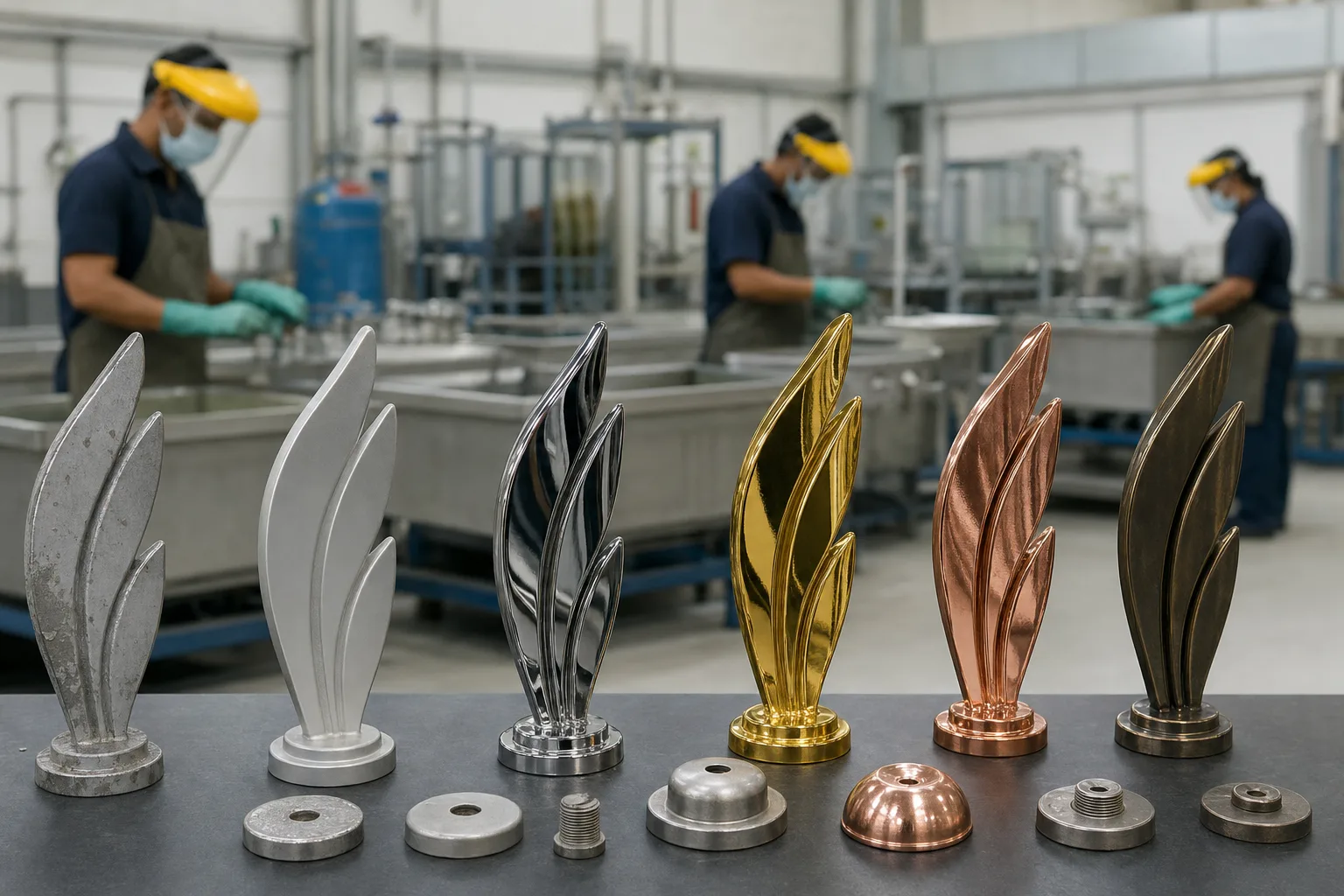
How Electroplating Supports the Finished Trophy
Electroplating applies a metallic surface finish to a prepared metal component. For a custom trophy, it can influence color, reflectivity, visual consistency, and how the part coordinates with painted details, engraving, nameplates, and the base.
The result depends on more than the selected finish name. The base material, casting condition, polishing level, part geometry, recess depth, joining points, and handling requirements can all affect the final appearance. Buyers should therefore approve a complete appearance specification rather than relying only on terms such as gold, silver, or bronze.
Review available appearance directions on the electroplating finish customization page. For examples of where these finishes may be used, see custom electroplated trophies.

APPROVAL STAGES
Typical Trophy Electroplating Workflow
The exact sequence depends on the material, structure, selected finish, and approved production specification. A typical project can include the following stages:
- Specification review: Confirm the trophy material, component structure, finish direction, visible surfaces, artwork, and quantity.
- Surface preparation: Remove or reduce surface irregularities according to the required appearance. See how polishing and surface preparation connect to the final finish.
- Cleaning and preparation for plating: Prepare the component surface using a process suitable for the approved material and finish requirement.
- Plating application: Apply the required plating sequence based on the confirmed specification. Layer composition and thickness remain subject to project review and should not be assumed without written technical requirements.
- Rinsing, drying, and handling: Process and handle plated parts to reduce avoidable marks or surface contamination.
- Appearance inspection: Check agreed visual points such as finish direction, color reference, exposed areas, and obvious surface defects.
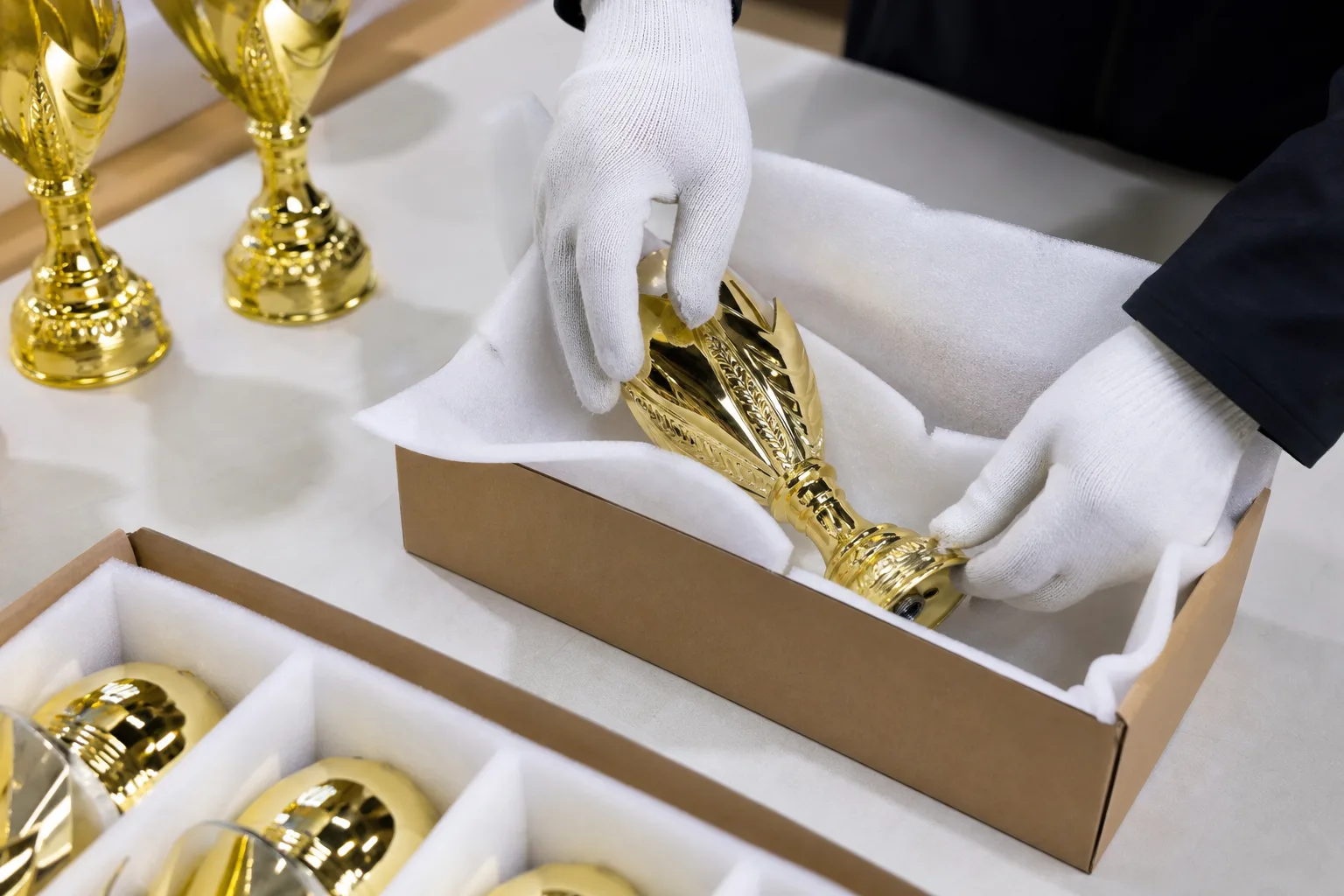
- Assembly and packing: Combine approved components and select packaging based on trophy shape, surface sensitivity, accessories, and shipping needs.
A sample can help confirm appearance before a larger order, especially when color interpretation, polished surfaces, mixed finishes, or complex geometry are important. Buyers with an appearance-sensitive specification can request a trophy sample after feasibility and cost review.
FINISH CHECKLIST
Define the Finish Before Production
A useful finish specification should address the complete trophy rather than one isolated component. Important decisions include:
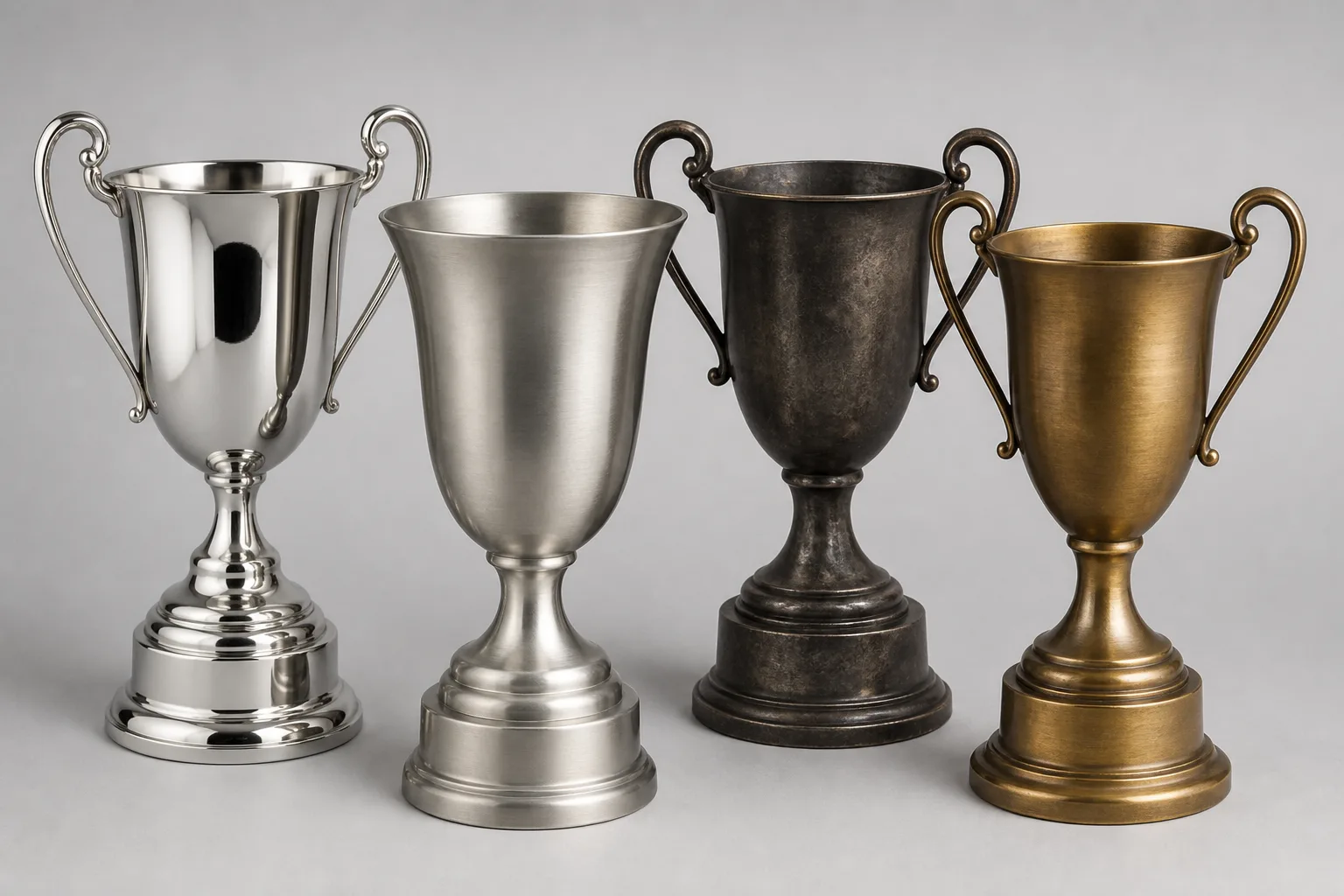
- Finish direction: State the intended metallic color and whether the appearance should be bright, satin-like, antique-style, or another agreed reference.
- Visible surfaces: Identify front, back, side, recessed, and underside areas that require appearance control.
- Surface preparation level: Confirm whether the design requires a highly reflective appearance or a less reflective treatment that may show surface conditions differently.
- Mixed processes: Mark where plating, painted details, engraving, nameplates, or separate attachments meet.
- Reference method: Supply a physical sample, approved color reference, or clear visual direction when appearance matching matters.
- Handling and packaging: Explain whether parts need individual protection, special separators, or retail packaging review.
Finish names and screen colors can be interpreted differently. Final approval should be based on an agreed reference and the actual material and process combination whenever practical.
BUYER USE CASES
Planning for Different Trophy Projects
01
A Distributor Preparing a Repeat Product Line
A trophy distributor may need several sizes with a consistent family appearance. The buyer should define which parts remain common, which dimensions change, how plated surfaces coordinate with bases and nameplates, and how reorder specifications will be recorded. A controlled approval file can reduce confusion between the first order and later purchase orders, but repeat appearance remains subject to the approved specification and production conditions.
02
An Event Organizer Working Toward a Fixed Date
An event organizer may prioritize the front-facing appearance, award-level differences, engraving data, packaging, and arrival schedule. The fixed event date should be discussed at the start of the inquiry. The buyer should allow time for design review, sample decisions, production, inspection, packing, and delivery coordination. Timing is project-specific and depends on the current order schedule and approved requirements.
03
A Brand or Private-Label Buyer Combining Finishes
A private-label project may combine electroplating with painted details, engraved information, or separately assembled parts. The buyer should identify process boundaries in the artwork and confirm authorization for any trademark, logo, team name, school mark, association mark, or event graphic before production.
QUALITY CONTROL
Common Electroplating Mistakes to Avoid
Electroplating cannot automatically hide every casting mark, seam, scratch, or polishing difference. Reflective finishes may make some surface conditions more visible. Complex recesses, sharp transitions, assembled joints, and contact points also require early review.
- Do not approve a finish only from an uncalibrated screen image.
- Do not leave visible and non-visible surfaces undefined.
- Do not assume two materials or part shapes will display a finish identically.
- Do not add plating after mold, structure, or assembly decisions without checking feasibility.
- Do not omit protective packaging requirements for appearance-sensitive surfaces.
- Do not begin production with unresolved logo rights, personalization data, or award-level details.
Inspection criteria should be agreed before production and applied to the approved specification. The trophy quality control process explains how checkpoints can connect design approval, incoming components, in-process review, assembly, and final inspection.
QUOTE INPUTS
Prepare Your Electroplating Project Details
To support feasibility review and quotation, provide as much of the following information as available:
- 2D artwork, 3D files, sketches, or clear reference images
- Target trophy size, shape, structure, and base concept
- Preferred metal material or a request for material evaluation
- Required electroplating finish and appearance reference
- Painted areas, engraving, nameplates, inserts, and accessories
- Estimated quantity and any award-level variations
- Personalization or variable-data requirements
- Packaging expectations and shipping destination
- Required event date or target arrival window
- Sample requirement and approval responsibilities
Pricing depends on artwork, size, material, quantity, surface finish, accessories, personalization, and packaging. Regular custom products are usually available from 1 piece, but exact MOQ depends on structure, size, material, process, mold needs, and packaging.
NEXT INQUIRY
Request an Electroplated Trophy Review
Send your design and finish requirements for an initial review of mold feasibility, material selection, surface preparation, electroplating direction, sample needs, packaging, and project timing. Me Trophy can then prepare a project-specific quotation based on the available information and current order schedule. Request a custom trophy quote
BUYER QUESTIONS
Frequently Asked Questions
What information is needed to select an electroplating finish for a trophy?
Provide the trophy material, component structure, target appearance, visible surfaces, artwork, quantity, and any physical or visual reference. The suitable process remains subject to feasibility review.
Can electroplating hide casting marks or scratches?
It should not be treated as a way to hide every surface condition. Polishing and other preparation steps can improve the surface, but reflective finishes may make some marks or variations more visible.
Should I request a sample before bulk production?
A sample is useful when finish color, reflectivity, mixed processes, complex geometry, or packaging presentation is important. Sample feasibility, cost, and timing depend on the project specification.
Can one trophy combine electroplating, paint, and engraving?
These processes can be combined when the material, geometry, process order, and assembly plan are suitable. The artwork should clearly identify the boundaries and requirements for each treatment.
What is the MOQ for an electroplated custom trophy?
Regular custom products are usually available from 1 piece, but the exact MOQ depends on size, structure, material, plating process, mold requirements, accessories, and packaging.
How long does trophy electroplating and production take?
Timing is project-specific and depends on design approval, mold needs, sample decisions, finish complexity, quantity, packaging, and the current order schedule. Share any fixed event date at the beginning of the inquiry.