
Custom Trophy Mold Development
Turn an approved trophy concept into a mold-ready specification for metal production. Me Trophy provides mold development support for international buyers whose projects require custom shapes, dimensional details, logos, or structural features. To begin a feasibility review, upload your trophy design with the target size, quantity, material preference, finish, and required delivery date.
WHY IT MATTERS
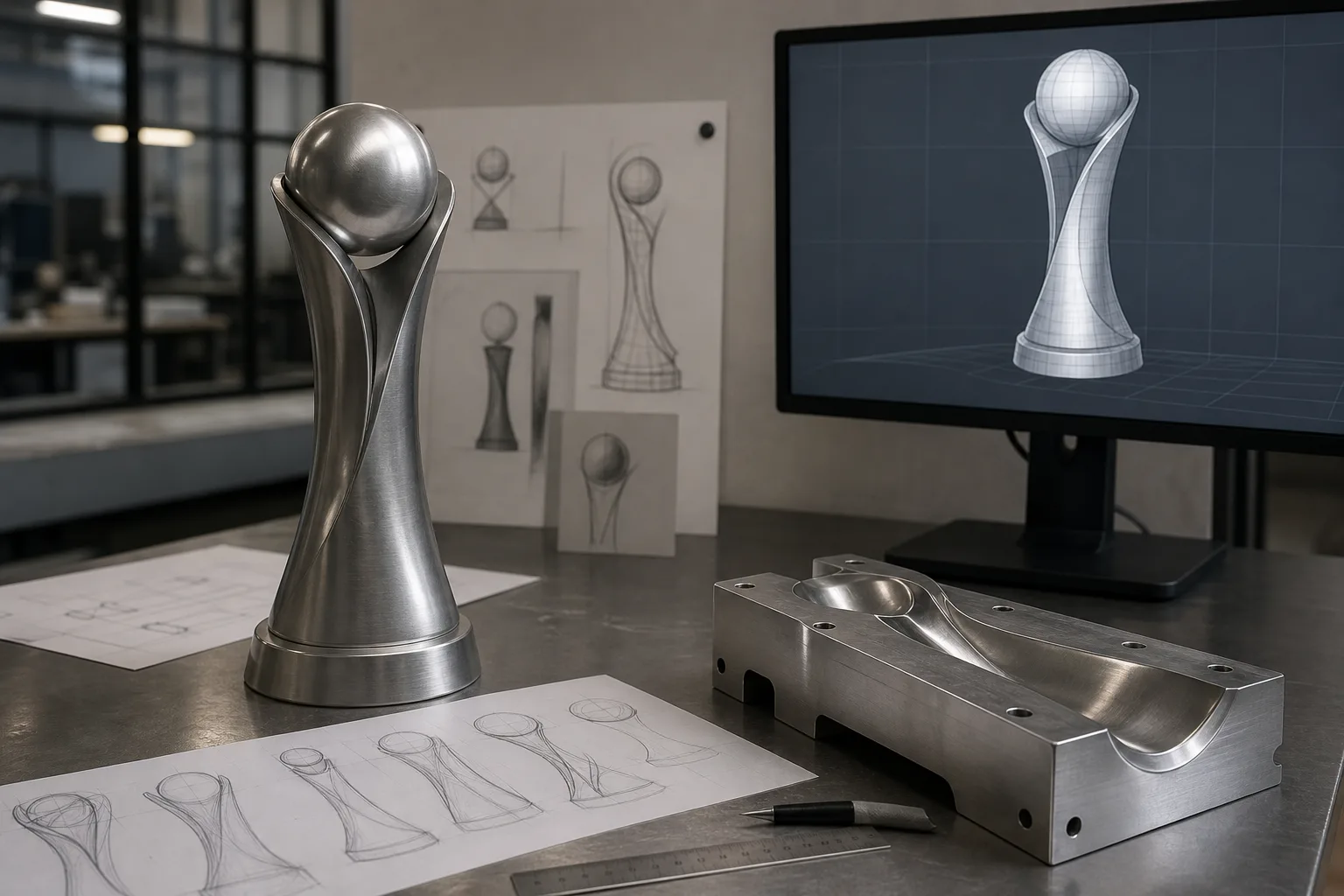
Connect the Trophy Design to a Repeatable Production Process
A custom mold defines the form and many of the physical details that will appear in a cast metal trophy component. Its development must account for appearance, dimensions, wall sections, relief details, assembly points, and the selected production method.
Mold development is not the same as metal casting. Mold development prepares the tooling and approved geometry, while the casting stage uses that tooling to form the metal component. Buyers who want to understand the next production stage can review the metal casting capabilities page.
Early review helps identify details that may be difficult to form, finish, assemble, or inspect. Changes made before mold work begins are usually easier to manage than revisions requested after a physical sample has been produced.
FEASIBILITY INPUTS
Prepare the Design and Production Requirements
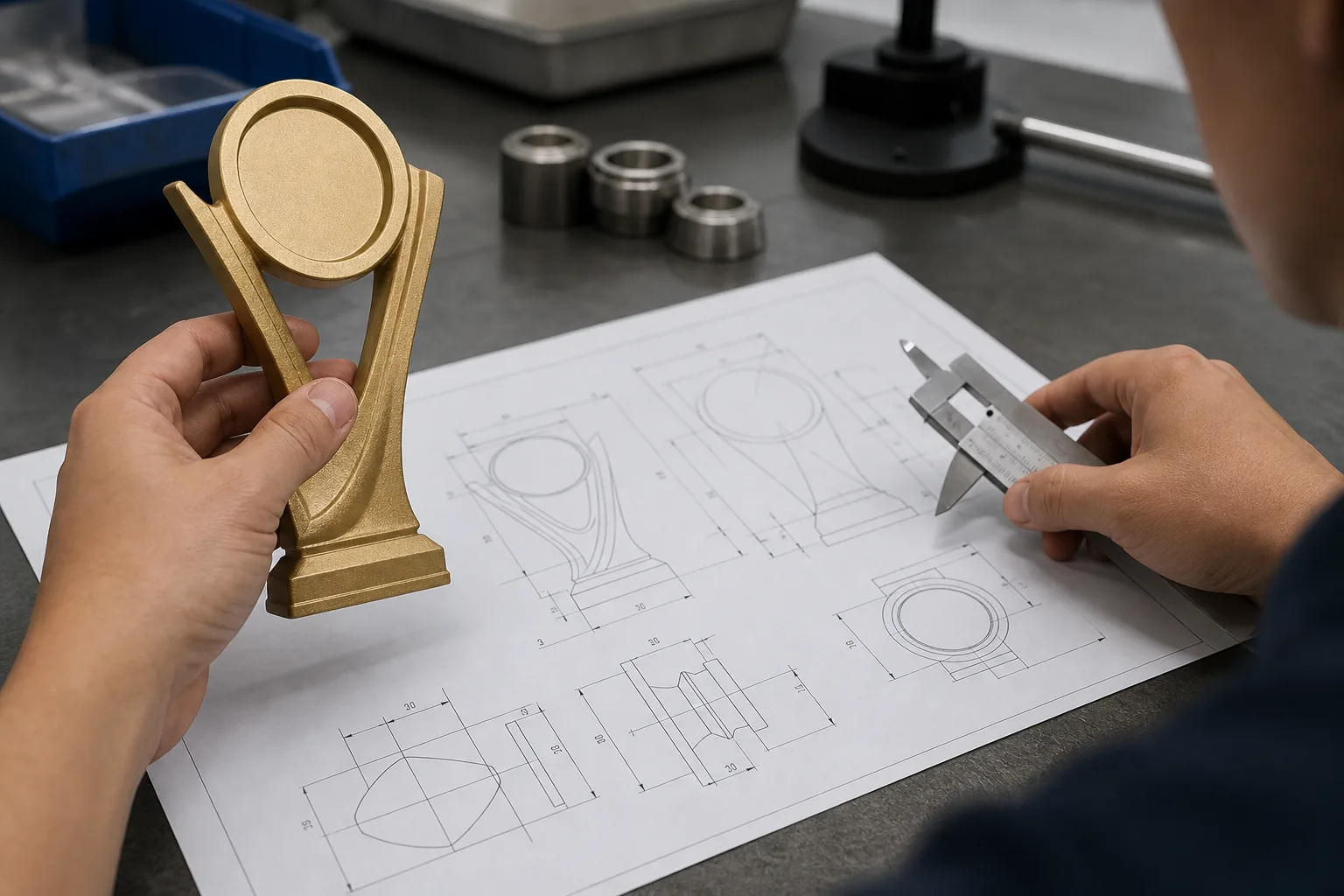
The mold review starts with the trophy concept and the intended production specification. Clear input reduces avoidable interpretation and helps determine whether the design should be adjusted before tooling begins.
- 2D artwork, dimensional drawings, or available 3D files
- Target height, width, depth, and approximate component dimensions
- Preferred metal material or a request for material guidance
- Front, back, side, relief, recessed, and open-area requirements
- Logo placement, engraving areas, nameplates, and painted details
- Base structure, attachment points, and assembly expectations
- Expected order quantity and possible reorder requirements
- Surface finish, color references, and packaging requirements
- Target event date or required delivery window
If the material has not been selected, compare the available metal material options. Buyers should also confirm that they are authorized to use any logo, event mark, school mark, association mark, team name, or other protected graphic before production.
BUYER SCENARIOS
Match the Mold Plan to the Project
A New Custom Award with a Distinctive Shape
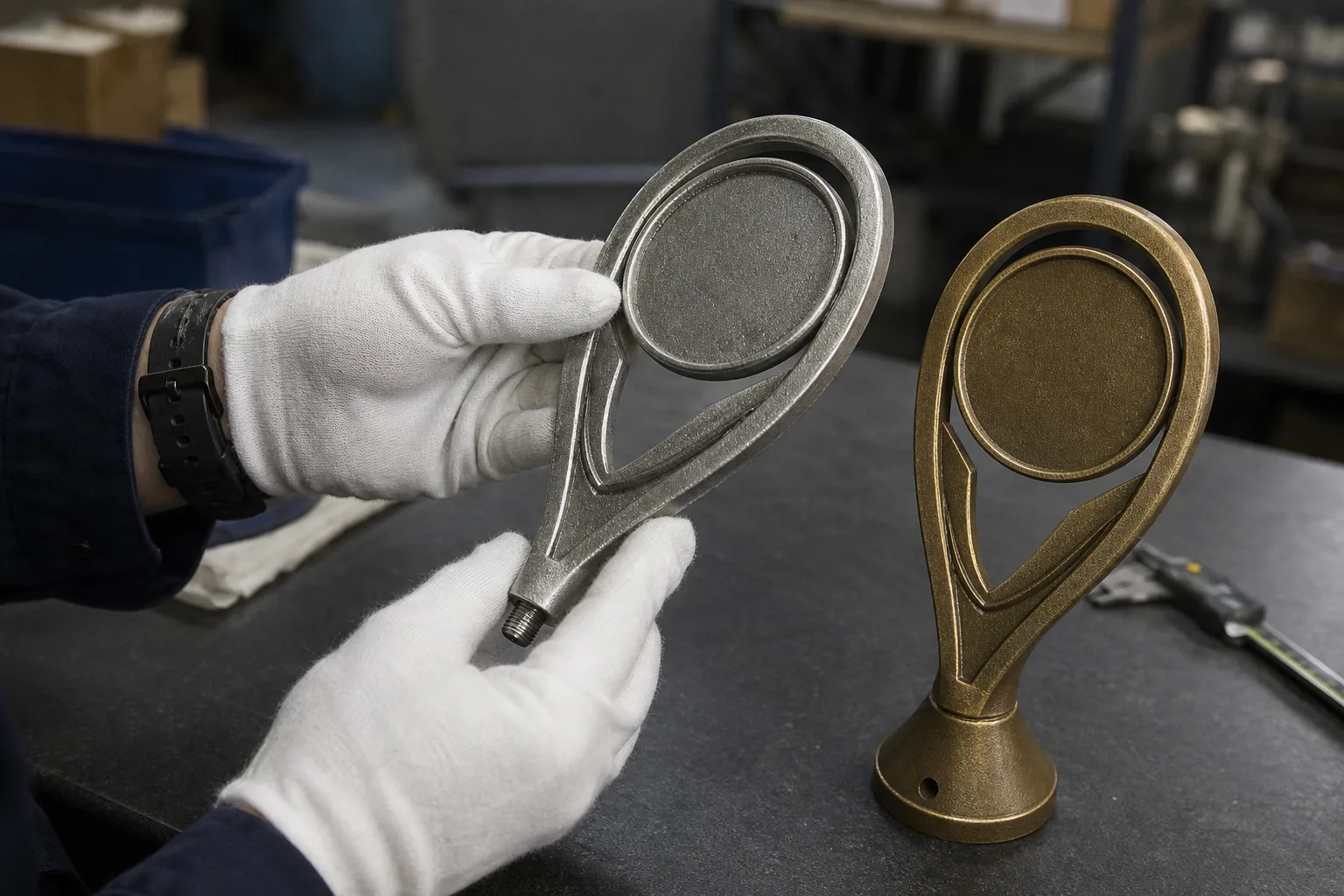
An event organizer or brand buyer may begin with a sketch or visual concept rather than a production-ready model. The main decisions include overall dimensions, relief depth, component separation, base connection, finish boundaries, and which details must remain readable after casting and surface finishing. A custom trophy design review can help organize these decisions before mold approval.
A Repeat-Supply Trophy for Distribution or Private Label
A distributor, wholesaler, or private-label buyer may place greater emphasis on reorder consistency, interchangeable personalization areas, assembly control, and packaging fit. The buyer should define which features remain fixed in the mold and which information changes by order, such as engraved names, plates, or painted accents.
| Specification Area | Decision to Confirm | Why It Matters |
|---|---|---|
| Geometry | Overall shape, relief, recesses, openings, and wall sections | Affects mold feasibility and how details form |
| Component structure | Single piece or multiple assembled parts | Affects tooling, assembly, inspection, and packaging |
| Surface design | Polished, plated, painted, textured, or engraved areas | Influences draft review, detail definition, and later finishing steps |
| Personalization | Fixed molded details or variable engraving and nameplates | Separates permanent tooling features from order-specific data |
| Reorder planning | Expected repeat use and specification control | Helps establish which files and approvals should remain unchanged |
APPROVAL STEPS
Review Each Stage Before Moving Forward
A project-specific workflow may vary with the design, material, structure, and production method. A typical review sequence includes:
- Requirement review: Check the submitted artwork, dimensions, material preference, quantity, finish, assembly, packaging, and schedule.
- Feasibility evaluation: Identify geometry, relief, wall-section, attachment, or finishing concerns that may require design changes.
- Mold-ready specification: Confirm the approved dimensions, component breakdown, permanent graphics, and relevant production details.
- Mold development: Prepare the mold according to the approved specification and selected manufacturing route.
- Trial component review: Examine the formed component for shape, detail definition, fit, and visible issues before full finishing.
- Sample production and approval: Apply the agreed finishing, engraving, assembly, and packaging details for buyer review where required.
- Production release: Begin the confirmed order after the required approvals and based on the current production schedule.
Appearance-sensitive projects can use sample production to review the physical result before bulk production. Sample approval should identify the accepted specification and any approved changes in writing.
RISK FACTORS
Reduce Rework Before Tooling Begins
Mold cost and timing depend on the trophy’s size, geometry, material, component structure, detail level, production method, revision needs, and expected use. Final pricing and lead time are subject to project review. If a trophy is needed for a fixed event date, discuss that date at the start of the inquiry.
Common mistakes include:
- Starting mold work before dimensions and component structure are approved
- Using very small or crowded details without checking whether they will remain clear
- Changing logos, dimensions, or attachment points after tooling has begun
- Treating plating, paint, engraving, and molded relief as interchangeable decoration methods
- Failing to separate permanent mold details from variable names or event data
- Approving only a front view without considering side, back, base, and assembly requirements
- Leaving packaging dimensions until after the trophy structure is fixed
Risk can be reduced through controlled files, written revision records, defined approval checkpoints, and a physical sample when the project’s appearance or fit requires one. Mold approval does not replace checks for finishing, engraving, assembly, or packaging.
NEXT STEP
Request a Project-Specific Evaluation
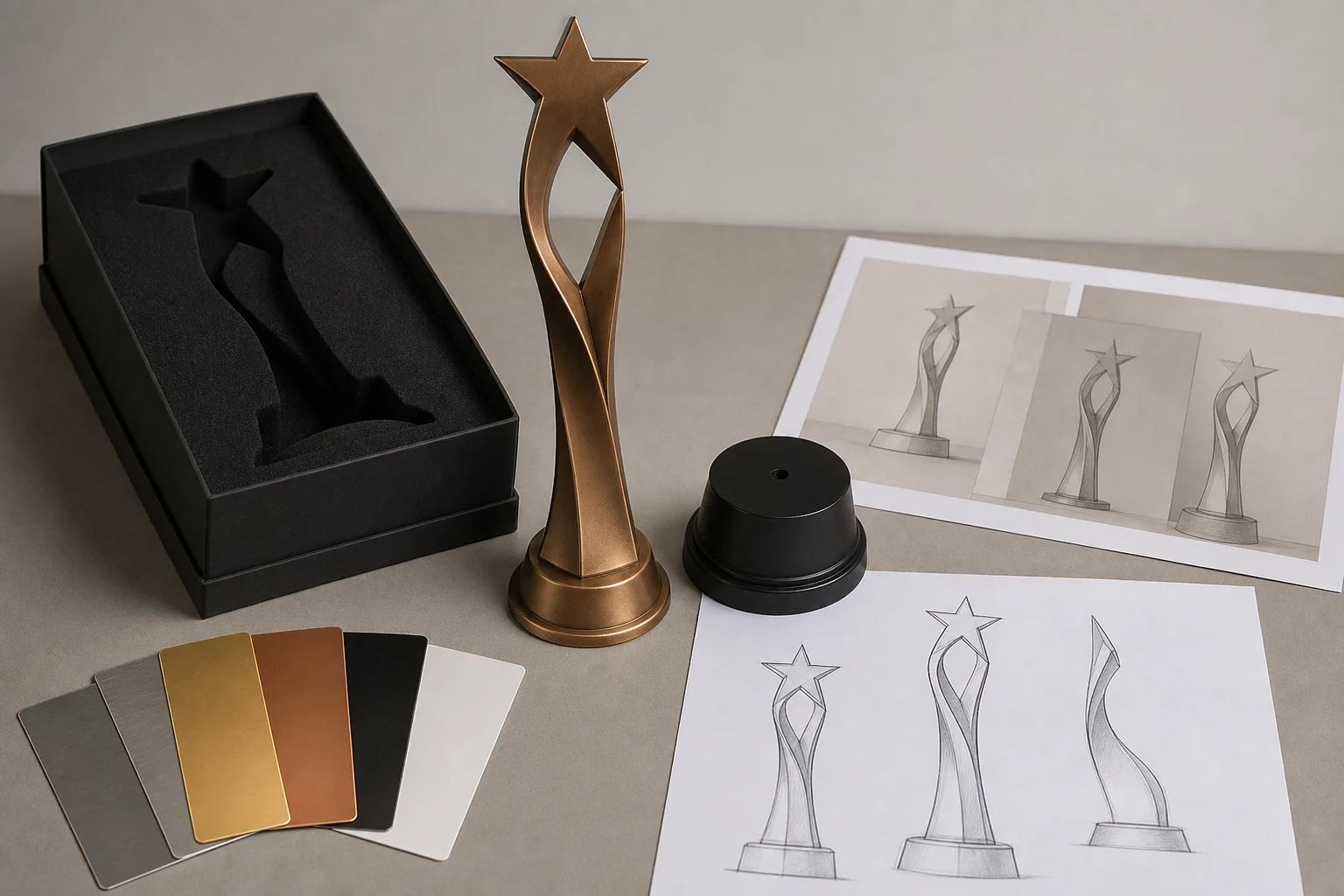
Before requesting a quotation, prepare the latest design file, target dimensions, preferred material and finish, estimated quantity, personalization plan, base requirements, packaging expectations, destination, and required delivery window. If some choices are open, clearly identify them so they can be discussed during the review.
Pricing, MOQ, mold requirements, sample needs, and timing depend on the approved design and current order schedule. For a broader commercial estimate, request a custom trophy quote. For the most direct mold-development next step, upload the current trophy design for feasibility review.
BUYER QUESTIONS
Frequently Asked Questions
Does every custom metal trophy require a new mold?
Not necessarily. Mold requirements depend on whether the project uses a new cast shape, an existing approved structure, or customization methods such as engraving, nameplates, or painted details. The design must be reviewed before the requirement can be confirmed.
What files are useful for custom trophy mold development?
Buyers can provide vector artwork, dimensioned 2D drawings, available 3D files, reference views, and notes about materials, finishes, assembly, and personalization. The usable file set depends on the design and production method.
Can the trophy design be changed after mold development starts?
Changes may be possible, but they can affect tooling, sample work, cost, and timing. Dimensions, component structure, permanent graphics, and attachment points should be reviewed before mold work begins.
How long does trophy mold development take?
Timing is project-specific and depends on geometry, material, component structure, file readiness, revision rounds, sample requirements, and the current production schedule. A fixed event date should be stated at the start of the inquiry.
Is a sample recommended after the mold is completed?
A sample is useful when the buyer needs to review physical dimensions, detail definition, finish, color, engraving, assembly, or packaging before production. The appropriate approval process depends on the project.
What affects the cost of a custom trophy mold?
Cost can be influenced by trophy size, geometry, detail level, component count, selected material, production method, revisions, and mold needs. A quotation requires review of the actual design and order specification.