
Metal Material Options for Custom Trophies
Select a metal material that supports the shape, surface appearance, structure, and budget of your custom trophy project. This page helps event organizers, distributors, procurement teams, and private-label buyers compare practical material directions before sample production. Prepare your artwork, target size, quantity, finish references, and delivery requirements, then request a project-specific quotation.
DESIGN INPUTS
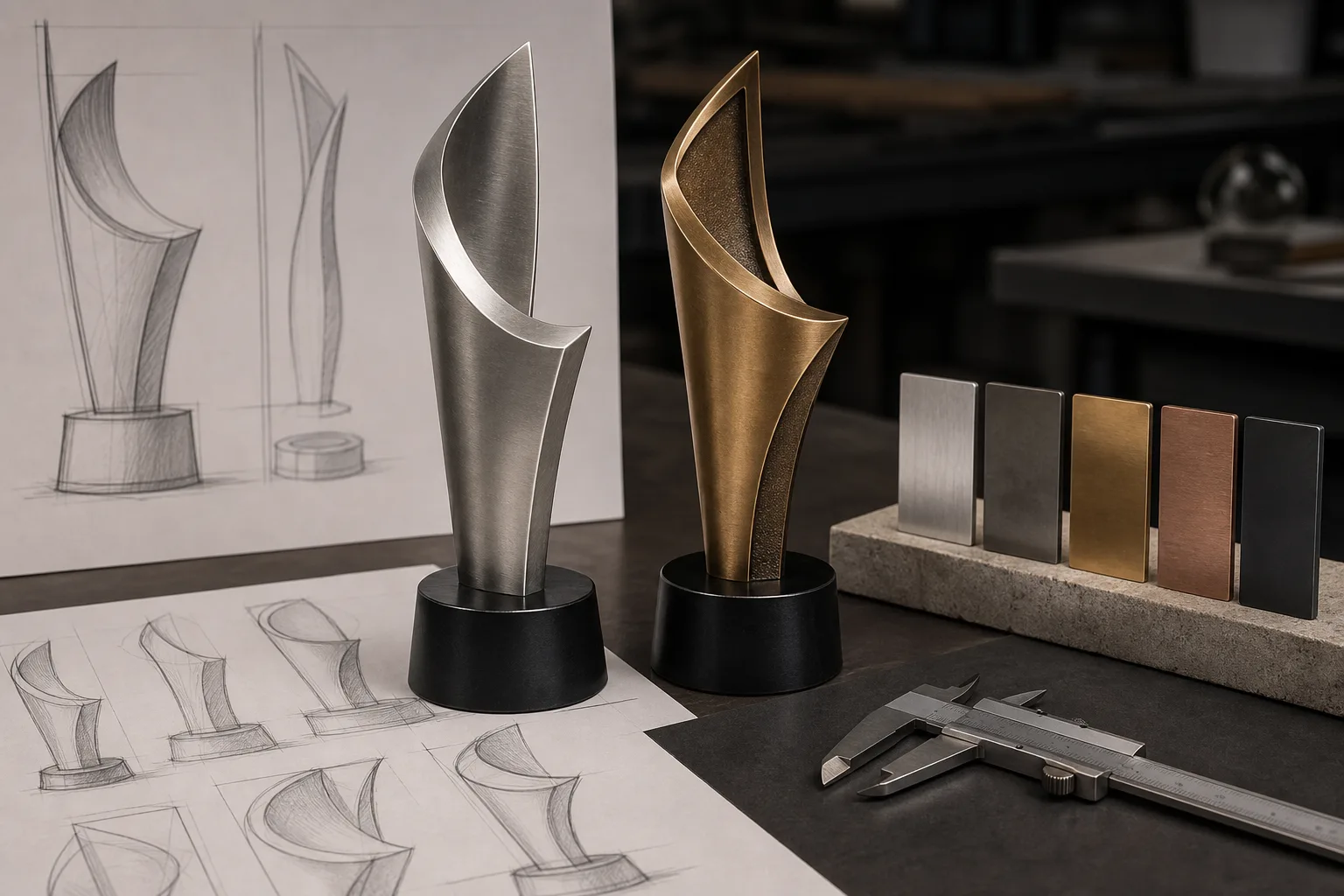
Choose Material by Shape, Structure, and Intended Appearance
A trophy material should be evaluated as part of the complete design rather than as an isolated choice. The shape, wall thickness, relief depth, connection points, base structure, finish, and packaging can all affect feasibility.
Before selecting a material, define the following points:
- Overall dimensions and desired visual weight
- Flat, formed, cast, layered, or assembled structure
- Fine relief, open areas, thin sections, or projecting details
- Electroplated, polished, brushed, painted, or mixed surface appearance
- Logo engraving, nameplates, individual names, or variable award data
- Base material, balance, attachment method, and packaging requirements
Buyers at an early concept stage can submit drawings through the custom trophy design process for an initial feasibility review.
MATERIAL COMPARISON
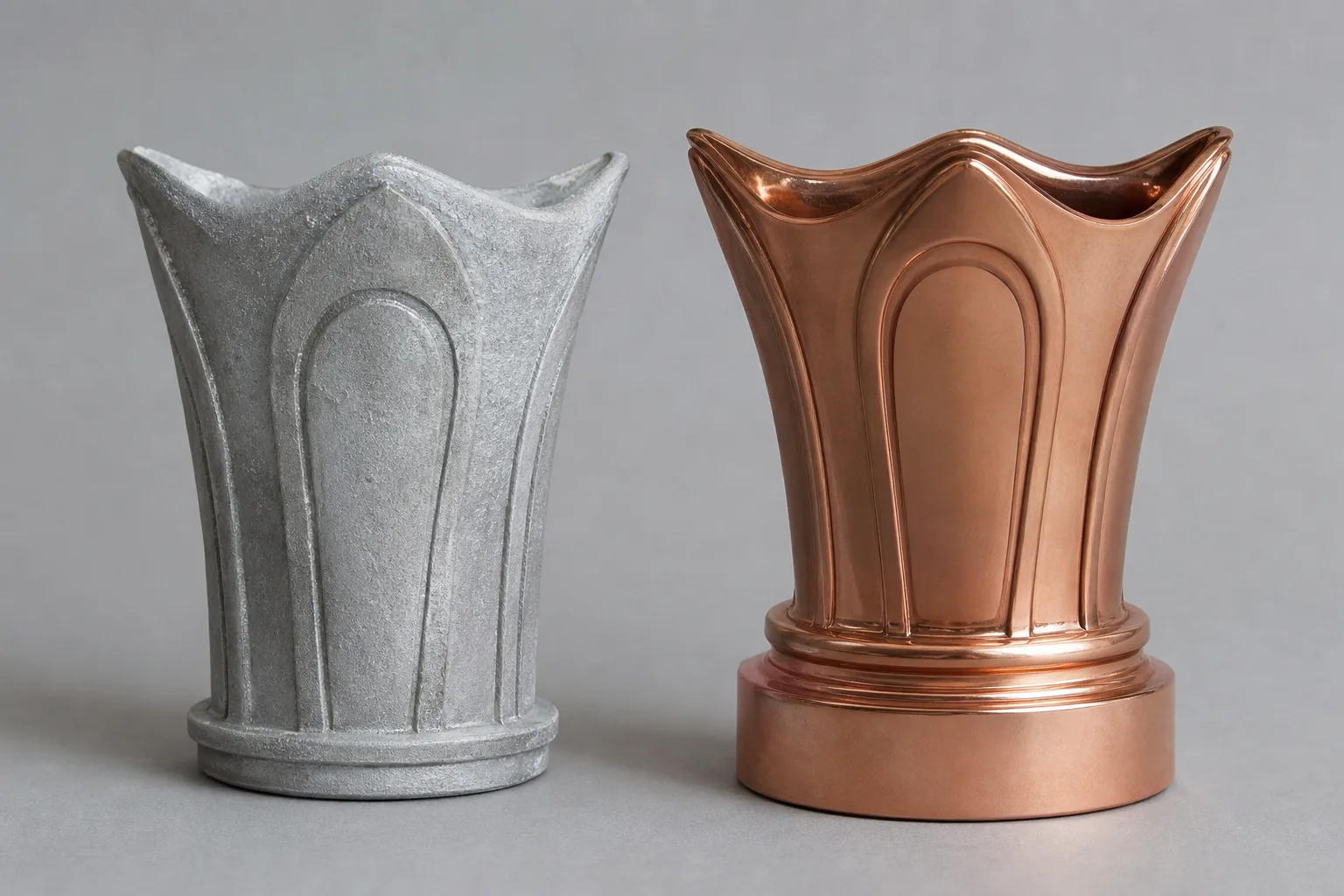
Zinc Alloy and Copper Trophy Options
The following comparison provides an initial decision framework. The final material, grade, construction method, and finish remain subject to review of the approved design and production specification.
| Metal Option | Possible Design Direction | Points to Evaluate |
|---|---|---|
| Zinc alloy | Often evaluated for cast shapes, raised relief, sculptural forms, and integrated decorative details. | Mold requirements, section thickness, part size, surface preparation, finish, weight, and assembly method. |
| Copper | May suit designs based on formed, cut, engraved, layered, or assembled metal components. | Material form, structural stiffness, edge treatment, joining method, surface appearance, and protection during packaging. |
Explore custom zinc alloy trophies and custom copper trophies when you need a product-specific starting point. Exact suitability depends on the artwork, dimensions, process route, quantity, and finish requirements.
FINISH PLANNING
Plan the Base Metal and Surface Appearance Together
The selected metal creates the underlying structure, while finishing controls much of the visible color, gloss, texture, and contrast. A metal choice should not be approved only from a color reference because similar-looking finishes may require different preparation or process steps.
Finish Questions to Resolve
- Is the target appearance bright, satin, brushed, antique, painted, or mixed?
- Which areas require contrast, recessed color, or exposed metal?
- Are front, back, edges, and hidden assembly areas included in the finish specification?
- Will engraved or personalized areas be finished before or after marking?
- Is a physical sample needed to review color, reflection, and surface consistency?
Review available electroplating finish considerations separately from the base-metal decision. Finish feasibility remains dependent on the material, geometry, surface preparation, and approved appearance standard.

BUYING SCENARIOS
Material Decisions for Different Trophy Programs
01
One Custom Award or a Small Presentation Set
For a one-off award or a small set, the buyer should first determine whether the design requires a new mold or can use an assembled structure. The team should also confirm the size, desired visual weight, personalization, finish, base, and presentation packaging. Regular custom products are usually available from one piece, but the exact MOQ depends on structure, size, material, process, mold needs, and packaging.
02
Repeat Awards for Events, Distribution, or Private Label
For repeat programs, the buyer should consider how future orders will reproduce the approved material, finish, dimensions, logo position, nameplate format, and packaging. Version control is important when recipient names, award levels, event dates, or private-label packaging change between batches. Reorder feasibility and timing should be confirmed against the current specification and production schedule.
APPROVAL PROCESS
Review Material Feasibility Before Bulk Production
A structured approval process helps reduce misunderstandings about weight, color, texture, detail, and assembly.
- Submit the design files, dimensions, quantity, finish references, personalization plan, and intended delivery date.
- Review whether the proposed material supports the shape, relief, wall thickness, connections, base, and finish.
- Confirm mold requirements, material direction, construction method, accessories, and packaging specification.
- Produce a sample when required and review its dimensions, appearance, engraving, assembly, balance, and packaging.
- Approve the documented specification before bulk production planning.
The scope and timing of custom trophy sample production depend on the design, material, tooling, finish, and current order schedule. A sample is an approval checkpoint, not a substitute for a complete written specification.
INQUIRY CHECKLIST
What to Send for Material Evaluation and Quotation
Provide enough information to compare feasible options instead of requesting a material recommendation from a reference image alone.
- Vector artwork, 2D drawing, 3D file, or clear concept image
- Target height, width, depth, and base dimensions
- Required quantity and expected reorder pattern
- Preferred metal or permission to propose an alternative
- Finish references and clearly identified painted details
- Logo, engraving, nameplate, and variable recipient data
- Base structure, accessories, and packaging expectations
- Destination and required event date, if applicable
Common risks include selecting material by color alone, using details that are too thin for the intended structure, leaving the back or edges unspecified, overlooking trophy balance, and approving artwork without confirming authorization for protected marks. Buyers should confirm permission to use company logos, team names, school marks, association marks, and event graphics before production.
Pricing depends on artwork, size, material, quantity, surface finish, accessories, personalization, and packaging. Timing is project-specific, and a fixed event date should be discussed at the start of the inquiry. The next step is to request a custom trophy quote with your design files and material requirements.
BUYER QUESTIONS
Frequently Asked Questions
Which metal material is suitable for a custom trophy with raised details?
Zinc alloy is often evaluated for cast shapes and raised relief, but suitability depends on the dimensions, detail depth, wall thickness, mold requirements, finish, and assembly design.
Can Me Trophy recommend a material if I only have a concept image?
A concept image can support an initial discussion. More reliable evaluation requires target dimensions, quantity, desired finish, structural expectations, personalization details, and packaging requirements.
Does the metal material determine the final trophy color?
Not by itself. The visible color and texture also depend on surface preparation, electroplating, polishing, brushing, painting, and other approved finishing steps.
Is one custom metal trophy possible?
Regular custom products are usually available from one piece. The exact MOQ depends on the structure, size, material, process, mold needs, and packaging.
Should I request a sample before placing a bulk order?
A sample can be useful when appearance, dimensions, engraving, balance, assembly, or packaging requires physical review. Sample feasibility, cost, and timing depend on the project specification and current order schedule.
What affects the price of different metal material options?
Pricing depends on the artwork, size, material, quantity, mold requirements, surface finish, accessories, personalization, assembly, and packaging. A project-specific quotation requires these details.