
When a buyer sends a vague brief, each supplier has to guess different parts of the project: structure, finish, artwork, packaging, sampling, and delivery assumptions. That is why a custom trophy RFQ can produce quotes that look comparable on price but are not comparable in scope. If you want a cleaner quotation process, start by defining the award purpose and then convert the idea into measurable, quote-ready inputs. For teams that want a manufacturing review before formal submission, Me Trophy can assess a rough brief through its OEM trophy manufacturing process so missing items can be identified early.
This guide shows how to turn a loose inquiry into a specification set that manufacturers can quote against with less ambiguity. It is written for procurement managers, agencies, event organizers, and product developers who need a practical way to compare offers, reduce clarification cycles, and separate confirmed requirements from assumptions.
Why Trophy RFQs Become Incomparable
The core problem is not that suppliers quote differently for the same item. The real problem is that many RFQs are not actually asking for the same item. A short message such as custom award for our event, need quote, send ideas leaves room for multiple interpretations. One manufacturer may assume a solid metal trophy with plated finish and individual packing, while another may price a lighter construction with simpler graphics and standard cartons. The numbers are not wrong, but the scope is different.
Quote gaps usually appear when the RFQ omits one or more of these points:
- Exact dimensions, so the supplier chooses a size that changes tooling, structure, and freight assumptions.
- Finish names, so gold-plated, brass-colored, brushed, satin, or painted surfaces are all interpreted differently.
- Artwork detail, so logo complexity, text count, and personalization are priced inconsistently.
- Packaging expectations, so gift box, insert, and transit protection are not treated the same way.
- Delivery terms, so freight responsibility and landed cost assumptions are not aligned.
For this reason, Me Trophy should be treated as a manufacturer and project partner that reviews the brief before quotation, not only as a place to receive a price. If the RFQ is still rough, a short design or manufacturability review can expose missing inputs before they become quote disputes. If you are still shaping the concept, a quick request a quote submission with notes about what is confirmed and what is still open is often better than sending an unstructured email chain.
| Weak RFQ input | Typical result | Better practice |
|---|---|---|
| Need trophy for annual event | Suppliers assume different styles, audiences, and finishing levels | State the event, award purpose, and who will receive it |
| About 20 cm tall | Different suppliers may quote different structures at different costs | Give exact dimensions or a dimensioned sketch |
| Gold look | Plating, paint, lacquer, and color tone may vary | Name the finish direction and expected surface quality |
| Simple logo on front | Artwork size, placement, and method are guessed | Show placement, file version, and decoration method |
Project Purpose, Quantity, and Delivery-Market Inputs

Start the RFQ with the business reason for the trophy, not only the object description. A championship award, a corporate recognition piece, a distributor program, and an exhibition souvenir can all look similar in a mood board, but they often need different proportions, visual hierarchy, and packaging discipline. Write the purpose in one sentence, then define the audience, presentation setting, and use case so the manufacturer can judge structure and finish choices correctly.
The basic commercial inputs should be stated as clearly as the design inputs. List the quantity needed, the ship-to country, the destination market, and whether the order needs split shipping or delivery to multiple sites. If your project has a fixed event date, note it as an internal milestone, but do not assume production or freight timing. Lead time, MOQ, price, and any other company-specific commercial conditions must be confirmed directly with Me Trophy rather than guessed in the RFQ.
When the audience, quantity, and destination are defined together, the supplier can quote the right production logic instead of a generic unit price. That matters because one award may need event-ready packaging for a single venue, while another may need export cartons, label sets, and staged delivery across several regions. For buyers who want to compare multiple offers on a like-for-like basis, the key is to make destination-market assumptions visible on the first page of the RFQ.
| RFQ field | What to include | Why it matters |
|---|---|---|
| Project purpose | Competition, corporate recognition, sponsorship, or commemorative use | Shapes the visual language and structure |
| Audience | Winners, executives, athletes, guests, distributors, or VIPs | Influences perceived value and presentation format |
| Quantity | Confirmed order quantity and any planned repeats | Helps the manufacturer plan tooling, assembly, and packing scope |
| Destination | Country, city, site, and any split-shipment needs | Clarifies freight and export assumptions |
| Commercial items | Leave open items clearly marked for confirmation | Prevents hidden assumptions from entering the quote |
Dimensions, Weight, Materials, and Finish Specifications
A quote-ready trophy specification should tell the manufacturer what the award must physically be, not only how it should look. State exact dimensions whenever possible: overall height, width, depth, base size, and any special projection that affects balance or packaging. If the piece must fit a podium, display case, retail carton, or shipping limit, say so explicitly. When weight matters, provide an approximate target only if the project already has one; otherwise, describe the practical constraint, such as easy hand-carry presentation or compact transit packing.
Material choice should be described in consistent terminology. If the project calls for a metal body, identify the metal family or process preference, such as die-cast metal, zinc alloy, copper-based elements, or a mixed-material structure. If you are comparing plated and painted effects, specify where each finish should appear and whether the base material will remain visible. For projects built around plated or cast awards, the product framing on custom metal trophies can help buyers align the visible design idea with the underlying manufacturing route before they finalize the RFQ.
Finish language should be as precise as the shape. Instead of saying nice gold, explain whether the project needs polished, satin, brushed, antique, matte, lacquered, color-filled, or a mixed surface approach. If the finish changes by zone, describe each zone separately: face, rim, edge, column, base, insert, or emblem. This matters because finish sequencing can affect polishing, masking, painting, plating direction, and inspection expectations.
If the structure is not yet locked, a short design evaluation can help confirm whether the concept is practical before you circulate the RFQ to multiple suppliers. The goal is not to over-engineer the brief. The goal is to make sure every manufacturer is quoting the same object, the same surfaces, and the same level of finishing.
What a good spec sheet should show
- A dimensioned front, side, or isometric view.
- Any approximate weight target or handling constraint.
- Material notes for the body, base, insert, and accessory parts.
- Finish callouts for each visible zone.
- Reference photos or sketches with annotations where wording alone is not enough.
Artwork, Logo, Personalization, and File Requirements
Artwork is one of the fastest ways to turn a simple RFQ into a messy one. Manufacturers need to know what will be engraved, printed, cast, etched, embossed, laser-marked, or applied as a separate emblem. State the exact logo placement, text copy, language versions, recipient names, event titles, and any personalization rules. If every trophy has a different name plate, say whether the names are variable, fixed, or supplied later in a separate file.
Do not send artwork without version control. Label the file revision, approval status, and which file is binding for quotation. If the design is still developing, use one reference file for concept discussion and one final version for quote comparison. This is especially important when multiple stakeholders are involved, because a manufacturer should not have to guess whether an early draft or a later correction is the version to price against. For concept development, combine references, sketches, and a clear custom trophy design brief so the production team can see the intended result rather than a loose mood board.
Editable vector artwork is usually the safest starting point for logo and line-based decoration. Adobe’s file-format guidance lists common supported formats such as AI, PDF, EPS, and SVG, which makes it a useful reference when a buyer is deciding what to request from its design team or agency. For photo-based or raster artwork, include resolution expectations and explain where the image will be used so the supplier can confirm whether it is suitable for production.

A practical RFQ should also specify what happens after artwork review. Say whether the manufacturer should quote one proof round, whether there is a formal approval gate, and whether final artwork will be supplied as a separate deliverable after order confirmation. If the naming or logo package is not final, mark those fields as pending rather than leaving them blank. That helps the manufacturer quote the physical award while making the open artwork scope visible.
| Artwork field | Buyer should specify | Why it matters |
|---|---|---|
| Logo placement | Front, back, base, side, top, or multiple zones | Affects tooling, decoration, and layout |
| Text content | Exact wording, line breaks, and language versions | Prevents rework after proofing |
| File version | Approved revision and file owner | Ensures everyone quotes the same artwork |
| File type | Editable vector or high-resolution image, as applicable | Determines whether the file is production-ready |
| Personalization | Name list, variable fields, and data source | Shows how much manual handling the job requires |
Supported file formats for Illustrator
Sampling, Packaging, Inspection, and Shipping Expectations
Sampling should be part of the RFQ if the project is sensitive to appearance, fit, or presentation. State whether you need a concept sample, pre-production sample, or production approval sample, and indicate what must be checked at that stage. Some buyers only need artwork confirmation, while others need physical approval for finish, balance, or packaging fit. If a sample is required, ask the manufacturer to quote that stage separately so the approval path is visible from the start.
Packaging is not just an afterthought. It affects appearance, protection, carton count, and export handling. Specify whether the trophy should arrive in a gift box, protective insert, foam tray, folded carton, or transit-ready outer pack. If you need retail-style presentation, say so. If you need bulk packing for distribution, say that too. Carton labeling should also be described if there are country marks, product codes, or recipient-specific labels.
Inspection expectations should be written in the RFQ, especially for overseas projects where the buyer and manufacturer are not on the same site. If appearance, logo alignment, finish consistency, or packaging presentation are critical, list those priorities explicitly. Me Trophy’s quality control page is relevant here because it reminds buyers to treat inspection criteria as part of the quotation scope, not a separate assumption added later.
For cross-border shipments, name the delivery term and the named place of delivery with care. The ICC’s Incoterms 2020 guidance is the official reference for trade terms such as EXW, FOB, and DDP, and it is useful when the RFQ needs to define where responsibility for freight, risk, insurance, and clearance changes hands. If you do not know which term will be used, leave the term open and mark it for confirmation rather than implying a default.
| Shipping field | What to write | Risk if omitted |
|---|---|---|
| Delivery term | Exact Incoterm 2020 rule and named place | Freight and risk responsibilities stay unclear |
| Packaging level | Gift box, inner protection, or bulk carton | Suppliers price different protection levels |
| Inspection priority | Appearance, function, packing, or label accuracy | Quality checks may not match buyer expectations |
| Shipment pattern | Single destination or split delivery | Carton planning and logistics can be misquoted |
A Final RFQ Completeness Check Before Submission
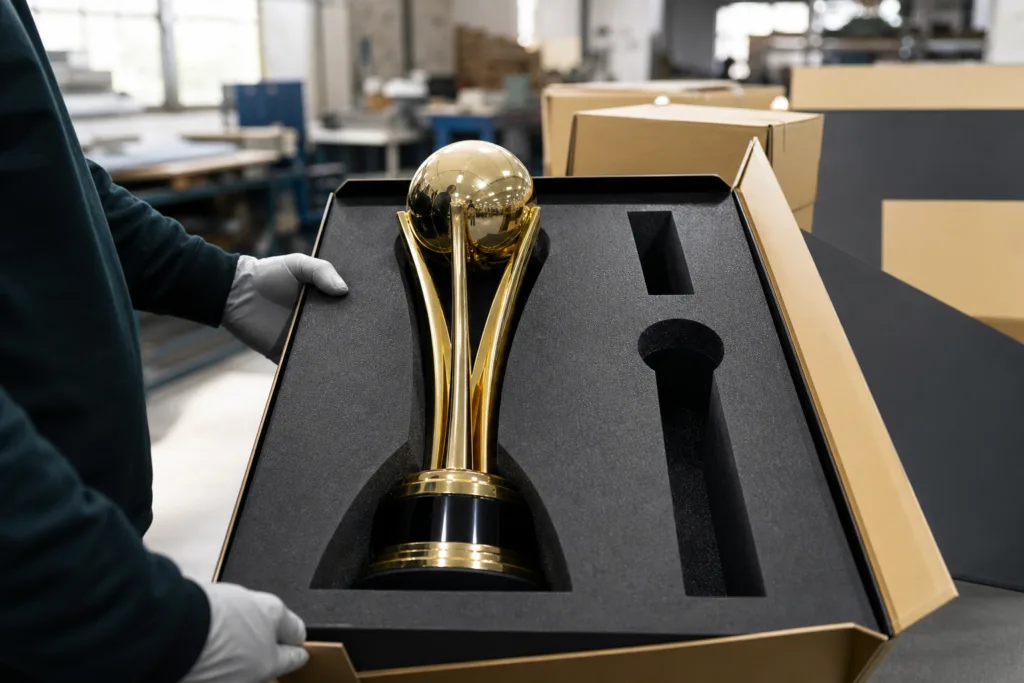
Before you send the inquiry, review the RFQ as if you were the manufacturer. Can they identify the purpose, quantity, size, material, finish, artwork, packaging, and delivery scope without making assumptions? If the answer is no, the RFQ is not ready for apples-to-apples comparison. A complete brief does not need to be long, but it does need to be consistent.
| Checklist item | Yes or no |
|---|---|
| Project purpose and audience are stated | |
| Quantity and delivery market are confirmed | |
| Dimensions and structure are defined | |
| Material and finish language is consistent | |
| Artwork files and revision status are clear | |
| Sampling needs are identified | |
| Packaging expectations are written down | |
| Inspection priorities are included | |
| Delivery term and named place are stated or marked for confirmation |
If you are comparing quotations from multiple suppliers, only compare them after the same specification set has been issued to all of them. A lower price can simply reflect a smaller scope, lighter packaging, or a different interpretation of the design. The right comparison is not quote versus quote. It is quote versus the same RFQ.
When the specification is complete, return to Me Trophy through the OEM trophy manufacturing page or send the same brief with a request a quote so the project can be reviewed for quotation completeness and any open commercial items can be confirmed directly. That is the point at which the buyer and manufacturer are discussing the same award, not two different interpretations of it.
FAQ
What should always be included in a custom trophy RFQ?
At minimum, include the project purpose, quantity, delivery market, dimensions, material direction, finish expectations, artwork requirements, packaging expectations, and any sampling or inspection needs. If any commercial terms are still open, mark them clearly as to be confirmed rather than leaving them implied.
How detailed should dimensions and finish specifications be?
As detailed as needed to remove ambiguity. Provide exact dimensions when possible, plus notes about weight sensitivity, base size, and any fit limits. For finishes, use consistent wording for visible zones so the manufacturer knows whether you want polished, brushed, matte, plated, painted, or mixed-surface treatment.
What artwork files should I send with the RFQ?
Send the most recent approved logo or artwork files, preferably editable vector files when line accuracy matters. Also include text copy, language versions, placement notes, and the file revision that is valid for quotation. If the artwork is still changing, say so in the RFQ.
Should I ask for samples before bulk production?
Ask for samples whenever appearance, fit, finish, or presentation quality is important enough to justify an approval stage. Define the sample type you need and make sure the sampling stage is quoted separately if it is part of the project scope.
How do I compare quotes from different trophy manufacturers?
Compare only after each supplier has received the same RFQ version. Check whether dimensions, material, finish, artwork, packaging, inspection, and delivery terms are truly aligned before deciding that one quote is cheaper or better. Otherwise, the quotes may reflect different assumptions rather than different prices for the same item.