
Metal Trophy Material Guide
Compare practical material paths for a made-to-order metal trophy, understand which project details affect feasibility, and prepare a clearer inquiry for your event, award program, or resale order. Primary CTA: Request a custom trophy quote
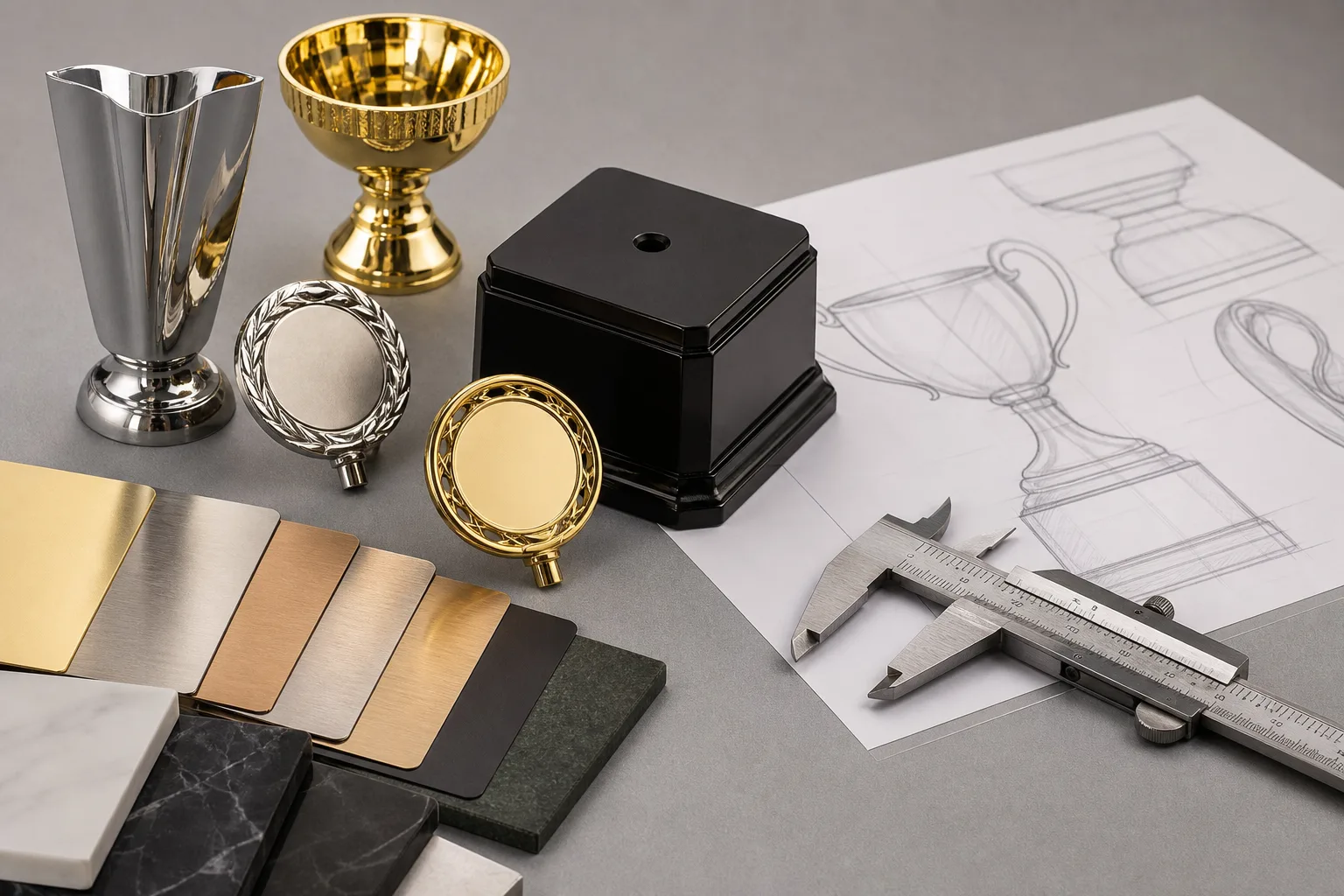
SPECIFICATION FIRST
Start With the Trophy Specification
Material selection follows the design and use case. A metal name alone does not define the finished trophy. The right route depends on the artwork, size, shape, structure, quantity, surface finish, personalization, accessories, base, and packaging requirements. Mold needs and assembly details can also affect feasibility, cost, and production lead time.
Before selecting a material, define the parts that must carry fine relief, color, engraving, or structural loads. A trophy may combine a metal body with a separate base, nameplate, or other approved components. Review the available custom trophy material options as part of the complete specification rather than as an isolated purchasing decision.
- Intended event, award program, or sales channel
- Target dimensions and approximate weight expectations
- Two-dimensional, relief, or three-dimensional artwork
- Preferred metal appearance and painted details
- Base structure, engraving, and personalization data
- Order quantity, packaging needs, destination, and required event date
MATERIAL PATHS
Compare Material Families on Project Requirements
Zinc alloy and copper are separate material paths, but neither should be selected from appearance alone. The approved artwork, construction, finishing plan, quantity, and packaging specification should be evaluated together. Exact alloy composition and technical performance must be confirmed for the individual project rather than assumed from a general guide.
| Material Path | What to Evaluate | Questions for the Supplier |
|---|---|---|
| Zinc alloy | Compatibility with the proposed form, relief, mold plan, finish, assembly, and quantity | Does the artwork need changes for mold feasibility? Which details require separate parts or painted treatment? |
| Copper | Compatibility with the proposed construction, surface treatment, engraving, assembly, and approved appearance | How will the design be produced and finished? Which dimensions and details need confirmation before sampling? |
For a more focused decision framework, use the zinc alloy versus copper trophy comparison. Final selection remains subject to design evaluation and an approved specification.
Material, process, and finish are different decisions. Material identifies what the metal component is made from. Casting describes how a form may be produced, while electroplating, painting, polishing, and engraving describe later appearance or identification steps. For example, a buyer reviewing die-cast metal trophy options should still confirm the proposed material, mold requirements, finish, and assembly plan.
BUYER SCENARIOS
Match the Decision Process to the Project
Scenario 1: A new championship trophy An event organizer with original artwork should first confirm the overall silhouette, relief depth, base structure, award levels, quantity, personalization, packaging, and fixed event date. If the concept is incomplete, the useful next step is to upload the trophy design for evaluation. Material selection should follow a review of mold feasibility and the intended finish.
Scenario 2: A repeat corporate award program A procurement team planning recurring awards should define which elements remain fixed and which change by recipient or award cycle. The team should review nameplate data, color references, engraving fields, packaging, sample approval records, and reorder specifications. Consistent source files and an approved reference sample can reduce ambiguity between orders.
Scenario 3: A distributor or private-label order A distributor should evaluate the product specification together with order quantity, branding authorization, packaging, labeling, and destination requirements. Any customer logo, school mark, association mark, team name, or event graphic should have confirmed authorization before production.
SELECTION SEQUENCE
Move From Concept to Approved Material Specification
- Define the trophy’s purpose, dimensions, structure, quantity, award levels, and event deadline.
- Submit artwork with views, dimensions, relief expectations, and editable source files where available.
- Review material and process feasibility, including mold needs, separate components, surface preparation, finishing, engraving, and assembly.
- Confirm the appearance specification with color references, finish descriptions, logo placement, and base details.
- Review a sample when appearance, fit, personalization, or packaging needs physical approval. Buyers can request a trophy sample subject to project requirements.
- Approve the final specification, personalization data, packaging, quantity, and schedule before production.
Timing is project-specific and depends on the design, material, process, mold needs, sample approval, quantity, packaging, and current order schedule. Discuss a fixed event date at the start of the inquiry.
COMMON MISTAKES
Reduce Avoidable Specification Risk
- Choosing a material from a reference photo without confirming dimensions, structure, and production method
- Treating a plated or painted appearance as proof of the underlying metal
- Comparing a material, a casting process, and a finish as if they were equivalent options
- Approving artwork without checking small relief details, engraving space, separate parts, or base connections
- Leaving recipient names, award levels, logo files, or color references until production planning is underway
- Assuming an earlier sample or quotation applies after the design, quantity, finish, or packaging changes
- Using protected marks without confirming the buyer’s authorization to reproduce them
A written specification and approved sample can help align expectations, but both must match the intended production order. Any later revision should be reviewed for effects on feasibility, price, and timing.
QUOTATION PREP
What to Send for a Quotation
Prepare the clearest available design package so the material recommendation can be tied to the actual trophy rather than a generic category.
- Artwork, sketches, reference images, and editable files where available
- Target height, width, depth, and preferred base dimensions
- Required quantity and any award-level variations
- Preferred material or appearance, if already specified
- Electroplating, painted color, polishing, engraving, and nameplate requirements
- Logo placement and confirmation that protected marks are authorized
- Individual names, numbering, or other variable data requirements
- Packaging expectations, delivery destination, and fixed event date
Regular custom products are usually available from one piece, but the exact MOQ depends on structure, size, material, process, mold needs, and packaging. Pricing also depends on the approved artwork, quantity, surface finish, accessories, personalization, and packaging.
Send the design, dimensions, quantity, finish preferences, packaging needs, and target date to request a material-specific trophy quotation.
BUYER QUESTIONS
Frequently Asked Questions
Which metal material should I choose for a custom trophy?
The choice depends on the artwork, dimensions, structure, quantity, mold needs, finish, assembly, base, personalization, and packaging. A design evaluation is needed before confirming the material.
Is die casting a type of trophy material?
No. Die casting describes a manufacturing process, while zinc alloy and copper identify material families. The process, material, and finish should be specified separately.
Can the same finish be used on every metal trophy material?
Finish suitability depends on the proposed material, surface preparation, geometry, color requirements, and production process. Confirm the finish as part of the approved project specification.
Do I need a sample before placing a bulk order?
A sample is useful when appearance, dimensions, fit, assembly, personalization, or packaging requires physical approval. Whether it is needed depends on the project and should be discussed during quotation.
What affects the MOQ for a metal trophy?
Regular custom products are usually available from one piece, but exact MOQ depends on the trophy’s structure, size, material, process, mold requirements, and packaging.
What files should I provide for a material review?
Provide available artwork or editable design files, dimensions, quantity, finish references, base details, personalization requirements, packaging expectations, destination, and any fixed event date. Confirm authorization for protected logos or marks before production.