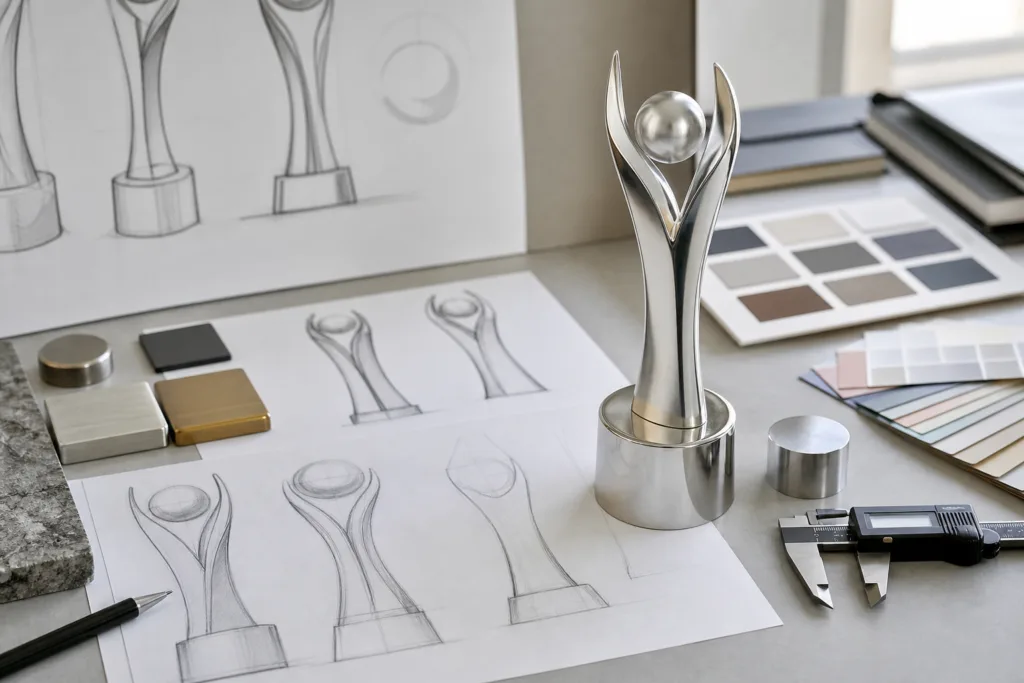
Die Casting vs Sand Casting for Custom Trophies
Compare how die casting and sand casting affect trophy detail, tooling, surface preparation, order planning, and design flexibility. This guide is for buyers evaluating a metal trophy concept before mold development or sample approval. Talk to a trophy specialist to review which casting path may suit your artwork, quantity, finish, and schedule.
PROCESS BASICS
What Is the Main Difference Between Die Casting and Sand Casting?
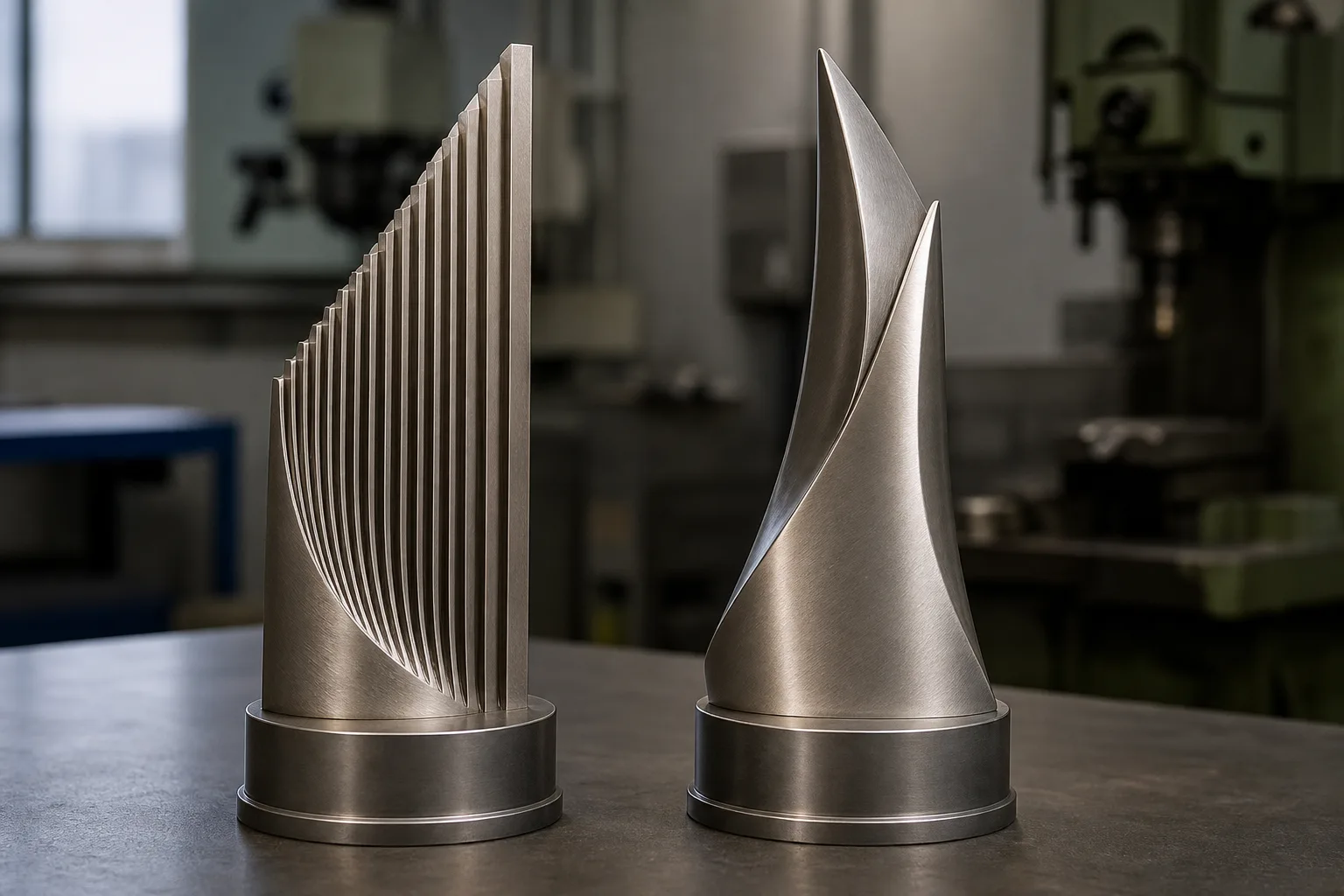
Die casting forms metal in a reusable metal die, while sand casting uses a prepared sand mold that is normally remade for each casting cycle. This difference affects tooling decisions, repeat consistency, surface condition, detail, structure, and the practical quantity range of a project.
Die casting is often considered when a design needs repeatable shapes, defined decorative features, and planned production quantities that can support dedicated tooling. Sand casting may be considered for larger, thicker, simpler, or lower-repeat structures where reusable die tooling is not the preferred route.
Neither process is automatically better for every trophy. The decision should begin with the approved design, compatible metal, dimensions, wall structure, quantity, finish, and future reorder plan. Buyers still selecting a metal can review the metal trophy material guide before comparing casting processes.
BUYING FACTORS
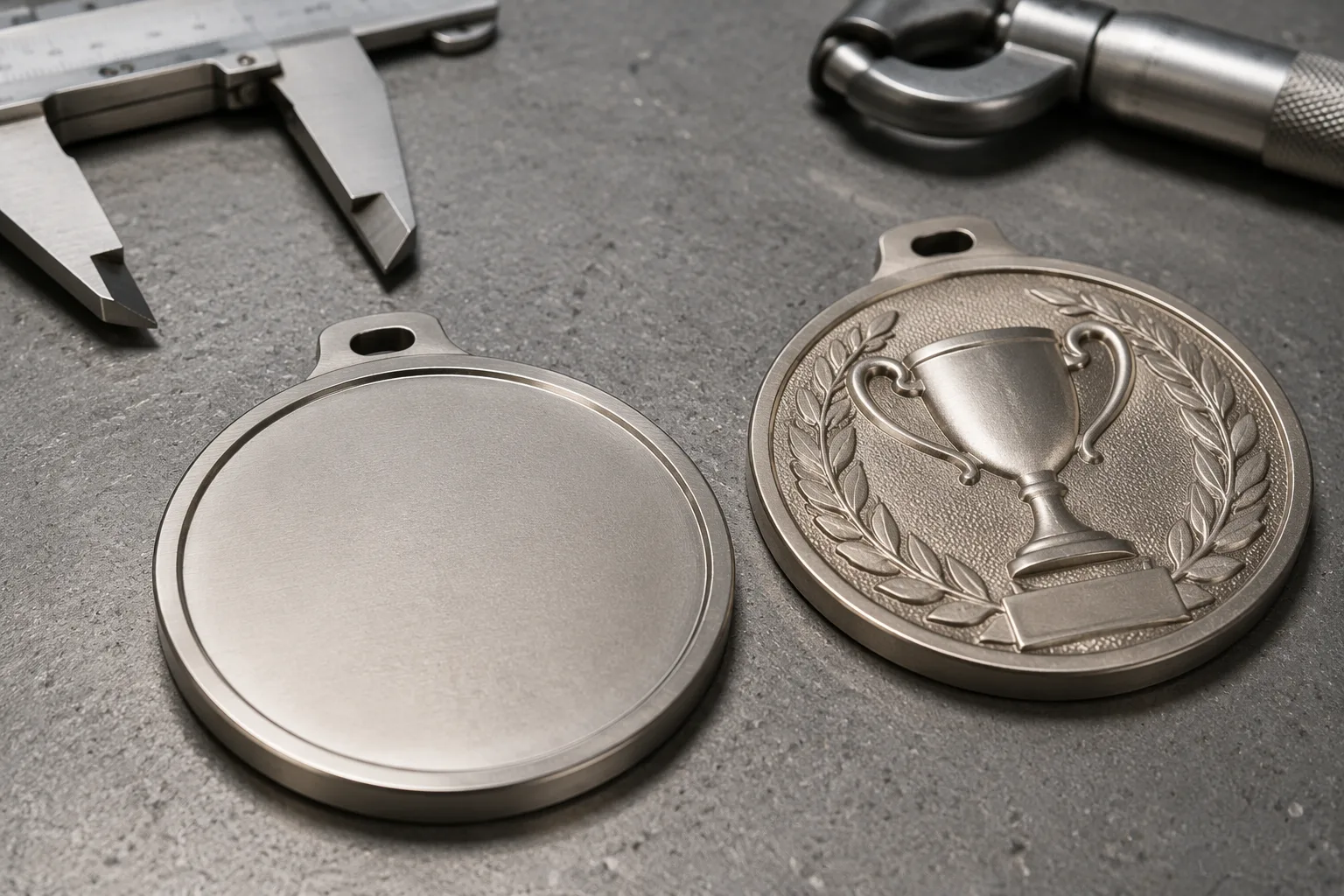
Die Casting vs Sand Casting Trophy Comparison
| Decision Area | Die Casting | Sand Casting |
|---|---|---|
| Tooling approach | Uses dedicated reusable die tooling that requires feasibility review and an upfront tooling decision. | Uses prepared sand molds and may offer a different setup path for lower-repeat or larger structures. |
| Detail and consistency | Often suitable for repeated decorative details and more consistent part geometry, subject to design and process control. | May be better suited to broader forms and less intricate surface detail. |
| Surface condition | Can provide a more controlled starting surface, although polishing and preparation may still be required. | Typically requires more attention to surface cleanup and preparation before a decorative finish. |
| Structure and scale | Commonly considered for repeatable components designed around die-filling and release requirements. | Can be considered for larger, heavier, thicker, or simpler forms, depending on the metal and design. |
| Design changes | Changes after tooling approval can affect cost and timing because the die may need modification or replacement. | Pattern and mold changes may follow a different workflow, but revisions can still affect cost, timing, and feasibility. |
| Order planning | Often becomes more commercially practical when tooling can support a planned production or reorder program. | May be evaluated where quantity, dimensions, or structure do not justify dedicated die tooling. |
These are general planning differences rather than fixed rules. Casting feasibility depends on the complete specification and the available production route. The metal casting capabilities overview explains how casting connects with surface preparation, finishing, engraving, assembly, and inspection.
PROJECT FIT
Buyer Scenarios and Required Decisions
01
Scenario 1: A Repeat Award Program with Detailed Metal Parts
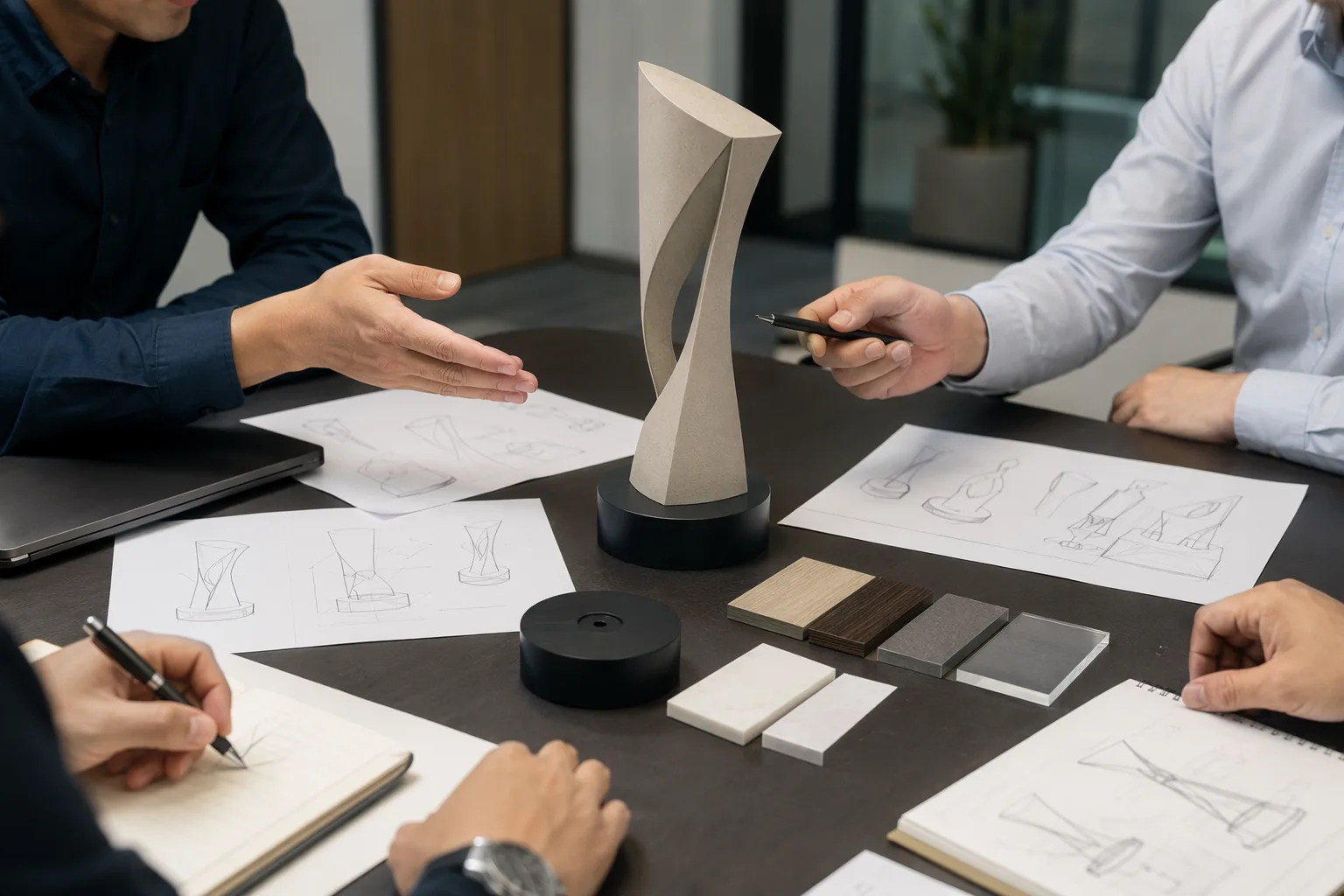
An event organizer or distributor may need the same trophy body for recurring award programs while changing the event name, year, category, or recipient data. Die casting may be worth evaluating when the core shape has defined relief, repeated geometry, and an expected reorder plan.
The buyer should decide which features belong in the cast part and which should be handled through engraving, painted details, or a replaceable nameplate. The team should also confirm whether future editions will retain the same structure, because major design changes after die approval can create new tooling work.
02
Scenario 2: A Large or Sculptural Trophy Concept
A buyer developing a large, thick, or low-repeat metal form may ask whether sand casting offers a more suitable setup. The evaluation should consider weight, wall structure, assembly points, surface texture, polishing access, base stability, and the intended decorative finish.
The buyer should not select sand casting from appearance references alone. A technical review is needed to determine whether the geometry can be cast, prepared, finished, assembled, packaged, and transported as intended.
03
Scenario 3: A Small Initial Order with Possible Reorders
A low initial quantity does not by itself determine the correct casting method. Buyers should compare tooling investment, expected reorders, personalization strategy, sample needs, and the cost of later design changes. Regular custom products are usually available from 1 piece, but the exact MOQ depends on structure, size, material, process, mold needs, and packaging.
QUALITY RISKS
Decisions That Affect the Finished Trophy
Casting creates the main metal form, but the visible result also depends on surface preparation, electroplating or painted details, engraving, assembly, and the base structure. A process that can form the shape may still be unsuitable if the part cannot be polished evenly or if recessed areas are difficult to finish.
Common planning mistakes include:
- Selecting a casting method before confirming the metal and overall dimensions.
- Adding thin projections, deep recesses, or inaccessible polishing areas without a feasibility review.
- Expecting the casting surface to be the final decorative surface without preparation.
- Approving tooling before checking engraving zones, nameplate space, assembly points, and base balance.
- Ignoring packaging weight, movement, and protection for large or heavy structures.
- Changing the core shape after sample or tooling approval without reviewing cost and timing effects.
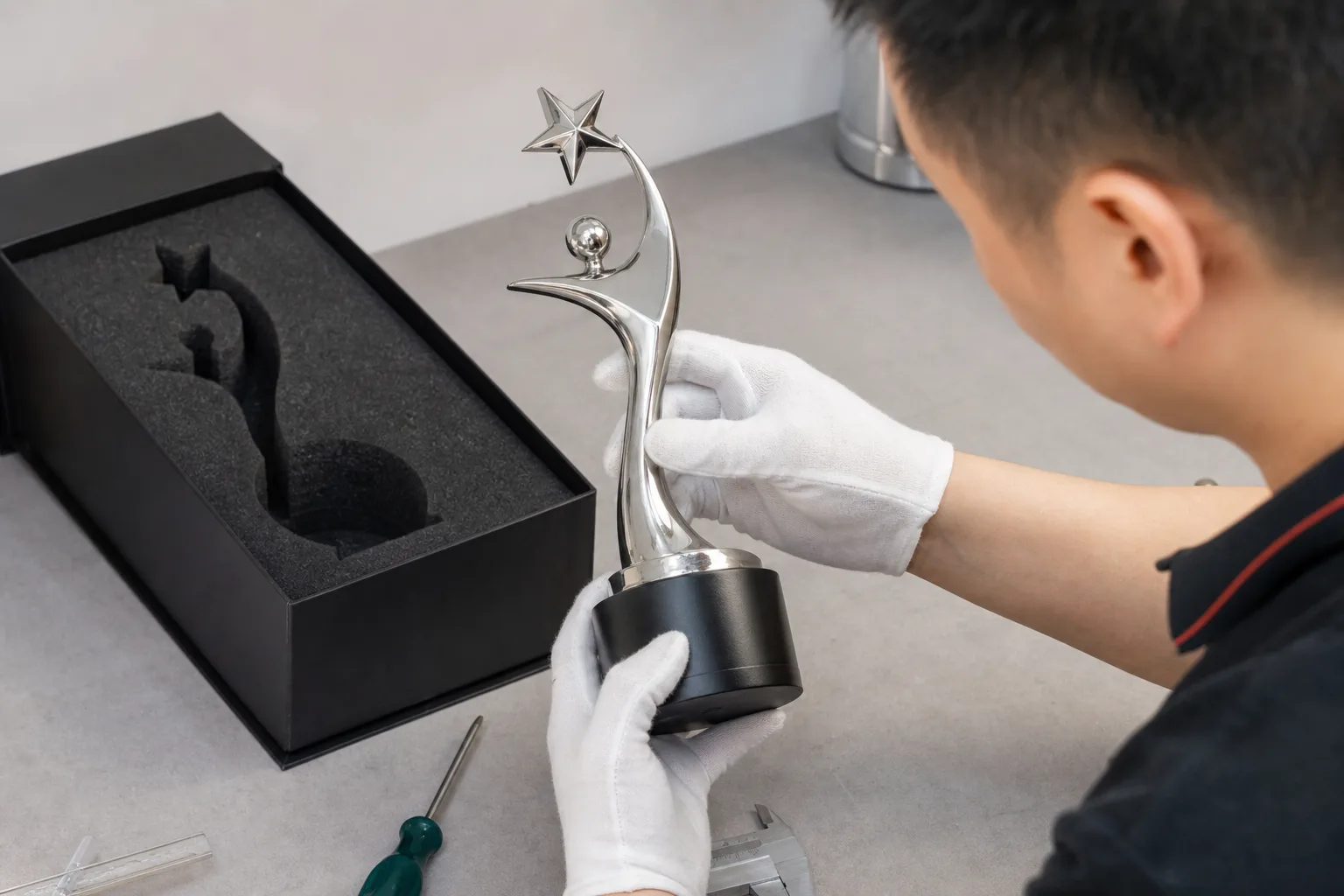
Dedicated tooling should follow a documented approval point. Buyers can review the role of custom trophy mold development when deciding how artwork becomes a production-ready structure.
EVALUATION STEPS
Casting Method Review Checklist
Prepare enough information for the supplier to compare the two processes against the same specification:
- 2D artwork, 3D files, sketches, or clear reference images.
- Target height, width, depth, and approximate weight preference.
- Preferred metal or a request for material recommendations.
- Required quantity and expected reorder pattern.
- Front, back, side, and underside appearance requirements.
- Electroplating, painted color, texture, engraving, or nameplate requirements.
- Base material, dimensions, attachment method, and stability expectations.
- Individual personalization data and the format in which it will be supplied.
- Packaging requirements, destination, and any fixed event date.
A practical evaluation normally follows these steps:
- Review the design, material, dimensions, quantity, and finish target.
- Identify casting constraints, mold requirements, assembly points, and surface-preparation risks.
- Confirm the proposed specification and quotation scope before tooling or sampling.
- Use sample production to evaluate appearance, dimensions, assembly, and packaging where appropriate.
Pricing depends on artwork, size, material, quantity, surface finish, accessories, personalization, and packaging. Production lead time is also project-specific and subject to the approved specification and current order schedule. A fixed event date should be discussed at the start of the inquiry.
NEXT STEP
Get a Casting Recommendation for Your Trophy Design
Me Trophy provides made-to-order metal trophy development and supply for international buyers. Project support can include design evaluation, mold development, metal casting, surface preparation, finishing, engraving, assembly, quality inspection, packaging, and export delivery coordination.
Send your artwork, dimensions, quantity, finish preferences, packaging needs, and target event date for review. If the specification is ready, request a custom trophy quote and ask for die casting and sand casting to be compared where both routes may be feasible.
BUYER QUESTIONS
Frequently Asked Questions
Is die casting always better for detailed trophies?
Not always. Die casting can support repeatable decorative detail, but suitability depends on the metal, geometry, wall structure, finish, quantity, and tooling plan. Fine features must still be reviewed for filling, release, polishing, and finishing.
Is sand casting suitable for a one-piece custom trophy?
It may be considered for some one-piece, large, thick, or low-repeat forms. The exact route depends on the design, material, surface expectations, finishing access, and packaging requirements. Regular custom products are usually available from 1 piece, but the exact MOQ remains project-specific.
Which casting method has the lower cost?
There is no fixed answer. Die casting can require dedicated tooling, while sand casting can involve different pattern, mold, cleanup, and finishing work. Total pricing depends on artwork, size, material, quantity, finish, accessories, personalization, and packaging.
Can the casting method be selected from a reference image?
A reference image can communicate appearance, but it is usually not enough for process selection. Dimensions, side and back geometry, material, quantity, assembly, finish, base structure, and target weight should also be reviewed.
Should buyers request a sample before bulk production?
A sample can be useful for checking appearance, dimensions, surface preparation, finish, assembly, engraving, and packaging. Whether a sample is appropriate and what it can validate depend on the approved specification and tooling stage.
Can logos or event marks be added to a cast trophy?
Logos and marks may be incorporated through casting, engraving, painted details, or a separate nameplate, depending on feasibility. Buyers should confirm that they have authorization to use any trademark, team name, school mark, association mark, or event graphic before production.