
Zinc Alloy vs Copper Trophies
Compare zinc alloy and copper trophy options before approving a design, sample, or bulk order. This guide helps event organizers, distributors, procurement teams, and private-label buyers identify which material route may suit their trophy structure, appearance, quantity, and personalization requirements.
Because material feasibility depends on the complete specification, the next step is to share your artwork, dimensions, quantity, finish, base, packaging needs, and required date. Request a custom trophy quote for a project-specific review.

DESIGN FIRST
What Does Zinc Alloy vs Copper Mean for a Trophy Project?
The material name alone does not determine the appearance, weight, cost, or production route of a custom trophy. A zinc alloy trophy may be evaluated for a cast structure, while a copper trophy may involve a formed or fabricated structure. The practical choice depends on the artwork and approved specification.
Buyers should also confirm whether “copper” means the trophy’s base material or only a copper-color surface appearance. Electroplating and painted details can change how a metal trophy looks, so a reference image is not enough to identify the underlying material.
Review the available metal material options together with the trophy’s size, shape, finish, base connection, and packaging plan. This avoids choosing a material that does not fit the intended structure.

DECISION FRAMEWORK
Zinc Alloy and Copper Trophy Comparison
The following table is a planning framework rather than a fixed performance specification. Final feasibility, price, and timing remain subject to design evaluation and the current order schedule.
| Specification Area | Zinc Alloy Route | Copper Route | Buyer Checkpoint |
|---|---|---|---|
| Typical design approach | Often evaluated for cast trophy bodies and shaped components | May be evaluated for formed, fabricated, or combined structures | Submit front, side, and assembly views where available |
| Shape and detail | Can suit projects requiring molded contours or repeated decorative features, subject to mold feasibility | Can suit designs built around metal surfaces, profiles, or assembled components, subject to structural review | Identify critical curves, recesses, openings, and fine details |
| Tooling | A new custom shape may require mold development | Tooling needs depend on the forming, fabrication, and component design | Ask which tooling is required and whether existing components can be used |
| Surface appearance | Can support approved electroplated or painted finishes | Can use its material appearance or receive an approved surface finish | Define color, gloss level, texture, and protected areas with references |
| Structure and assembly | May use one or more cast parts connected to a base or other components | May use formed or fabricated parts with planned joints and base connections | Confirm overall dimensions, balance, attachment points, and base structure |
| Personalization | Logos, engraved details, plates, or painted areas may be considered | Engraving, plates, applied details, or other approved methods may be considered | Provide logo files and variable nameplate data |
| Cost and timing | Depend on artwork, size, quantity, mold needs, finish, assembly, and packaging | Depend on material use, structure, forming or fabrication needs, finish, assembly, and packaging | Compare quotations based on the same approved specification |
For examples of material-specific product planning, review custom zinc alloy trophies and custom copper trophies as separate product paths.
BUYER SCENARIOS
Which Trophy Route May Fit Your Project?
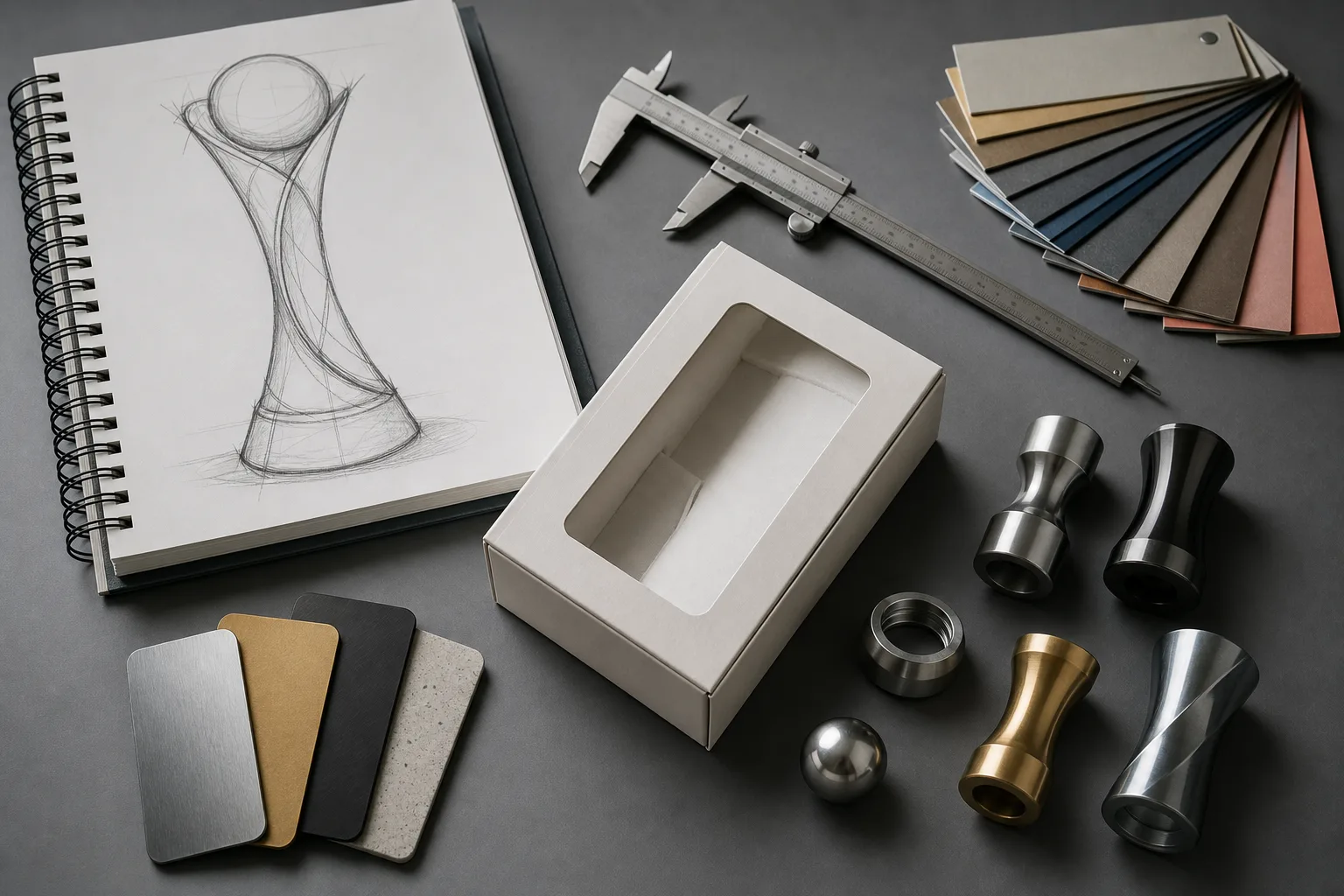
01
Scenario 1: A Sculptural Award with Repeated Shapes
An event organizer or distributor may have artwork with contours, relief details, or repeated decorative elements. The buyer should first confirm whether the shape is suitable for casting, whether separate parts are needed, and whether mold development is required. Zinc alloy may be considered as one route, but the decision should follow a review of dimensions, detail depth, assembly, finish, and order quantity.
02
Scenario 2: A Trophy Built Around Metal Profiles or Panels
A corporate award program may prefer a structure based on defined surfaces, profiles, or assembled metal elements. Copper may be considered, subject to confirmation of the forming or fabrication route, joint locations, stability, edge treatment, finish, and base connection. The buyer should not approve the material based only on a copper-color reference.
03
Scenario 3: Appearance Matters More Than the Underlying Metal
Some buyers need a gold, silver, bronze, antique, or copper-color appearance but do not require a specific base metal. In this case, compare feasible material-and-finish combinations rather than treating color as proof of material. Finish samples or an approved physical sample can help align expectations before production.
PROJECT INPUTS
Prepare One Complete Specification for Both Options
A useful comparison requires both material routes to be reviewed against the same design and purchasing conditions. Prepare:
- Artwork, sketches, reference images, or available 3D files
- Overall height, width, depth, and any critical component dimensions
- Expected order quantity and possible repeat-order requirements
- Preferred material, or permission to recommend a feasible material route
- Target finish, colors, texture, and painted detail requirements
- Logo engraving, plate layout, recipient names, numbering, or other variable data
- Base material, size, connection method, and stability requirements
- Individual packaging, private-label packaging, carton, or shipping requirements
- Destination and fixed event date, if applicable
If the concept is incomplete, upload your trophy design for an initial feasibility discussion. Buyers planning an appearance-sensitive order can also request a trophy sample, subject to the approved specification and project requirements.
APPROVAL STEPS
How to Compare Zinc Alloy and Copper Without Changing the Brief
- Define the intended appearance, dimensions, use, quantity, personalization, and packaging.
- Review whether the artwork supports a cast, formed, fabricated, or combined construction route.
- Identify mold, tooling, assembly, finishing, and base requirements for each feasible option.
- Compare quotations using the same artwork, quantity, finish, accessories, and packaging scope.
- Review drawings, finish references, engraving layouts, and variable data before sample production.
- Approve the physical sample or agreed specification before bulk production, where sampling is included in the project.
Regular custom products are usually available from 1 piece, but the exact MOQ depends on the structure, size, material, process, mold needs, and packaging. Pricing and production lead time are also project-specific.
SELECTION CHECKS
Reduce Material and Approval Risks
- Choosing by color alone: A copper-color finish does not necessarily confirm a copper base material. State whether material identity or visual appearance is the priority.
- Comparing different specifications: A price comparison is not useful if the size, finish, base, personalization, or packaging changes between options.
- Ignoring assembly and balance: Review component connections, base structure, stability, and packed dimensions with the complete trophy design.
- Approving from a digital image only: Screen colors and reflections can differ from a physical finish. Consider sample approval for appearance-sensitive projects.
- Submitting incomplete personalization data: Check spelling, numbering, award levels, and nameplate assignments before production approval.
- Waiting to disclose an event date: Discuss a fixed date at the start so sample, production, packaging, and export delivery planning can be reviewed.
- Using protected marks without permission: Confirm authorization for logos, team names, school marks, association marks, and event graphics before production.
REQUEST REVIEW
Get a Project-Specific Zinc Alloy or Copper Recommendation
Send Me Trophy your design files, dimensions, quantity, preferred appearance, personalization details, base requirements, packaging needs, destination, and required date. The team can review material feasibility, possible mold or tooling needs, finish options, sample requirements, and quotation inputs based on the proposed specification.
Request a custom trophy quote to compare suitable zinc alloy and copper routes for your project.
BUYER QUESTIONS
Frequently Asked Questions
Is zinc alloy always less expensive than copper for a custom trophy?
Not necessarily. Pricing depends on the artwork, size, quantity, material use, mold or tooling needs, surface finish, accessories, personalization, assembly, and packaging. Both options should be compared against the same specification.
Can zinc alloy and copper trophies have a similar color?
They may be developed with finishes that create similar visual directions, subject to process feasibility and sample approval. Buyers should state whether they require a particular base material or only a target color and appearance.
Which material is better for a complex custom shape?
The answer depends on the geometry, dimensions, detail, component structure, and manufacturing route. Zinc alloy may be evaluated for cast shapes, while copper may be evaluated for formed or fabricated structures. A design review is required before confirming feasibility.
Does a custom zinc alloy trophy require a mold?
A new cast shape may require mold development. The requirement depends on the design, structure, size, quantity, and whether suitable existing components are available.
Can I request a sample before placing a bulk order?
Sample production can be discussed based on the approved design, material, finish, personalization, and packaging requirements. Sample scope, cost, and timing are project-specific and should be confirmed before proceeding.
What files should I send for a material comparison?
Send available artwork, sketches, reference images, dimensions, quantity, finish preferences, logo files, personalization details, base requirements, packaging needs, destination, and required date. Front, side, and assembly views are useful when available.