
Metal Casting Capabilities for Custom Trophies
Me Trophy provides metal casting support for made-to-order trophy projects that require custom shapes, dimensional details, separate metal components, or repeatable production based on an approved specification. We help international buyers evaluate the design, material direction, mold needs, finishing plan, and quality checkpoints before production.
Send your artwork, target dimensions, quantity, finish requirements, and delivery schedule to request a custom trophy quote.
PROCESS IMPACT
Building the Main Metal Form of a Trophy
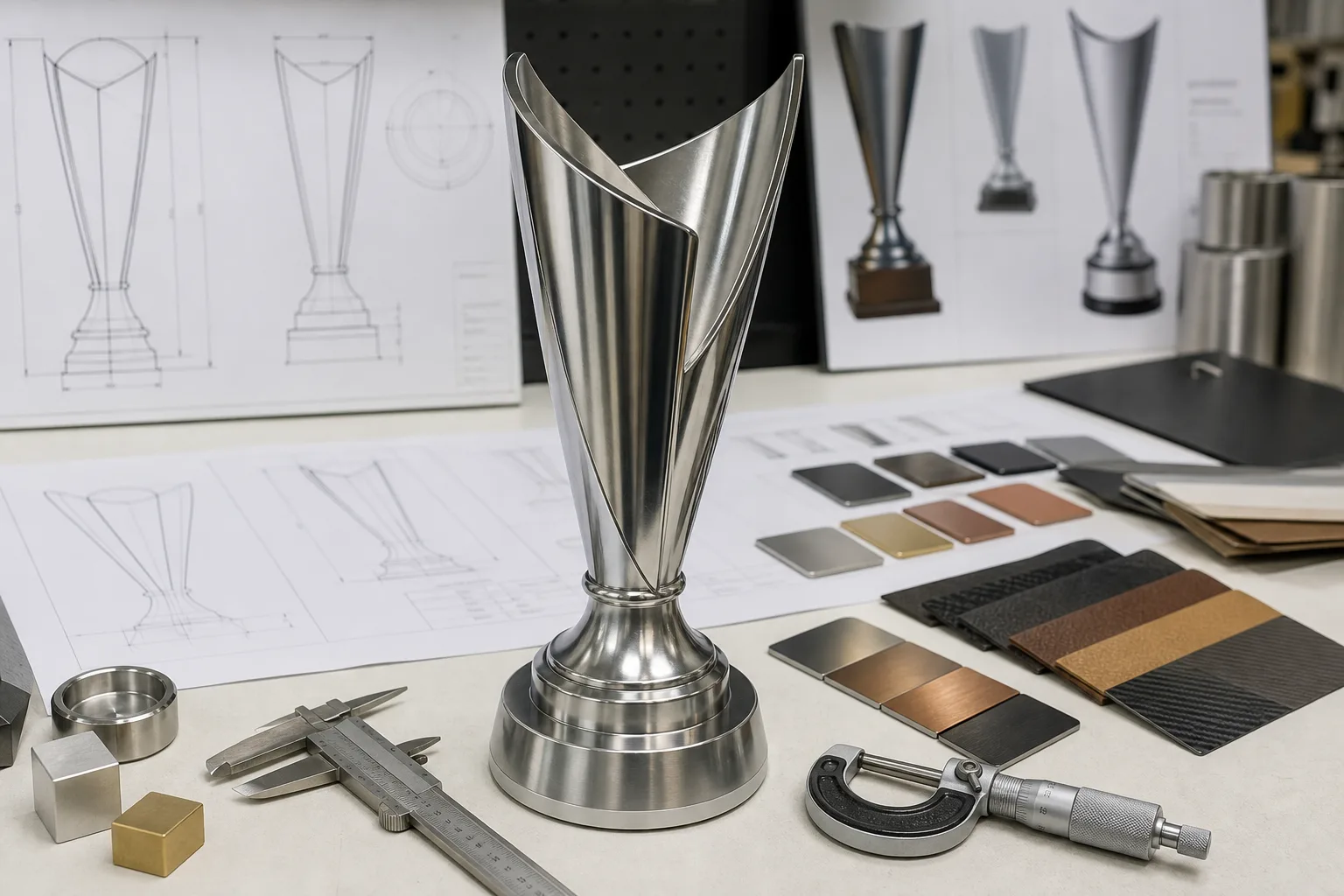
Metal casting creates the underlying metal form before surface preparation, finishing, engraving, and assembly. Decisions made at this stage can affect the appearance, weight, structural layout, mold complexity, finishing access, and consistency of the completed trophy.
A casting review should consider more than the front view of the artwork. The project also needs suitable thickness transitions, practical edges, accessible recessed areas, stable connection points, and a clear plan for attaching the trophy body to its base or other components.
Casting does not determine every visible feature. Final color, gloss, texture, painted details, engraving, and assembly depend on downstream processes. Buyers should review casting and finishing requirements as connected parts of one approved specification.
PRE-MOLD REVIEW
Decisions to Confirm Before Mold Development
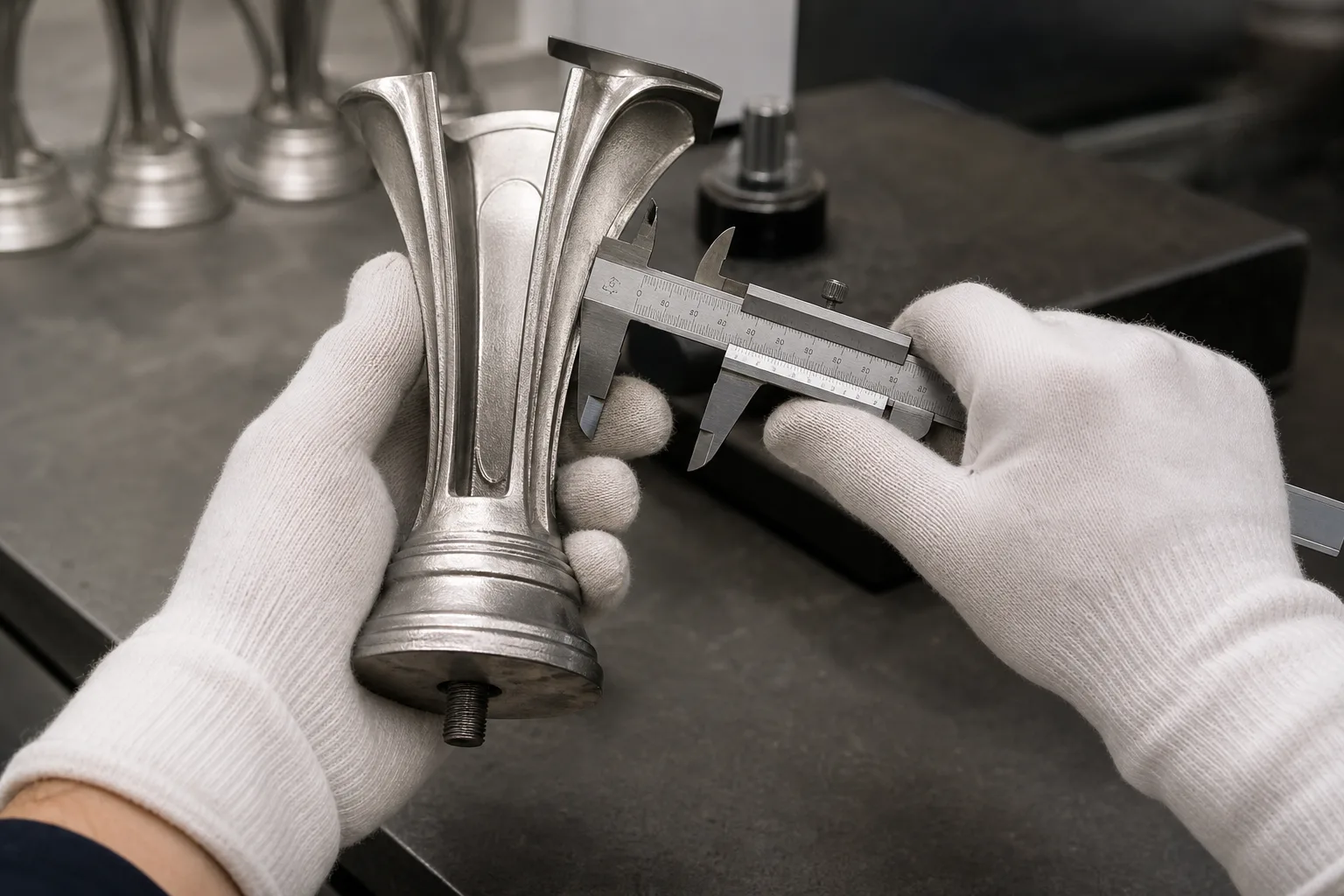
The appropriate casting route depends on the trophy geometry, selected material, dimensions, quantity, surface expectations, and downstream finish. Me Trophy can evaluate these factors before confirming the production approach.
- Geometry: Provide front, side, and rear views when the trophy has relief, curves, openings, or sculptural details.
- Dimensions and weight direction: State the target height, width, depth, and any practical weight preference.
- Part structure: Confirm whether the design should be evaluated as one cast body or as multiple cast and assembled components.
- Material direction: Review the relevant metal material options before approving the casting specification.
- Visible surfaces: Identify presentation faces, recessed details, edges, and areas that will receive plating, paint, engraving, or assembly hardware.
- Mold requirements: Custom geometry may require dedicated tooling. The final requirement is subject to artwork and structure review through the mold development process.
Changes to shape, size, material, or component structure can affect mold feasibility, cost, sampling, and production lead time. These items should be settled before final approval whenever possible.
APPROVAL STEPS
From Artwork to an Approved Cast Component
A controlled approval sequence helps prevent avoidable revisions after tooling or production begins.
- Project input review: Check artwork, dimensions, quantity, material direction, finish, personalization, base structure, packaging, and required delivery date.
- Feasibility evaluation: Review thickness, relief, openings, recessed areas, connection points, and whether the trophy should use one or several components.
- Mold and process planning: Confirm the proposed casting route, mold needs, expected visible surfaces, and downstream finishing sequence.
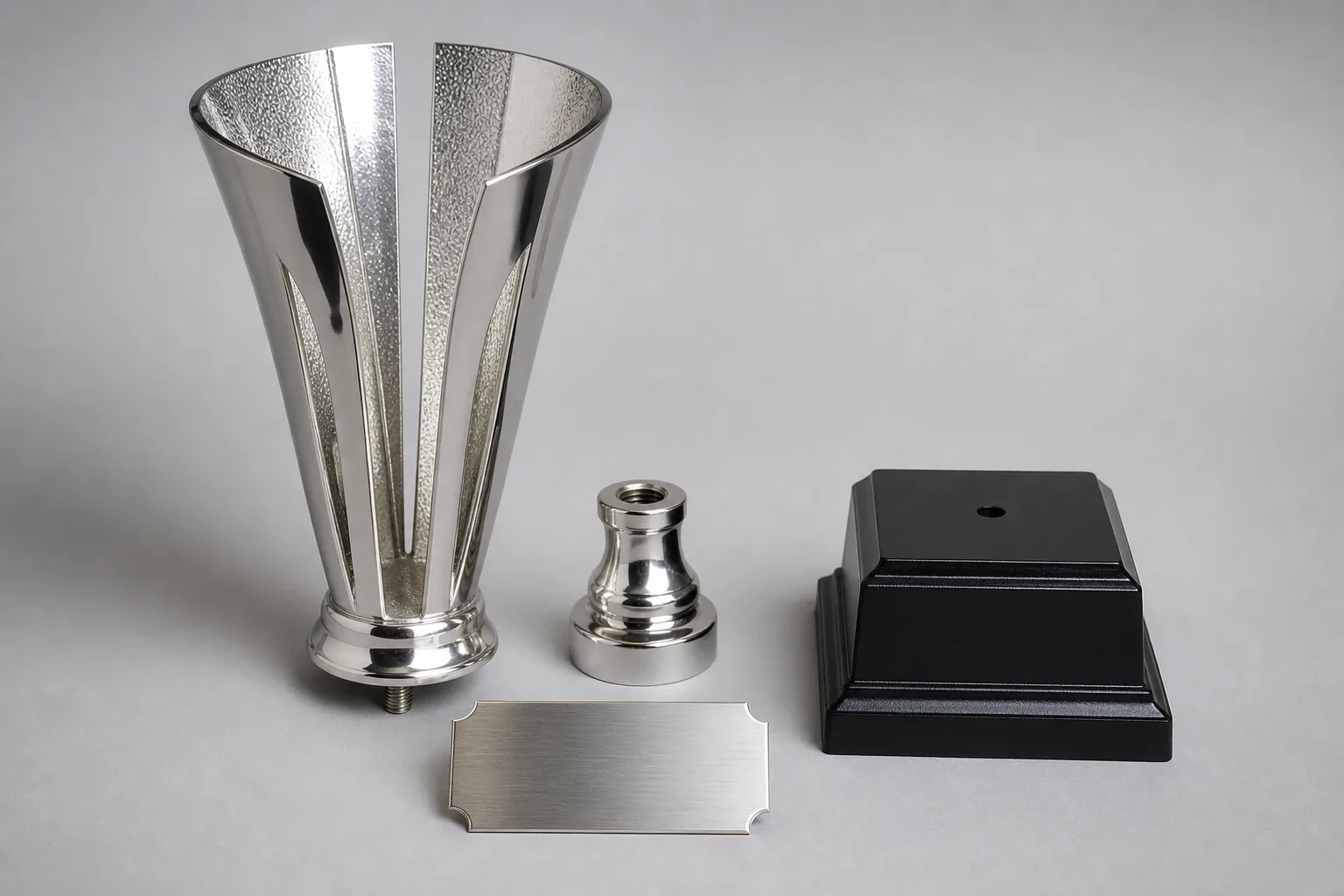
- Sample evaluation: When sampling is included in the approved project plan, inspect the physical form, fit, surface condition, and appearance after the specified finishing steps.
- Approval and production: Record the accepted specification and use it as the reference for production and inspection.
Buyers should avoid approving only a digital front view when the trophy includes three-dimensional details. Side profiles, back surfaces, base connections, and assembly points may be equally important to manufacturability.
BUYER SCENARIOS
How Casting Priorities Change by Project
01
A Detailed Championship or Commemorative Trophy
A sculptural trophy may include layered relief, open spaces, curved surfaces, or separate decorative parts. The buyer needs to confirm which details must remain prominent at the intended size, how components connect, which surfaces are most visible, and how the finish should reach recessed areas. Simplifying a very small detail may improve practical mold and finishing access, subject to design approval.
02
A Repeat Award Program or Distributor Order
A repeat supply project needs a stable approved specification as well as a clear method for controlling variants. The buyer should separate fixed cast features from changing information such as names, award levels, dates, or event data. Packaging references, personalization files, finish standards, and reorder identifiers should be managed independently from the mold specification.
For either scenario, a fixed event date should be discussed at the beginning. Timing remains subject to design approval, mold needs, sampling, order quantity, finishing, packaging, and the current order schedule.
QUALITY CHECKS
Reduce Defects Before Finishing and Assembly
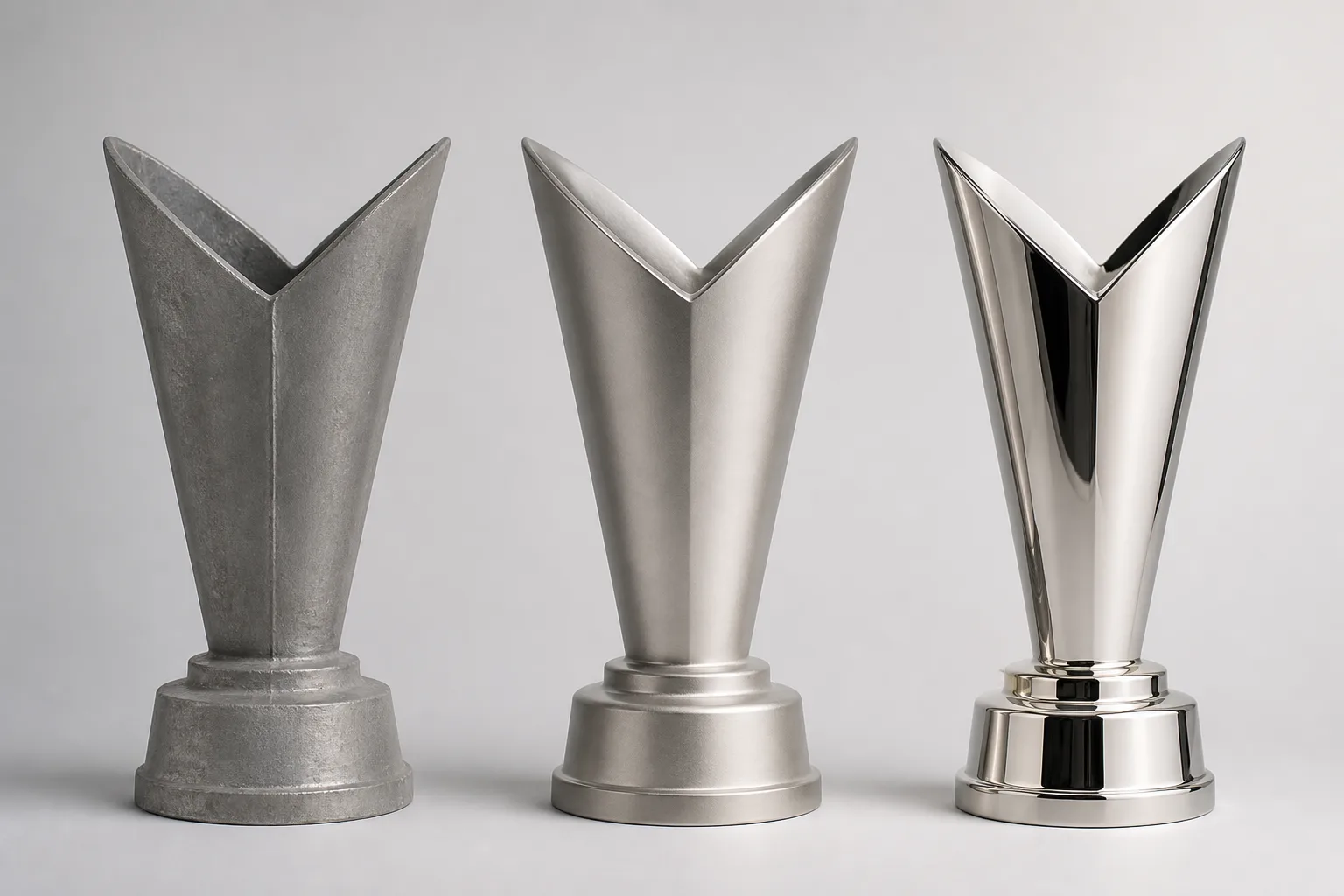
Raw cast components require evaluation before later processes add color, gloss, engraving, or other appearance details. A finish cannot always conceal unsuitable geometry or an unapproved surface condition.
Useful risk-reduction checkpoints include:
- Compare key dimensions and component interfaces with the approved specification.
- Review visible faces, edges, recesses, and connection areas before finishing.
- Check whether surface preparation can reach the areas that require a decorative finish.
- Confirm fit between the cast body, base, nameplate, and separate accessories before final assembly.
- Keep finish references and personalization data separate from the casting geometry approval.
- Use agreed inspection points rather than relying only on general appearance descriptions.
See how polishing and surface preparation connect the cast component to the selected finish. Project-specific checks can then be incorporated into the broader quality control process.
Common mistakes include changing dimensions after mold planning, omitting side or rear artwork, treating a finish sample as approval of the underlying geometry, and submitting logos without confirming production rights. Buyers must confirm authorization for trademarks, team names, school marks, association marks, event graphics, and other protected content before production.
INQUIRY PREP
Information Needed for a Practical Review
Prepare the following information before requesting a quotation:
- Artwork or reference images, preferably with front, side, and rear views
- Target height, width, depth, and weight direction
- Expected order quantity and any planned variants
- Preferred metal or a request for material guidance
- Target finish, painted details, engraving, and personalization needs
- Base material, base dimensions, and intended connection method if already defined
- Packaging requirements and destination market
- Required event or delivery date, if applicable
- Any sample approval or inspection requirements
If the concept is not yet production-ready, upload your trophy design for evaluation. For pricing and casting planning based on your current specification, request a custom trophy quote and include the available project files.
BUYER QUESTIONS
Frequently Asked Questions
What information is needed to evaluate a trophy for metal casting?
Provide artwork or reference images, target dimensions, quantity, material direction, finish requirements, base structure, packaging needs, and the required delivery date. Multiple views are useful for sculptural or assembled designs.
Does every custom metal trophy require a new mold?
Not necessarily. Mold requirements depend on the geometry, dimensions, material, process, and whether an existing approved structure can be used. The requirement is confirmed after design evaluation.
Can a trophy be cast as several separate components?
A multi-part structure may be considered when it suits the geometry, finishing access, assembly plan, or variant requirements. The proposed component layout must be evaluated and approved for the specific project.
How does metal casting affect the final trophy finish?
Casting establishes the underlying metal form and surface condition. Surface preparation, electroplating, painting, engraving, and assembly create later appearance details, so these processes should be planned together.
Can I approve the trophy based only on a digital image?
Digital artwork can support design review, but appearance-sensitive projects may also require a physical sample under the agreed project plan. Sample availability, cost, and timing depend on the specification and mold needs.
What can affect the production lead time for a cast metal trophy?
Timing can be affected by artwork readiness, design revisions, mold development, sample approval, quantity, finish complexity, assembly, personalization, packaging, and the current order schedule. A fixed event date should be shared at the start of the inquiry.