
Custom Trophy Electroplating Finishes

APPEARANCE PLANNING
Plan the Trophy Appearance
An electroplating finish changes how a metal trophy reflects light and how its shape, relief, engraving, and painted details appear. It should be selected together with the trophy material, surface preparation, logo treatment, and base structure rather than treated as an isolated color choice.
Commonly requested visual directions include gold-tone, silver-tone, bronze-tone, dark metallic, bright, satin, and antique-style effects. Availability and the final result depend on the base material, part geometry, preparation process, approved reference, and production feasibility.
- Define whether the award should look bright, understated, traditional, modern, or aged.
- Decide whether one finish or contrasting finishes should separate design areas.
- Identify recessed areas, fine relief, engraving, and painted details that may affect the finish plan.
- Confirm whether the base, nameplate, and accessories should match or intentionally contrast.
For projects still at the concept stage, review the custom trophy design process before finalizing the finish direction.
FINISH COMPARISON
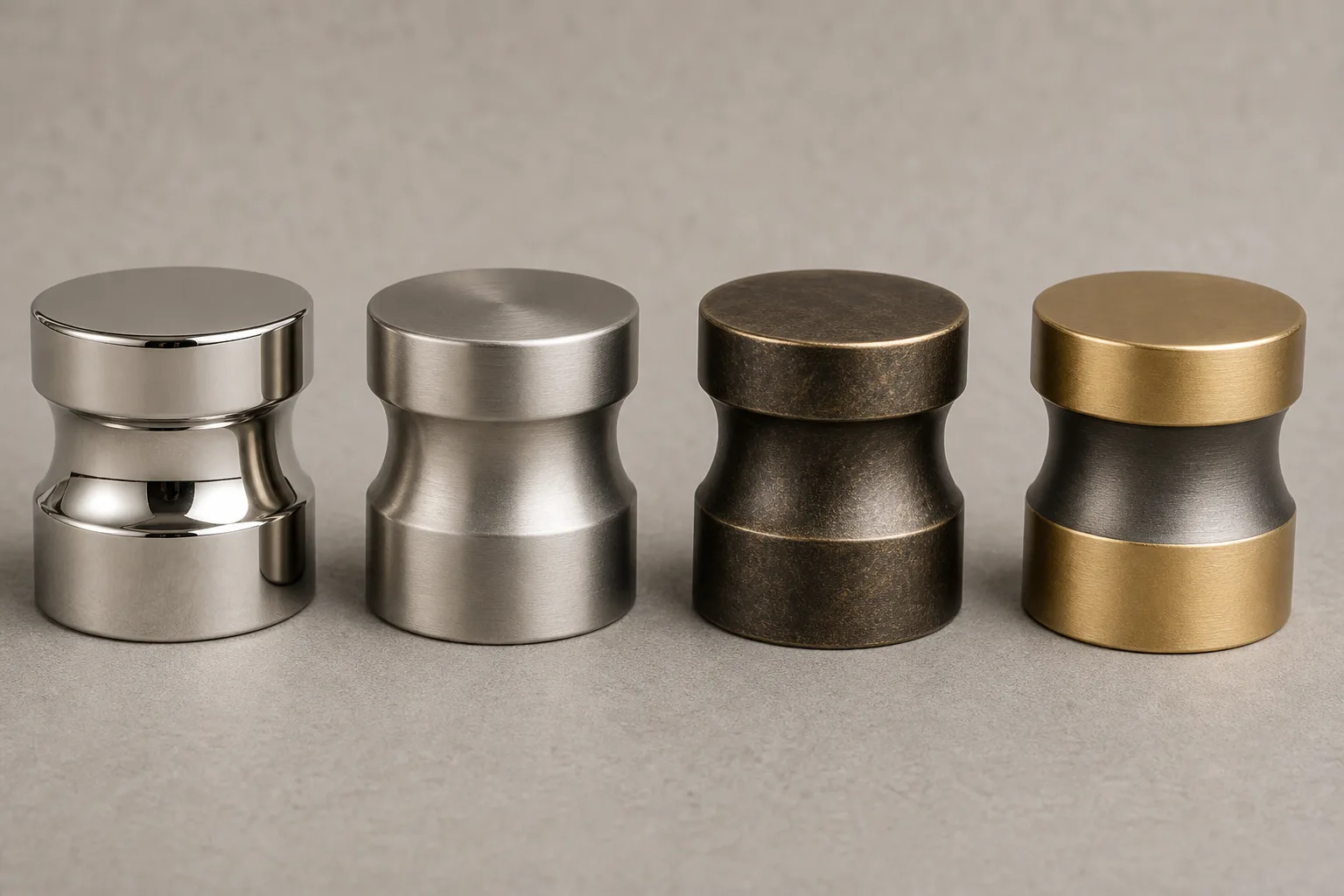
Compare Finish Directions
The following categories help buyers describe the intended appearance. They are visual planning directions rather than fixed technical specifications, and each option remains subject to feasibility review and sample approval.
| Finish Direction | Visual Character | Useful Design Considerations |
|---|---|---|
| Bright metallic | Reflective and visually prominent | Surface preparation and handling marks may be more noticeable. |
| Satin metallic | Softer reflection with a restrained appearance | Confirm the desired texture with a physical reference or approved sample. |
| Antique-style effect | Darker recesses with stronger relief contrast | Relief depth and recessed details influence the visible effect. |
| Two-tone direction | Contrasting metallic areas on one trophy | Part separation, masking, geometry, and added processing require feasibility review. |
| Plating with painted details | Metallic surfaces combined with selected color areas | Define color boundaries and provide color references for evaluation. |
If the project is deciding between metallic plating and broader color coverage, use the electroplating versus painted trophy guide to compare the two approaches.
BUYER SCENARIOS
Match Finish to the Buyer Scenario
01
A Multi-Level Event Award Program
An event organizer may use finish differences to distinguish champion, second-place, third-place, or participation awards. The buyer should confirm whether each level shares the same mold, which finish changes between levels, how names or categories will be personalized, and whether the packaging must identify each award clearly.
02
A Distributor or Private-Label Range
A distributor may prioritize repeatable approved references, consistent product codes, packaging separation, and clear reorder records. The buyer should define which finish belongs to each SKU, how mixed variants should be packed, and whether a new sample is needed after artwork, material, or finish changes.
In both scenarios, trademarked logos, event marks, school marks, team names, and association graphics require authorization from the rights holder before production.
APPROVAL CONTROL
Control the Result Before Production
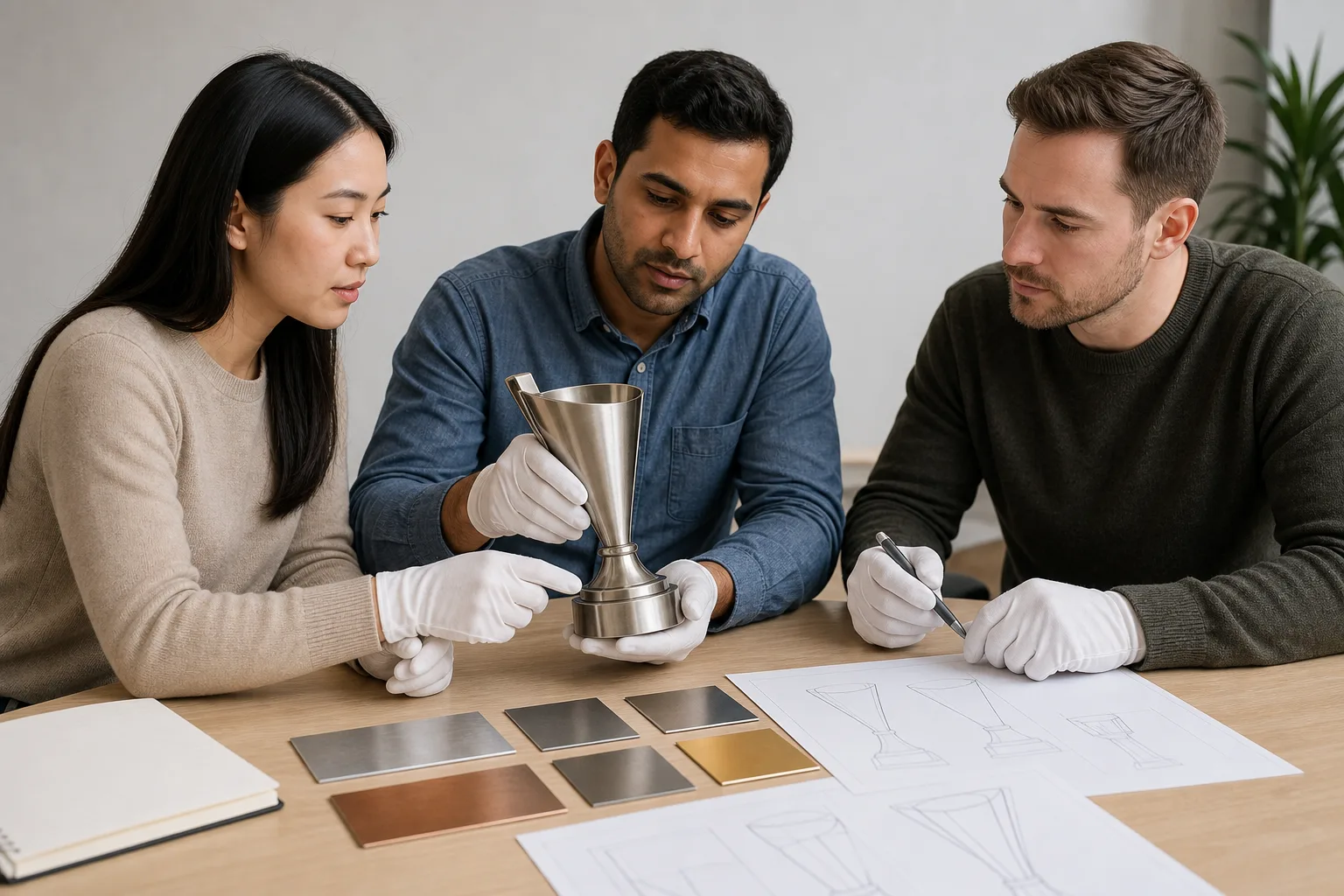
Screen images do not reliably represent metallic reflection. Lighting, camera settings, monitor differences, surface texture, part geometry, and nearby colors can change how a finish appears. For appearance-sensitive projects, use clear references and review a physical sample against the agreed specification.
- Submit artwork, dimensions, material preferences, finish references, and intended quantity.
- Review whether the geometry, relief, separate parts, and surface areas suit the requested finish.
- Confirm the proposed finish direction, painted details, engraving, assembly, and packaging specification.
- Request and review a sample when the project requires physical appearance approval.
- Approve the specification before production planning, subject to the current order schedule.
When a physical approval stage is needed, request a custom trophy sample. Sample scope, cost, and timing depend on the project requirements.
RISK REVIEW
Reduce Avoidable Electroplating Problems
Surface preparation and design geometry influence the finished appearance. The manufacturing process must be evaluated against the approved design rather than assumed from a reference photo.
- Avoid approving a metallic color only from a phone or monitor image.
- Do not assume the same finish will look identical on different materials, textures, or shapes.
- Identify deep recesses, sharp transitions, joining areas, and hidden surfaces during design evaluation.
- Keep finish references, personalization data, and packaging instructions under clear revision control.
- Discuss handling, storage, display conditions, and cleaning expectations before approving the specification.
- Allow time for sample review when finish appearance is important to the award program.
The separate trophy electroplating process page explains manufacturing inputs, checkpoints, and process-related risks in more detail.
QUOTATION PREP
Prepare for a Quotation
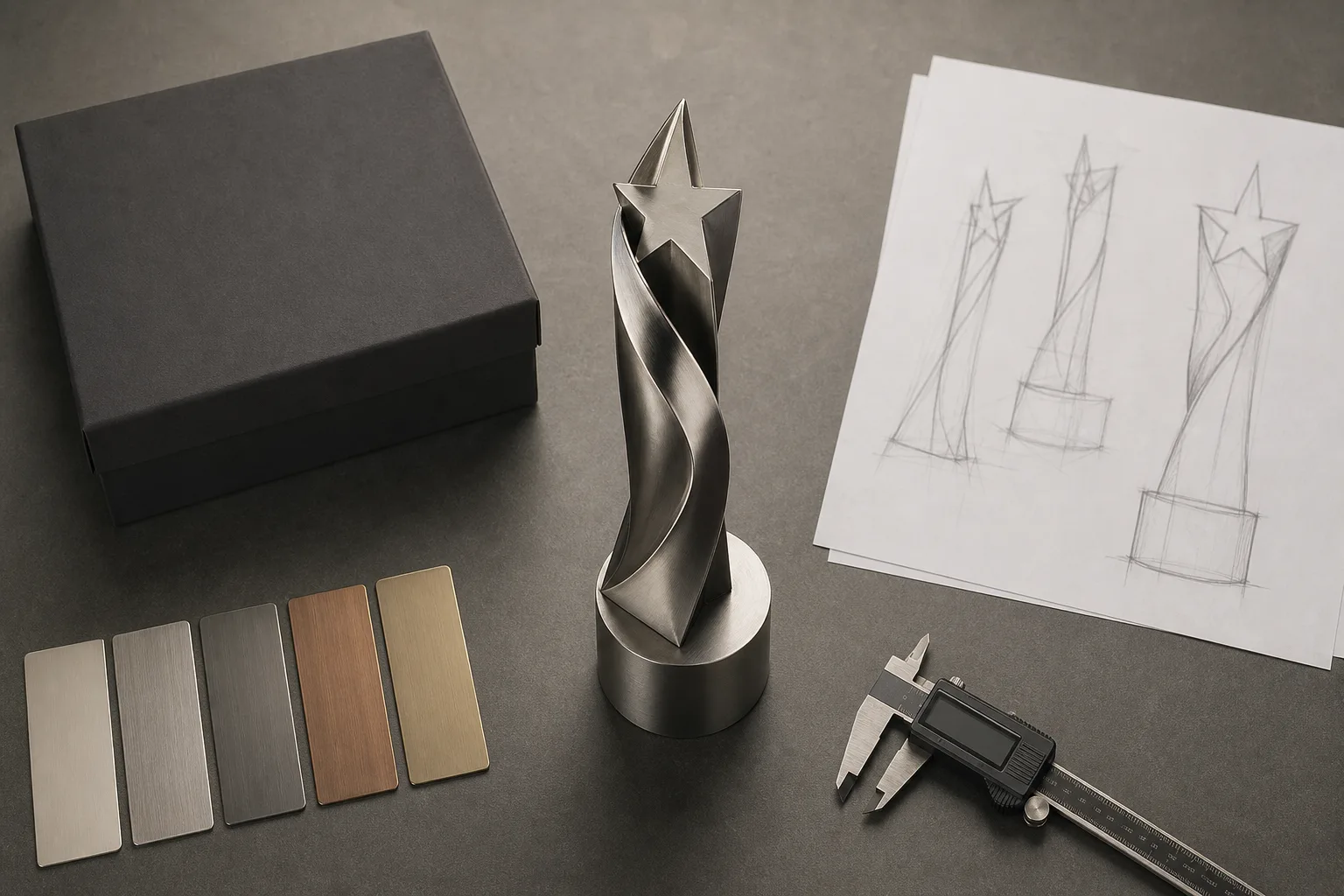
A useful quotation starts with enough information to evaluate the complete trophy, not only its metallic appearance.
- Trophy artwork, drawing, reference image, or 3D file if available
- Target dimensions, material preference, weight expectations, and base structure
- Requested finish direction and any physical reference or approved sample
- Logo method, engraving, nameplate data, painted details, and personalization plan
- Order quantity and the number of finish or award-level variants
- Packaging requirements, destination, and any fixed event date
Pricing and production lead time depend on the approved artwork, size, material, quantity, surface finish, accessories, personalization, mold needs, packaging, and current order schedule. Discuss a fixed event date at the start of the inquiry.
For the next step, Request a quote for your electroplated trophy project and include the finish reference, artwork, quantity, and required event date.
BUYER QUESTIONS
Frequently Asked Questions
Which electroplating finish is suitable for a custom metal trophy?
The suitable direction depends on the trophy material, geometry, relief, intended visual style, painted details, and budget. Share a reference image or physical sample so feasibility can be reviewed against the complete design.
Can one trophy use more than one metallic finish?
A two-tone direction may be possible, but feasibility depends on part separation, masking requirements, surface geometry, and the selected manufacturing process. The design should be evaluated before quotation and sampling.
Will an electroplated finish look exactly like the color shown on my screen?
Not necessarily. Metallic reflection changes with lighting, photography, monitor settings, surface texture, and viewing angle. An appearance-sensitive project should use an agreed reference and, when appropriate, a physical sample.
Can electroplating be combined with painted details or engraving?
Electroplating can be considered alongside painted areas, engraving, relief, and nameplates. The order of operations, color boundaries, geometry, and handling requirements must be reviewed for the specific trophy design.
What should I provide for an electroplated trophy quotation?
Provide artwork or reference images, target dimensions, material preferences, finish direction, quantity, personalization details, base requirements, packaging needs, destination, and any fixed event date. Pricing and timing remain subject to the approved specification and current order schedule.
Should I request a sample before placing a production order?
A sample is useful when metallic appearance, contrast, assembly, or packaging must be physically reviewed. Sample requirements, cost, and timing depend on the design, mold needs, finish, and project scope.