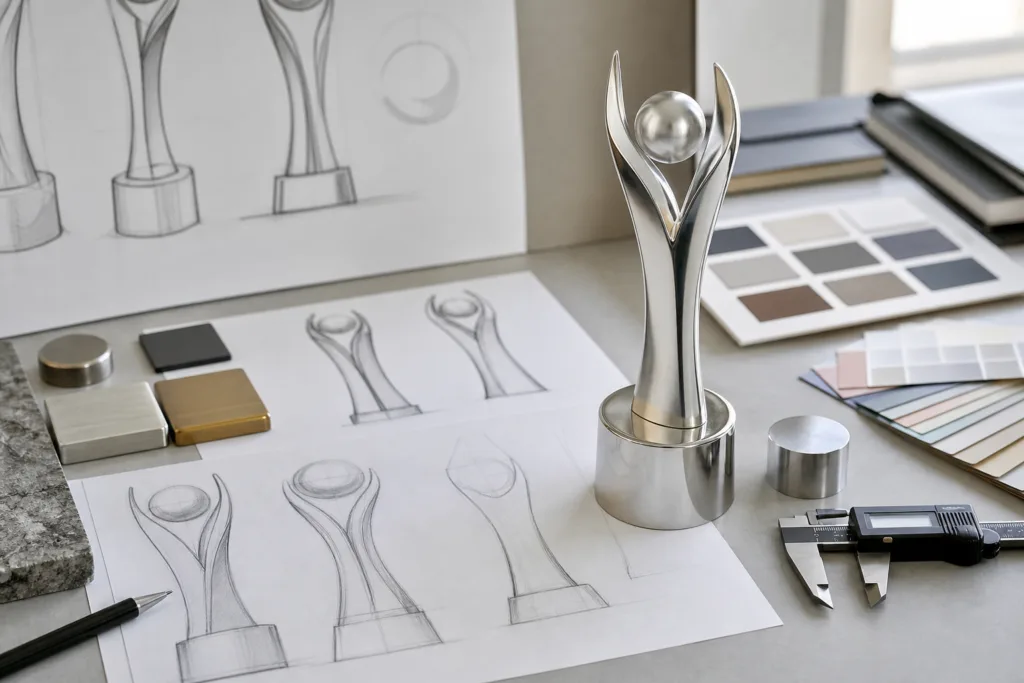
Custom Die-Cast Metal Trophies for Made-to-Order Award Projects
Me Trophy provides made-to-order die-cast metal trophy development for event organizers, corporate procurement teams, distributors, private-label buyers, and international sourcing teams. Projects can include design evaluation, mold development, sample production, casting, finishing, engraving, assembly, inspection, packaging, and export delivery coordination.
Share your artwork, target size, quantity, finish, base concept, packaging needs, and required delivery date to receive a project-specific review. Request a custom trophy quote, or upload your trophy design if your concept needs an initial feasibility check.

PROCESS FIT
When Die Casting Fits a Custom Trophy Project
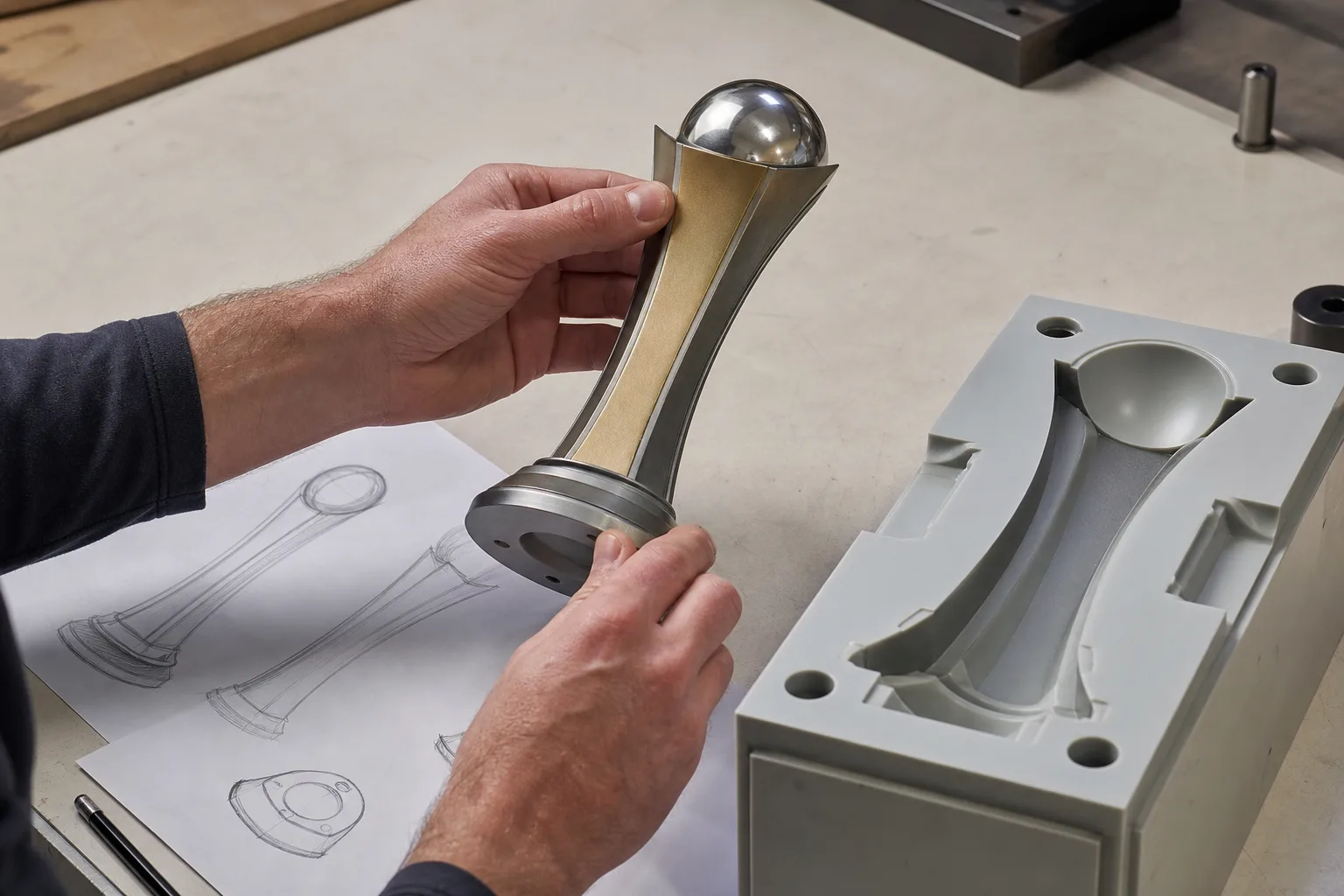
A die-cast trophy is developed around a dedicated mold that forms the main metal component. This approach can support shaped surfaces, dimensional details, repeated design elements, and coordinated production across an approved order. Actual feasibility depends on the artwork, dimensions, wall and edge conditions, material choice, finishing plan, assembly method, and expected quantity.
Die casting may be suitable when the trophy needs a recognizable custom silhouette or a repeatable body structure. It is not automatically the right process for every concept. Thin details, deep recesses, difficult parting positions, unstable structures, or complicated assemblies may require design changes before mold development.
Material should be selected as a separate decision rather than assumed from the casting method. Review the available metal material options before confirming the specification.
BUYER SCENARIOS
Common Die-Cast Trophy Buying Scenarios

01
Event awards with several achievement levels
An event organizer may use one main trophy shape across champion, runner-up, category, or participation levels. The buyer must decide whether levels will be separated by size, finish, painted details, engraved plates, or base variations. The final quantity for each level and all personalization data should be organized before production approval.
02
Distributor or private-label product lines
A trophy distributor or private-label buyer may need a repeatable design that can support later orders. Decisions include ownership and storage expectations for the mold, finish references, base specifications, packaging format, labeling requirements, and how future personalization data will be submitted. Reorder consistency depends on keeping the approved specification and identifying any requested changes before production.
03
Corporate recognition programs
A corporate procurement team may prioritize a consistent appearance across departments or award categories. The team should confirm the approved brand artwork, recipient data, presentation packaging, award hierarchy, and fixed ceremony date. Authorization must be confirmed before using company logos or other protected graphics.
SPECIFICATION DETAILS
Build the Specification by Decision Area
01
Shape and mold feasibility
Provide front, side, and rear views when possible. Clearly identify open areas, raised details, recessed details, attachment points, and the intended viewing angle. The design evaluation should address how the trophy will be cast, finished, assembled, and supported by its base. Mold development should begin only after the relevant design details are confirmed. Buyers can review the role of custom trophy mold development in this process.
02
Surface appearance
The finish affects the visual character of the cast part and may influence surface-preparation requirements. A project can use an electroplated appearance, painted details, or a combination where feasible. Color references and finish boundaries should be clear in the approved specification. See the available planning considerations for electroplating finishes.
03
Base and assembly structure
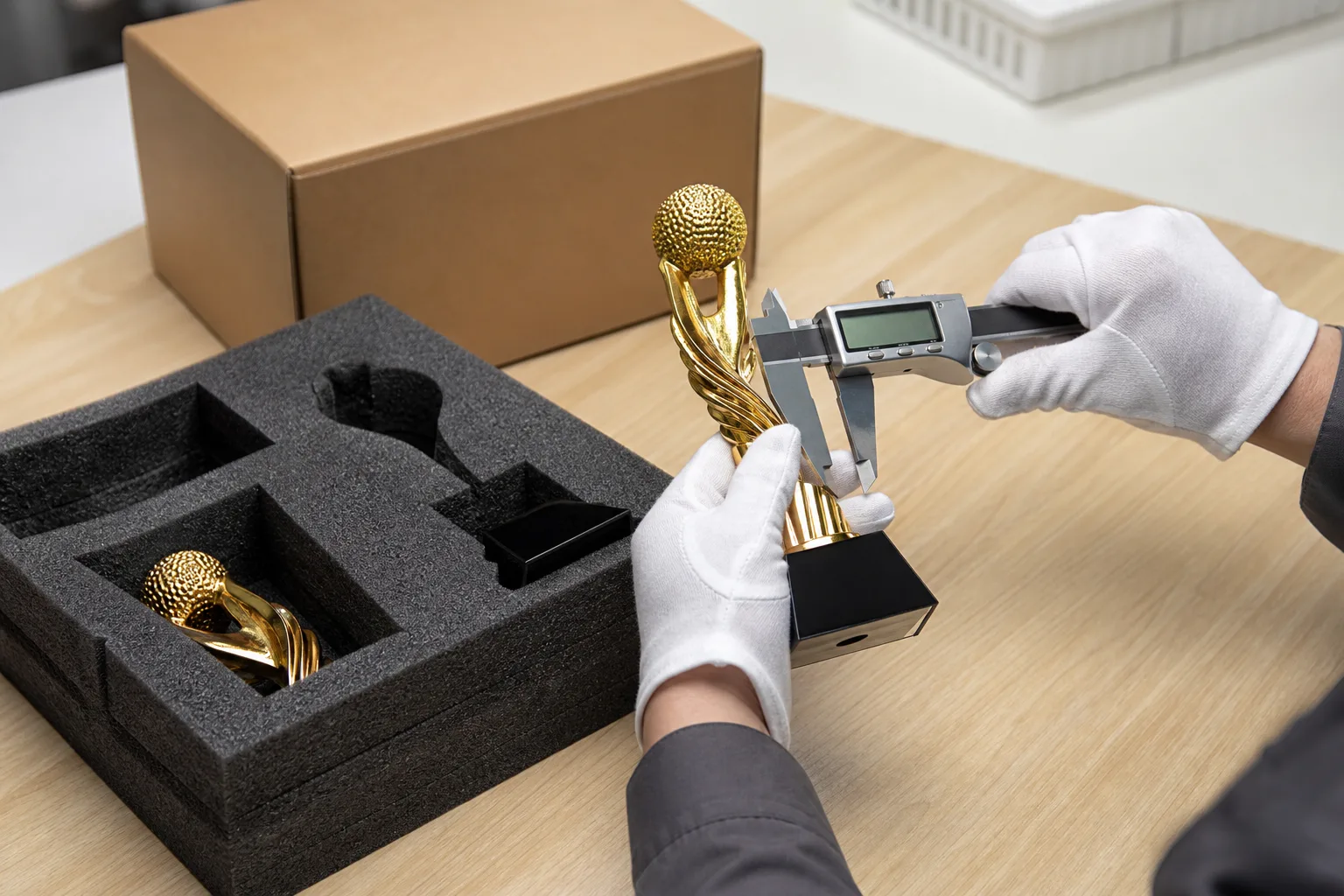
The base must suit the trophy body’s size, balance, attachment method, and presentation requirements. Confirm the base material, shape, color, visible hardware preferences, nameplate area, and protective packaging. A visually strong body can still create an unstable or difficult-to-pack product if the base is treated as a late decision.
04
Personalization
Identify whether the project needs engraved names, award categories, dates, serial information, or separate nameplates. Submit final data in an organized format and check spelling, capitalization, and award-level assignments. Buyers are responsible for confirming authorization to use logos, school marks, team names, association marks, event graphics, and other protected content.
APPROVAL STEPS
From Artwork Review to Approved Production
- Design evaluation: Review the concept, intended size, material direction, quantity, finish, base, personalization, packaging, and delivery requirements.
- Mold feasibility review: Evaluate the shape and structure, identify details that may need adjustment, and confirm the mold approach before development.
- Sample production: Produce a sample when required to review the overall shape, finish, assembly, personalization, and packaging direction.
- Buyer approval: Record the accepted sample or specification, along with any approved corrections, before the production order proceeds.
- Order production and inspection: Complete casting, surface preparation, finishing, engraving, assembly, quality inspection, and packing according to the approved specification and current order schedule.
A sample can help reduce appearance and assembly uncertainty, especially for a new mold or finish-sensitive design. Buyers with an approved concept can request a trophy sample review. Sample scope, cost, and timing remain subject to project confirmation.
QUOTE CHECKLIST
What to Prepare for an Accurate Project Review
- Artwork, sketches, reference images, or 3D files if available
- Target height, width, depth, and approximate weight preference if relevant
- Expected order quantity and quantity split by award level
- Preferred metal direction and surface finish
- Paint colors, finish references, and areas requiring special visual treatment
- Logo, engraving, nameplate, and recipient-data requirements
- Base concept, attachment expectations, and display requirements
- Individual box, protective insert, labeling, and outer-carton requirements
- Destination and required event or delivery date
Regular custom products are usually available from one piece, but the exact MOQ depends on structure, size, material, process, mold needs, and packaging. Pricing also depends on the artwork, quantity, finish, accessories, personalization, and packing specification. Production lead time is project-specific and should be confirmed against the approved design and current order schedule.
Common planning mistakes to avoid
- Starting mold work before the shape, dimensions, and assembly structure are settled
- Selecting a finish without defining color boundaries or surface references
- Leaving the base, nameplate, or packaging design until late in the project
- Submitting recipient names without a final spelling and category check
- Omitting a fixed ceremony or event date from the initial inquiry
- Providing a protected logo or event mark without confirming production authorization
NEXT STEP
Request a Project-Specific Evaluation
Send the available design files and commercial requirements for review. Me Trophy can evaluate the proposed structure, mold needs, material direction, finish, base, personalization, sample plan, packaging, MOQ considerations, and production schedule. Final recommendations depend on the approved specification.
For the next step, request a quote for custom die-cast metal trophies with your artwork, quantity, finish preference, packaging needs, destination, and required date.
BUYER QUESTIONS
Frequently Asked Questions
What information is needed to quote a custom die-cast metal trophy?
Provide the artwork or concept, target dimensions, quantity, preferred material and finish, base requirements, personalization, packaging, destination, and required date. The quotation depends on the complete specification.
Do die-cast trophy projects require a new mold?
A dedicated mold is commonly required for a new custom shape. Whether an existing mold or modified design can be considered depends on the artwork, dimensions, structure, and ownership or use conditions associated with the mold.
Can I order one custom die-cast trophy?
Regular custom products are usually available from one piece, but the exact MOQ depends on the structure, size, material, process, mold requirements, and packaging. A one-piece project may still involve mold and development costs.
Can die-cast trophies combine electroplating and painted details?
A combination may be feasible depending on the part geometry, surface-preparation needs, finish boundaries, color requirements, and approved production specification. Finish references should be reviewed before sampling.
Should I request a sample before placing the full order?
A sample is useful for a new mold, appearance-sensitive finish, complicated assembly, or custom packaging. The appropriate sample scope, cost, and timing are confirmed for each project.
How long does a custom die-cast trophy project take?
Timing depends on design evaluation, mold development, sample approval, quantity, finish, personalization, packaging, and the current order schedule. Share any fixed event date at the start of the inquiry so feasibility can be reviewed.