One trophy.
A growing legacy.
Custom perpetual awards for recurring competitions. Plan the first presentation and the future names, years and editions as one design.

Designed for the
next chapter, too.
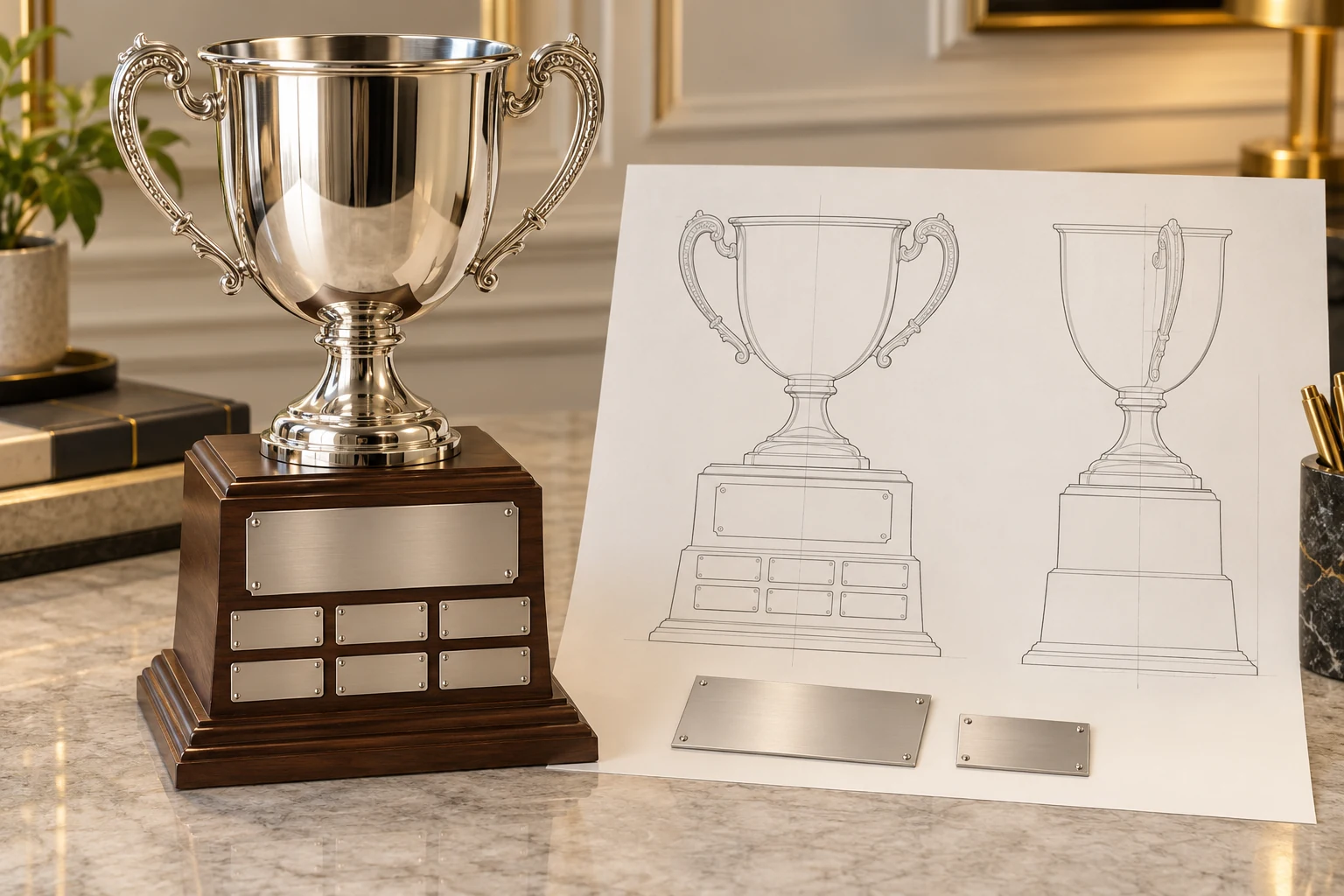
A perpetual trophy carries a continuing record of winners or events. Its shape, base and information area need to work for both the first inscription and later additions.
Estimate the number of editions, the text required for each and how future information will be added. This sets the brief for capacity, legibility, access and storage.
Plan where the
history will live.

A stable overall structure
Review the cup or main form, base dimensions, weight direction, support and future access together.
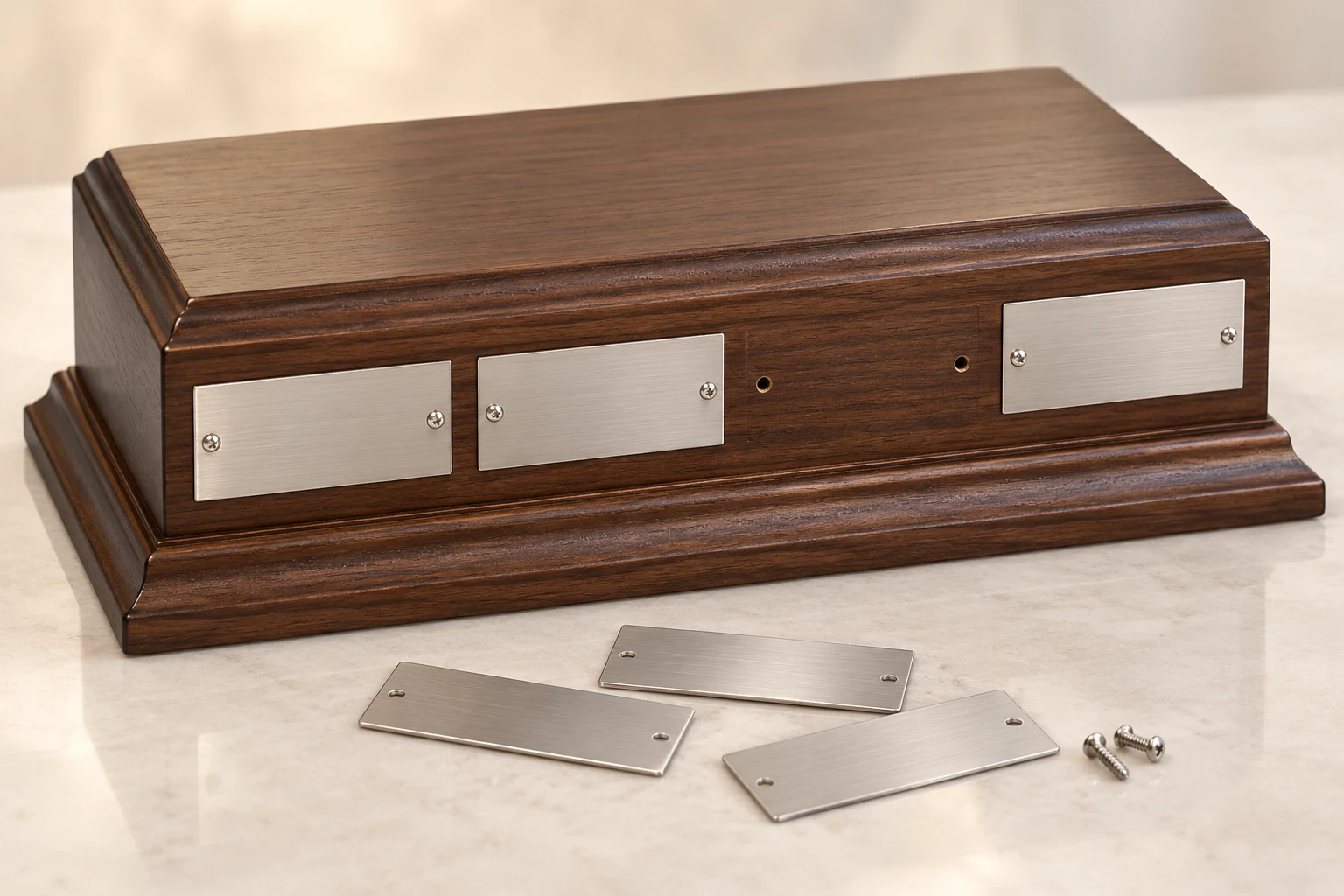
An agreed update method
Compare added nameplates, reserved engraving areas or another reviewed method. Define the attachment and information format.
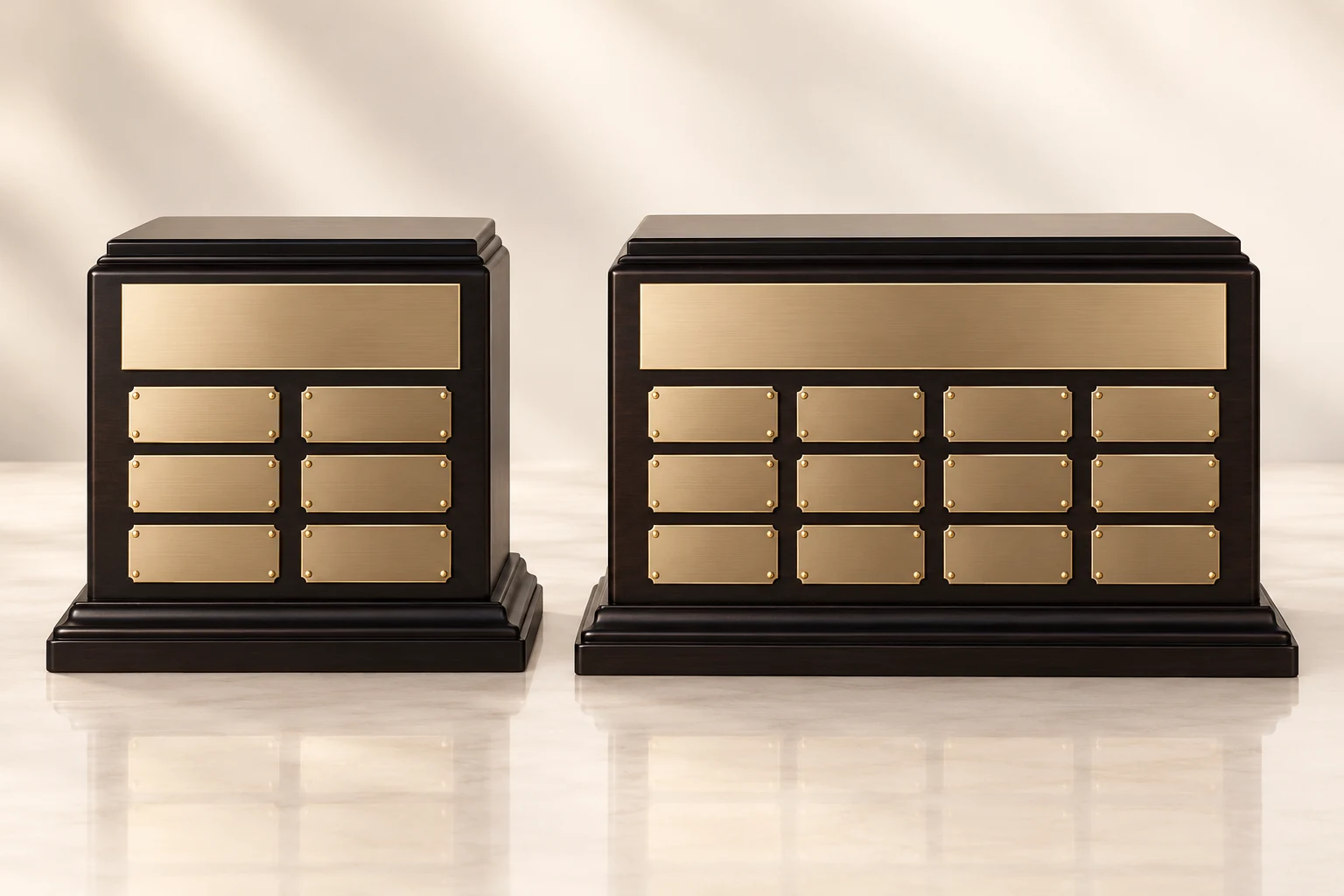
Room for future editions
Allow for long names, categories and bilingual information as well as dates or rankings.
Readable on display.
Accessible for updates.
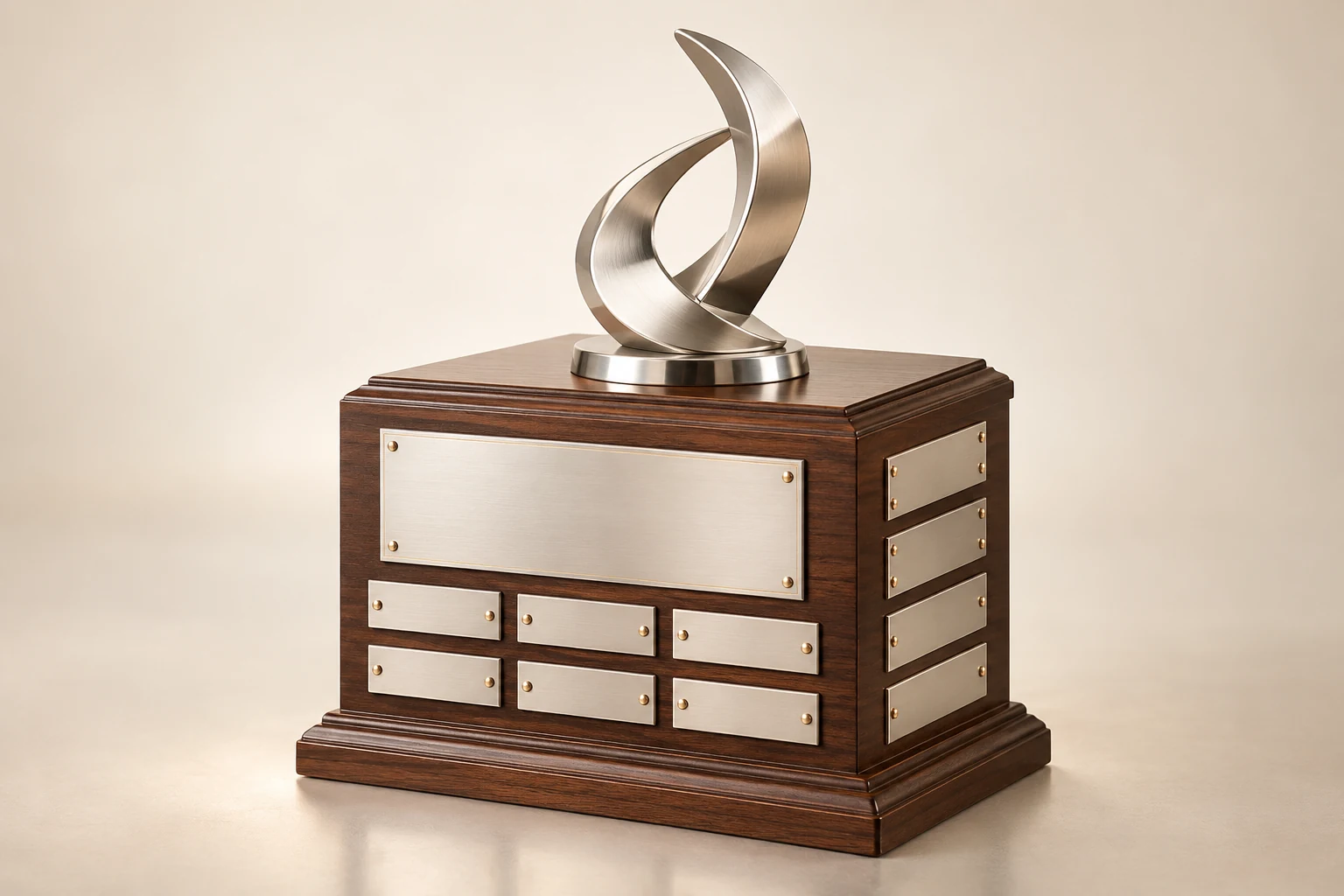
Choose the inscription position deliberately.
Assess front, side or base locations against viewing direction and distance. Keep the update area reachable while preserving balance and the award’s visual hierarchy.
Select the actual material, surface and inscription method together, including protection for the award and any separately stored components.
Think in two briefs.
| Initial presentation | Future additions |
|---|---|
| Organization, competition, logo and first presentation date. | Expected number of editions, winner names, years, rankings or categories. |
| Reference, size, material, structure and first inscription. | Approved information format, fonts, plate type and attachment details. |
| Initial quantity and award levels. | Expected quantities and whether additions are ordered separately or in groups. |
| Packing, destination and initial receipt date. | Access, storage, replacement components, packing and timing for later orders. |
| Design, sample and artwork approvals. | Who submits and approves each new winner list; retained specification and order reference. |
Consistency starts
with an agreed record.

Related award levels
Define common design elements and the differences between categories before the first production review.
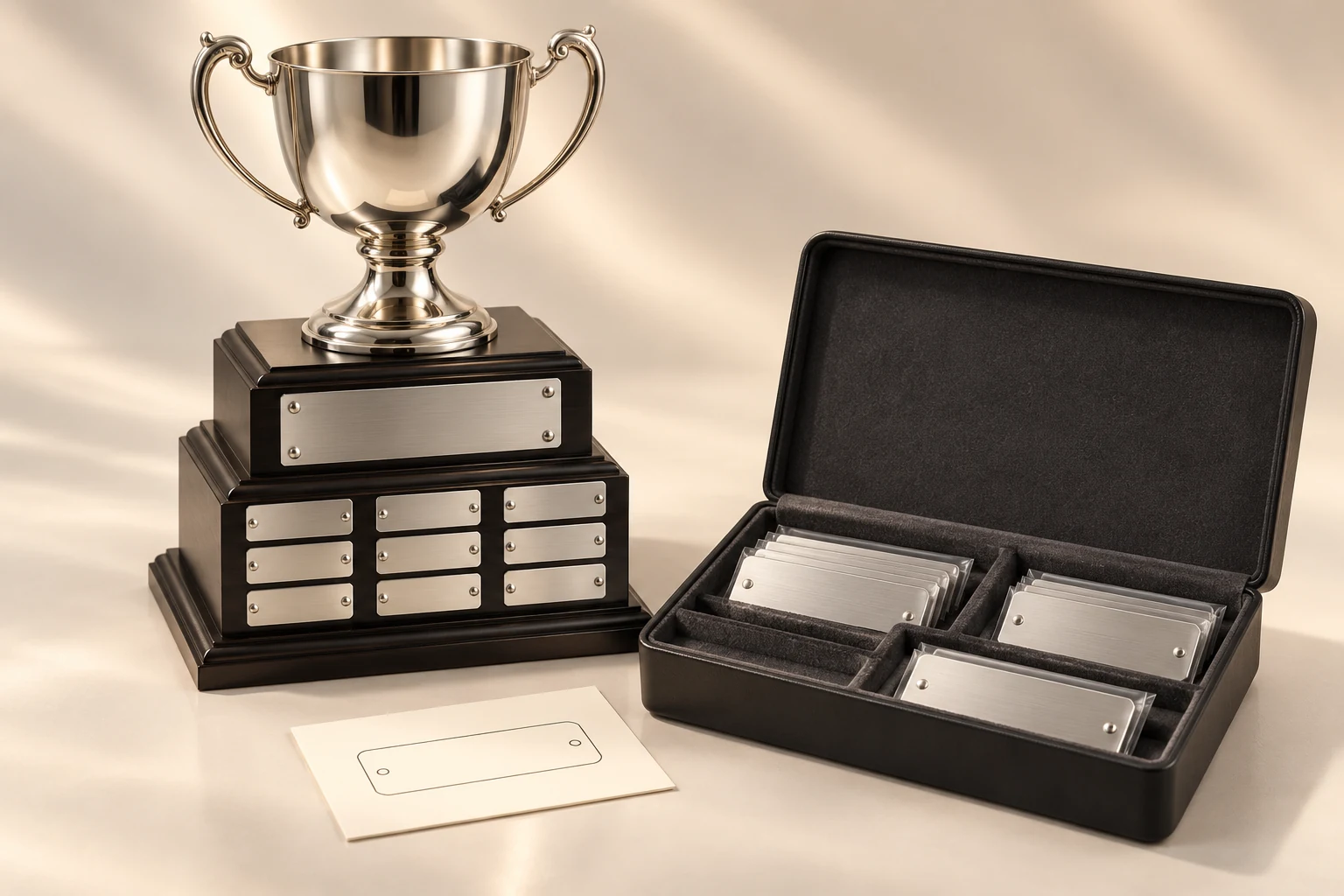
Reorders & components
Keep artwork, dimensions, finish, interfaces and packing with earlier order records. Each request is reviewed for supply and compatibility.
Sample & approval
Review the initial appearance, readable text, fit, stability, update access and packaging against the agreed scope.
Useful next steps.
Before you
get started.
Practical details for a clearer project brief.
How many years or names can a perpetual trophy hold?
Capacity is planned around the expected editions and information volume. Share the likely names, languages and categories so the update area can be sized sensibly.
How can later winners be added?
Discuss nameplates, a reserved engraving area or another suitable route. The specification records the location, attachment and information format.
Can we adapt an existing trophy?
Send photos, dimensions, material information and the proposed update method. Access, stability, components and available inscription space need a combined review.
Who manages future winner information?
Agree who supplies the text, approves the artwork and orders the additions. Use the same naming, font and date conventions each time.
Can replacement plates be ordered later?
Keep the measured dimensions, interfaces, finish and approved artwork. Later supply and compatibility are assessed using that reference.
What should the first sample establish?
Review the initial form and text as well as future access, component fit, stability and packing. Record the approved details and any outstanding revisions.
Give future winners
a place in the story.
Share the first award brief and your plan for the editions to come.